
Hunga eruption study links rapid caldera collapse to record 40-meter tsunami
This digest was compiled by AI from multiple sources — links to the originals are below.
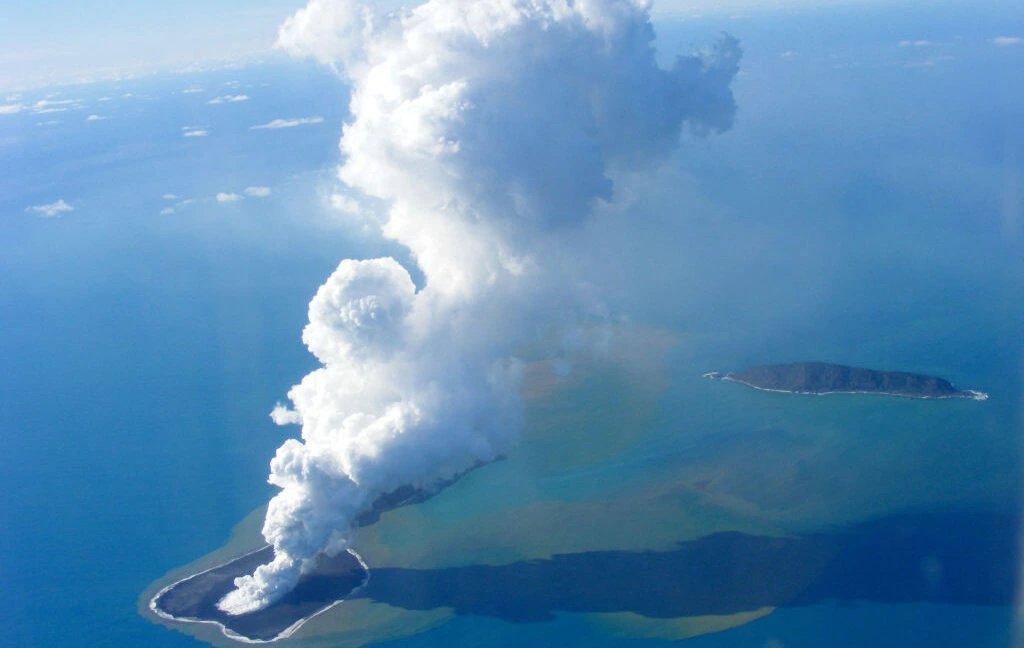
An international research team found that the 2022 Hunga eruption in Tonga caused a caldera about four kilometers wide to sink roughly one kilometer. The rapid collapse likely amplified the tsunami, which reached heights of 40 meters within 100 kilometers of the source. The findings suggest other small underwater volcanoes may pose similar tsunami risks.
Key Facts
- The 2022 Hunga eruption produced a tsunami with heights up to 40 meters within about 100 km of the source, the highest ever recorded from an underwater volcanic eruption.
- Post-eruption seafloor mapping showed a caldera roughly four kilometers wide sank by about one kilometer during the eruption.
- Hunga's caldera is one of the smallest among 177 known calderas in a global database, yet its subsidence depth relative to diameter is comparable to that of Newberry caldera in the United States.
- The eruption column soared more than 55 km, pushing vaporized seawater into the stratosphere, and the pressure wave was detected across the globe.
Caldera Collapse Mechanism
Researchers compared seafloor topography before and after the January 15, 2022 eruption to measure the caldera collapse. The caldera formed when the ground above a magma reservoir collapsed as magma drained away. The team argues that the rapid collapse of the entire caldera may have enhanced the massive tsunami. Even a relatively small caldera like Hunga may be capable of producing a dangerous tsunami, depending on the speed and nature of its collapse.
Tsunami and Eruption Scale
The Hunga eruption ranks among the most powerful volcanic events this century. The eruption column soared more than 55 km, pushing vaporized seawater up into the stratosphere. The pressure wave from the explosion was detected across the globe. The accompanying tsunami is estimated to have reached heights of 40 meters within about 100 km from the source.
Implications for Other Volcanoes
Hunga's caldera is about four kilometers in diameter, making it one of the smallest of the 177 known calderas in a global database. Relative to its diameter, the subsidence depth was comparable to that of famous calderas like Newberry in the United States. The researchers suspect that the speed of the caldera collapse may have been one of the factors behind the massive tsunami. This suggests that other underwater volcanoes may also have the potential to generate dangerous tsunamis.
1 source
Time · lag behind first