
Satellite data show Nepal glacier-rock system accelerated before deadly flood
This digest was compiled by AI from multiple sources — links to the originals are below.
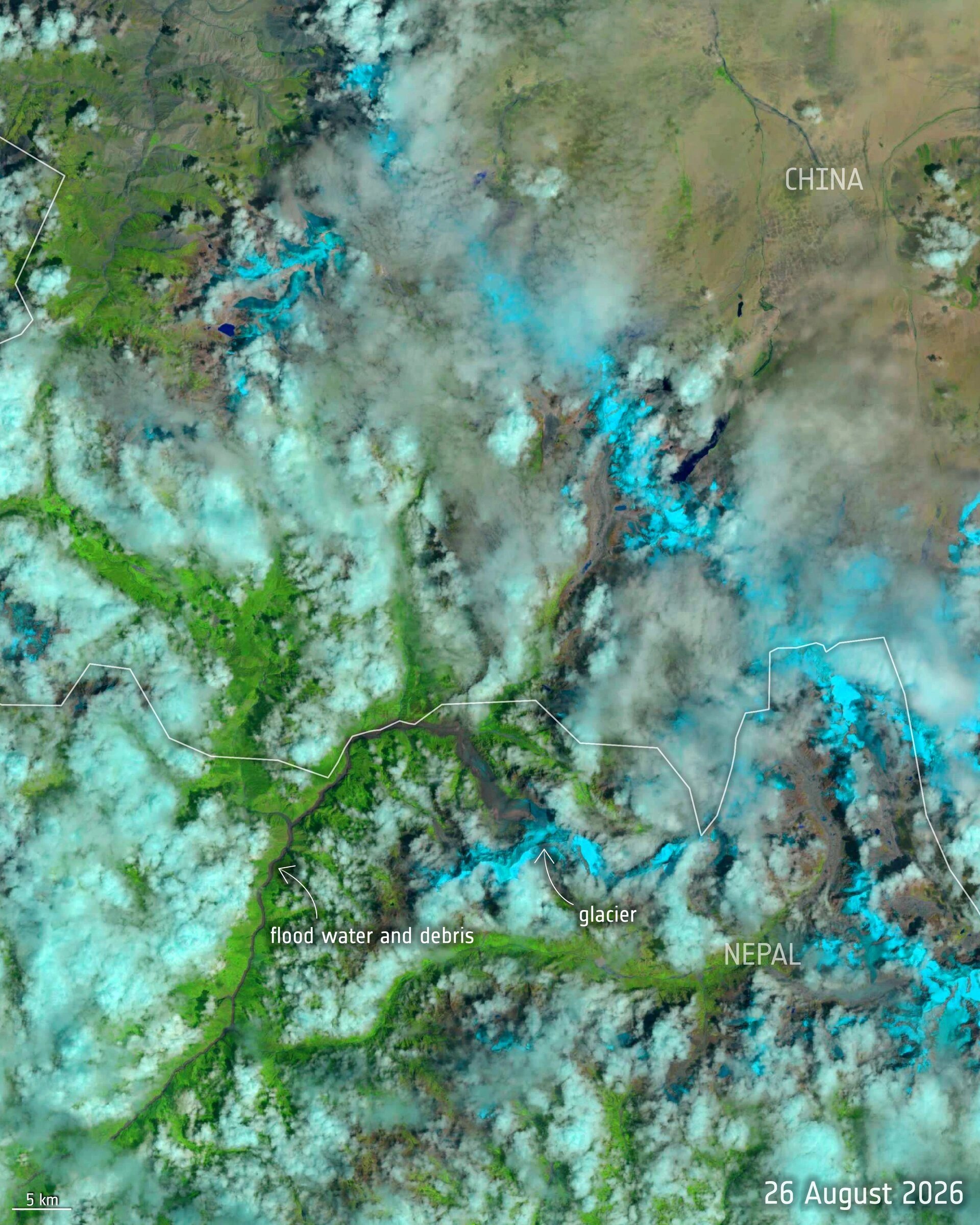
Satellite radar data show a glacier-rock system near the Nepal–Tibet border accelerated in the weeks before the 26 August flash flood that killed more than 1,000 people. The acceleration was detected in the final days before the collapse, according to geophysicist Manoochehr Shirzaei of Virginia Tech. More than 4,000 people remain missing after the disaster.
Key Facts
- The 26 August flash flood near the Nepal–Tibet border killed more than 1,000 people and left over 4,000 missing.
- Sentinel-1 radar data from 8 January to 18 August show the glacier-rock system moving at about 10 millimetres per month near the collapse area.
- The analysis indicates acceleration of rock and ice near the failure zone in the days before the disaster, according to Manoochehr Shirzaei of Virginia Tech.
- The collapse originated from a high-elevation glacier-rock system rather than extreme rainfall or a glacial lake outburst.
Satellite Detection
Researchers analysed radar data from the European Space Agency's Sentinel-1 satellites acquired between 8 January and 18 August. The last observation was made only seven days before the disaster. The data show the glacier-rock system moving downhill at roughly 10 millimetres per month near the apparent collapse area. More importantly, the analysis indicates acceleration of rock and ice near the potential failure zone in the days leading up to the collapse.
Prediction Challenges
The event was difficult to anticipate because it originated from the sudden failure of a high-elevation glacier-rock system rather than a routinely monitored trigger such as extreme rainfall or a glacial lake outburst. High-mountain areas are remote, difficult to access, and generally lack continuous ground-based instrumentation. Many glaciers and rock slopes move continuously without collapsing, and most monitoring systems are not designed to routinely examine thousands of glaciers for subtle deformation changes. The transboundary setting near the Nepal–Tibet border adds another challenge, as effective warning alerts depend on rapid sharing of observations between countries.
1 source
Time · lag behind first