
El Niño set to be largest on record, scientists urge immediate preparation
This digest was compiled by AI from multiple sources — links to the originals are below.
Sea surface temperatures in the central tropical Pacific reached 2.9°C above baseline in early September, exceeding the 1997 and 2015 El Niño events by more than 1°C. Forecasts give a more than 90% chance that this year's event will surpass every El Niño since observations began in the 1870s. Governments must start preparing immediately to mitigate drought, floods, wildfires, and coral bleaching.
Key Facts
- Sea surface temperatures in the central tropical Pacific were about 2.9°C above the 30-year climate baseline in early September 2026.
- Forecasts suggest a more than 90% chance that this year's El Niño will surpass every event since observations began in the 1870s.
- During the four strongest El Niño events between 1980 and 2016, southern Africa faced roughly an 80% chance of below-normal rainfall during the December–February wet season.
- South Africa's maize harvest fell by nearly half during the 2015–16 El Niño event.
- During the 1997 El Niño, Indonesian peatland fires emitted an estimated 3–9 gigatonnes of carbon dioxide, equivalent to roughly 13–40% of global fossil-fuel emissions that year.
Record Ocean Temperatures
In early September 2026, sea surface temperatures in the central tropical Pacific Ocean were about 2.9°C above the current climate baseline, which is the average for the past 30 years. This is more than 1°C warmer than at the same stage of the powerful 1997 and 2015 El Niño events. Forecasts now suggest a more than 90% chance that this year's event will surpass every El Niño since observations began in the 1870s. Zeke Hausfather, a climate scientist at Berkeley Earth, tracks the El Niño weather pattern using 14 leading models in a real-time dashboard.
Regional Impacts and Urgent Preparation
One of the clearest and most consistent impacts of El Niño is drought in southern Africa. During the four strongest El Niño events between 1980 and 2016, the region faced roughly an 80% chance of below-normal rainfall during the December–February wet season. Even the comparatively moderate 2023–24 El Niño triggered severe drought, prompting disaster declarations in Zimbabwe, Zambia and Malawi, and reducing the Zambezi River to its lowest recorded flow. South Africa's maize harvest fell by nearly half during the 2015–16 El Niño event. With the planting season beginning in October, governments have only a few weeks to act, including distributing drought-tolerant and early-maturing crop varieties in high-risk areas.
Indonesian Peatland Fire Risk
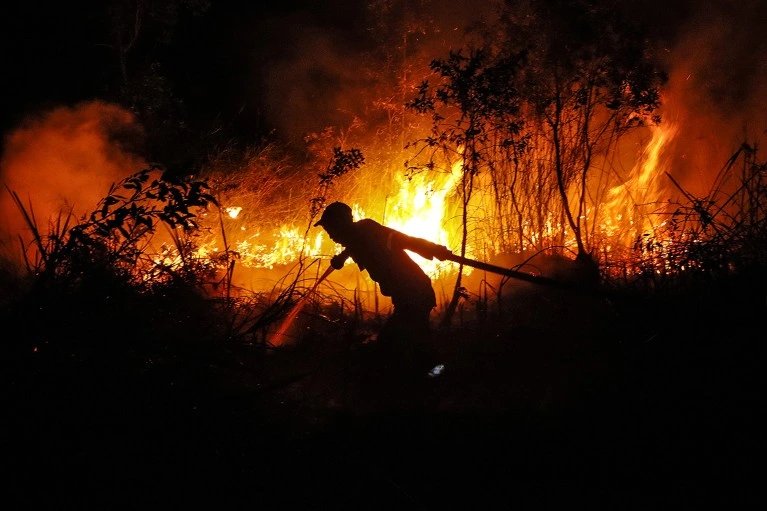
Rainfall is declining across Indonesia, boosting the risk of peatland fires. During the 1997 El Niño, Indonesian fires emitted an estimated 3–9 gigatonnes of carbon dioxide, equivalent to roughly 13–40% of global fossil-fuel emissions that year. Agencies ranging from national agriculture ministries to the World Health Organization must start preparing immediately to mitigate these risks.
1 source
Time · lag behind first