
University of Toronto engineers develop dye-sensitized nanoparticles that detect nearly identical chemicals
This digest was compiled by AI from multiple sources — links to the originals are below.
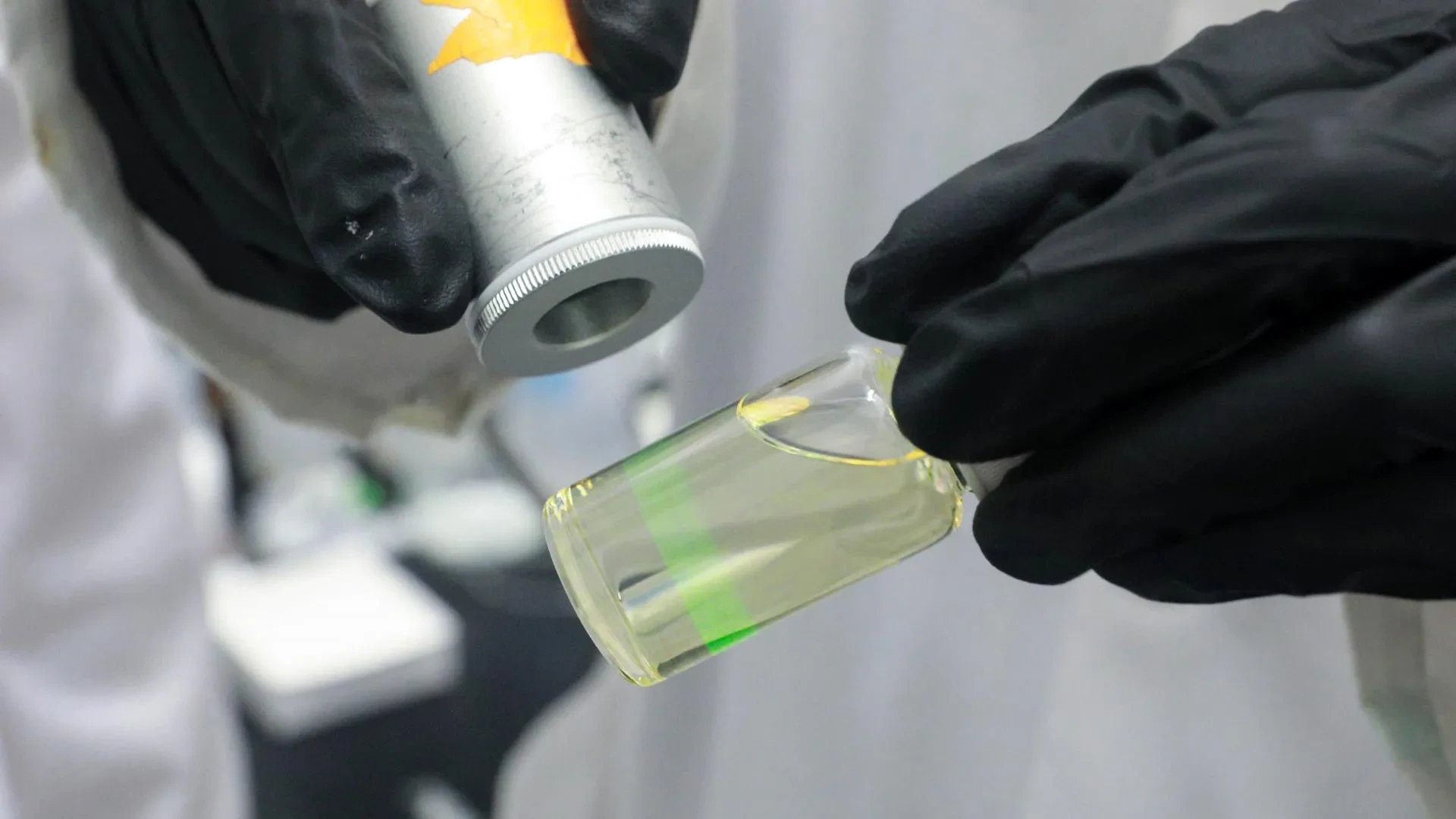
Engineers at the University of Toronto have developed dye-sensitized nanoparticles that detect chemicals at extremely low concentrations and distinguish nearly identical molecules. The particles emit a bright green signal after binding to target chemicals, enabling sensitive detection. The advance could aid pharmaceutical impurity testing and environmental pollutant monitoring.
Key Facts
- The nanoparticles absorb low-energy near-infrared photons and convert them into higher-energy photons, producing a bright green optical signal.
- The particles rely on ytterbium and erbium ions from the lanthanide family to perform upconversion.
- The research was published in the Journal of the American Chemical Society.
- Professor Kai Huang is the senior author of the paper describing the new particles.
Upconversion Mechanism
The nanoparticles use a process called upconversion, absorbing low-energy photons and emitting higher-energy ones. Near-infrared light from low-cost lasers can excite the particles, which then glow bright green. Because the excitation and emission frequencies differ, researchers can separate the desired signal from background autofluorescence. Professor Kai Huang compares the effect to stargazing at night, when stars are visible without the sun's overwhelming light.
Nanoparticle Design
The particles contain ytterbium and erbium ions distributed through a host material made from sodium, yttrium and fluorine. Earlier versions were flat hexagonal structures, with the ions embedded like chocolate chips in a cookie. Organic dye molecules covering the outside act like icing, sensitizing the nanoparticles to light.
Potential Applications
Pharmaceutical manufacturers could use the particles to identify unwanted impurities in drugs. Environmental researchers could search for very small amounts of chemical pollutants in groundwater. The ability to distinguish nearly identical molecules is valuable for quality control and trace analysis.
1 source
Time · lag behind first