
Mussel protein nanoparticles target pancreatic cancer cells
This digest was compiled by AI from multiple sources — links to the originals are below.
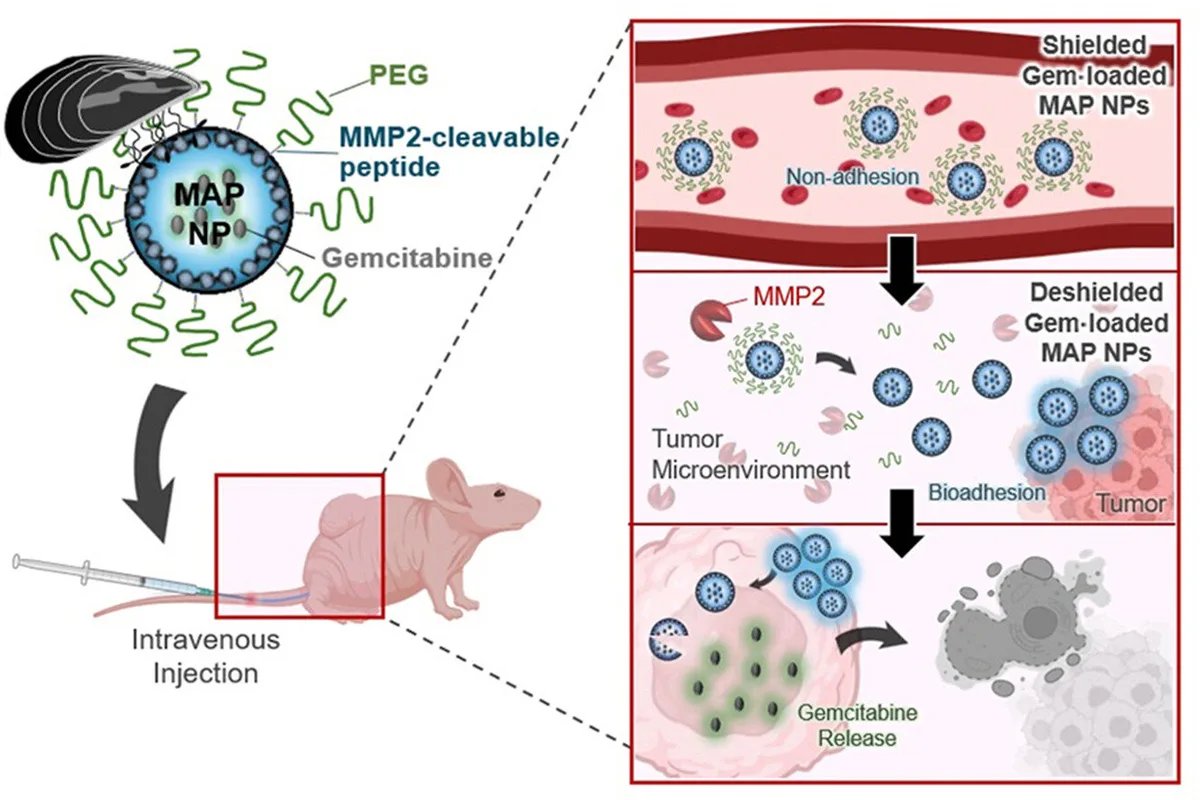
South Korean researchers developed smart nanoparticles from mussel proteins that remain inert in healthy tissue but activate and release anticancer drugs upon reaching tumor tissue. The technology aims to reduce side effects and improve treatment efficacy for pancreatic cancer, one of the deadliest cancers.
The Nanoparticle Design
The nanoparticles are derived from mussel adhesive proteins, which are biocompatible and can be engineered to carry a protective coating. This coating degrades in the acidic environment of tumors, exposing the drug payload. The approach exploits the pH difference between normal tissue (pH 7.4) and tumor tissue (pH 6.5–6.8).
Pancreatic Cancer Challenge
Pancreatic cancer has a five-year survival rate of about 10%, partly due to late diagnosis and resistance to conventional therapies. The new nanoparticles could deliver higher drug concentrations directly to tumors, potentially overcoming some resistance mechanisms. The research team tested the particles in mouse models, showing reduced tumor growth without systemic toxicity.
1 source
Time · lag behind first