
DTU researchers create nanolaser that could halve computer energy use
This digest was compiled by AI from multiple sources — links to the originals are below.
Researchers at DTU have created a tiny nanolaser that could cut computer energy consumption by as much as half. The device, published in Science Advances, traps light in a nanocavity to operate at room temperature with minimal energy. The breakthrough could enable optical communication inside microchips, replacing electrical signals with photons.
Key Facts
- The nanolaser was developed at DTU and published in the journal Science Advances.
- Professor Jesper Mørk estimates that using nanolasers in computers could reduce energy consumption by as much as half.
- The device uses a nanocavity to trap and concentrate light, allowing operation at room temperature with unusually little energy.
- The light-trapping structure was originally developed by Professor Ole Sigmund's group at DTU Construct.
Nanolaser Development
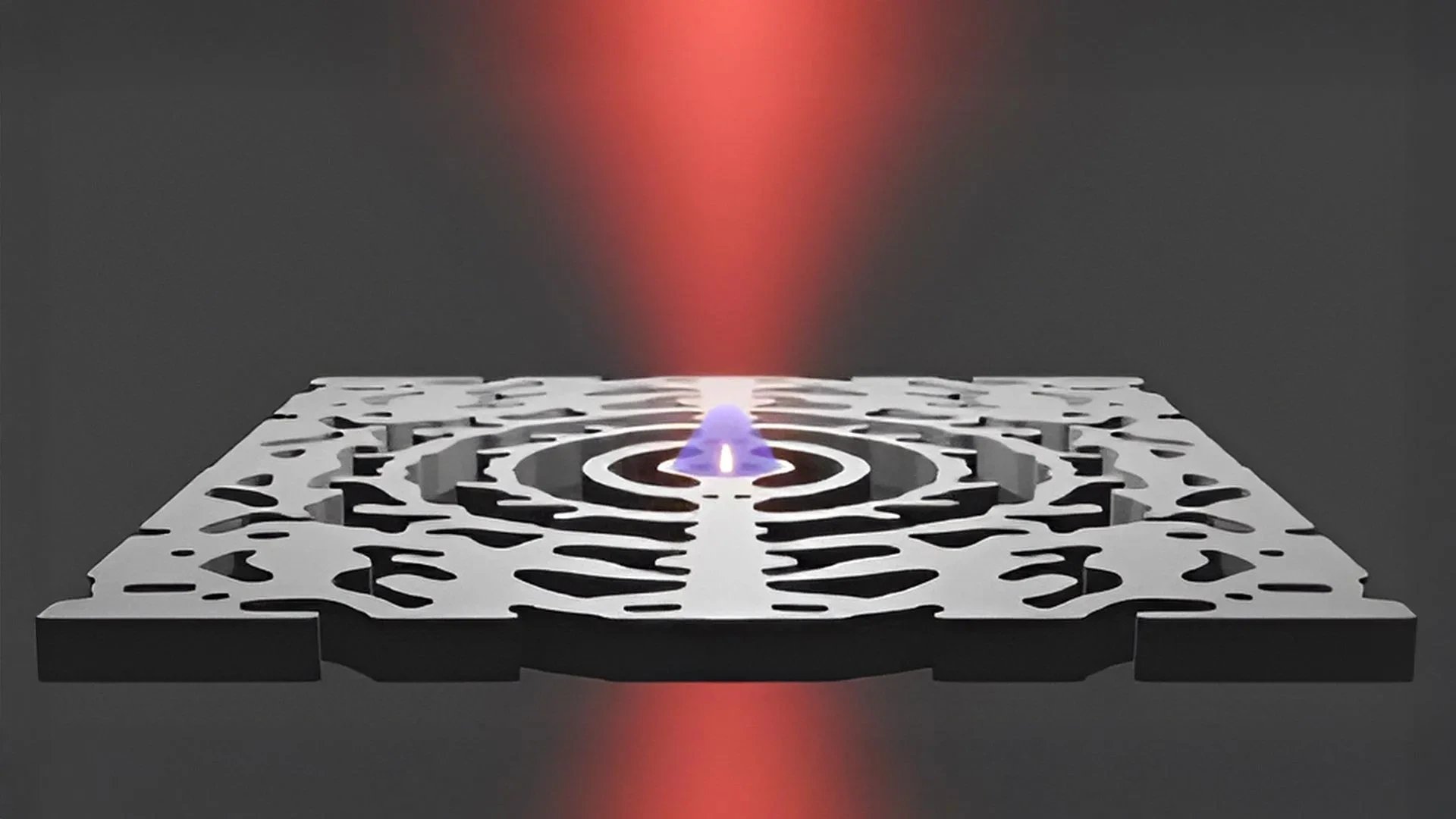
Researchers at DTU created the nanolaser in the university's clean room facility, DTU Nanolab. The device pushes beyond the conventional limit for how small a laser can be made, according to Professor Jesper Mørk. At its core is a nanocavity that traps and concentrates light within an exceptionally tiny space. When a beam of light shines on the device, photons and electrons concentrate in the same microscopic region, enabling room-temperature operation with little energy. The light-trapping structure was originally developed by Professor Ole Sigmund's group at DTU Construct.
Potential Applications
Thousands of these nanolasers could be integrated onto a single microchip to transmit data using photons instead of electrical signals. Mørk estimates that using nanolasers in computers could reduce energy consumption by as much as half. The nanolaser could also enable high-resolution imaging and ultrasensitive biosensors in healthcare, according to Mørk. Future chips designed around light-based communication would require thousands of extremely small, efficient lasers working together.
1 source
Time · lag behind first