
Croatian island lizards evolved cecal valves and stronger bites in 36 years
This digest was compiled by AI from multiple sources — links to the originals are below.
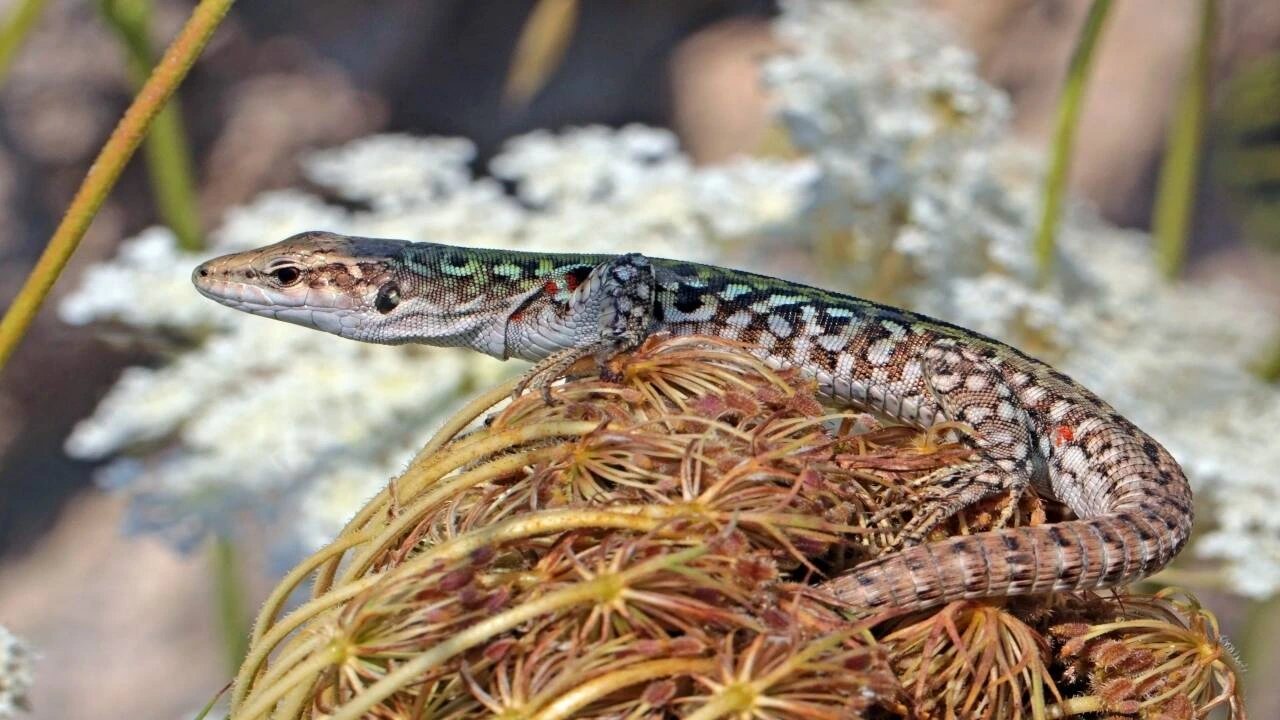
Italian wall lizards transplanted to a Croatian islet in 1971 developed cecal valves and stronger jaws within 36 years, researchers reported in the Proceedings of the National Academy of Sciences. The changes accompanied a dietary shift from insects to plants, with plant matter reaching 61 percent of summer intake. The findings complicate standard accounts of rapid evolution.
Key Facts
- Ten Italian wall lizards (Podarcis siculus) were moved to the Croatian islet of Pod Mrčaru in 1971.
- By the mid-2000s, the transplanted lizards had developed cecal valves, muscular ridges in the hindgut that slow food passage and enable fermentation.
- Plant matter made up 34 percent of the lizards' spring diet and 61 percent of their summer diet on Pod Mrčaru, compared with 4–7 percent on the source islet of Pod Kopište.
- The lizards' heads became longer, wider, and taller, delivering a much harder bite.
- Cecal valves of this type occur in well under 1 percent of known scaled reptile species, according to Duncan Irschick of the University of Massachusetts Amherst.
The 1971 Transplant
In 1971, Eviatar Nevo and colleagues moved five male and five female Italian wall lizards from Pod Kopište to Pod Mrčaru, a smaller islet a few kilometres east in the southern Adriatic. The transfer was part of a competition experiment between lizard species, but the project wound down and the region later went through a war. No one returned to check on the lizards for 36 years.
Morphological and Dietary Shifts
A survey team including Anthony Herrel of the University of Antwerp and Duncan Irschick of the University of Massachusetts Amherst found the islet densely populated by wall lizards in the mid-2000s. Mitochondrial DNA confirmed the lizards were descendants of the original ten transplants, and the rival species Podarcis melisellensis had disappeared. The lizards' heads were longer, wider, and taller, and their bite force was substantially greater. On Pod Mrčaru, plants accounted for 34 percent of spring diet and 61 percent of summer diet, with roughly half of that being tough, high-cellulose leaf material. The hindguts also contained cellulose-digesting nematodes that were absent in lizards from Pod Kopište.
Cecal Valves and Evolution
Researchers found cecal valves ringing the inside of the hindgut in adults, juveniles, and a hatchling only 26 millimetres long with its umbilical scar still visible. These muscular ridges slow food passage and create a fermentation chamber where microbes digest material the lizard's own enzymes cannot. According to Irschick, such valves occur in well under 1 percent of known scaled reptile species. The changes emerged over roughly 30 generations, a span of 36 years.
1 source
Time · lag behind first