
240-million-year-old Brazilian fossil reveals reptile evolution before dinosaurs and crocodiles
This digest was compiled by AI from multiple sources — links to the originals are below.
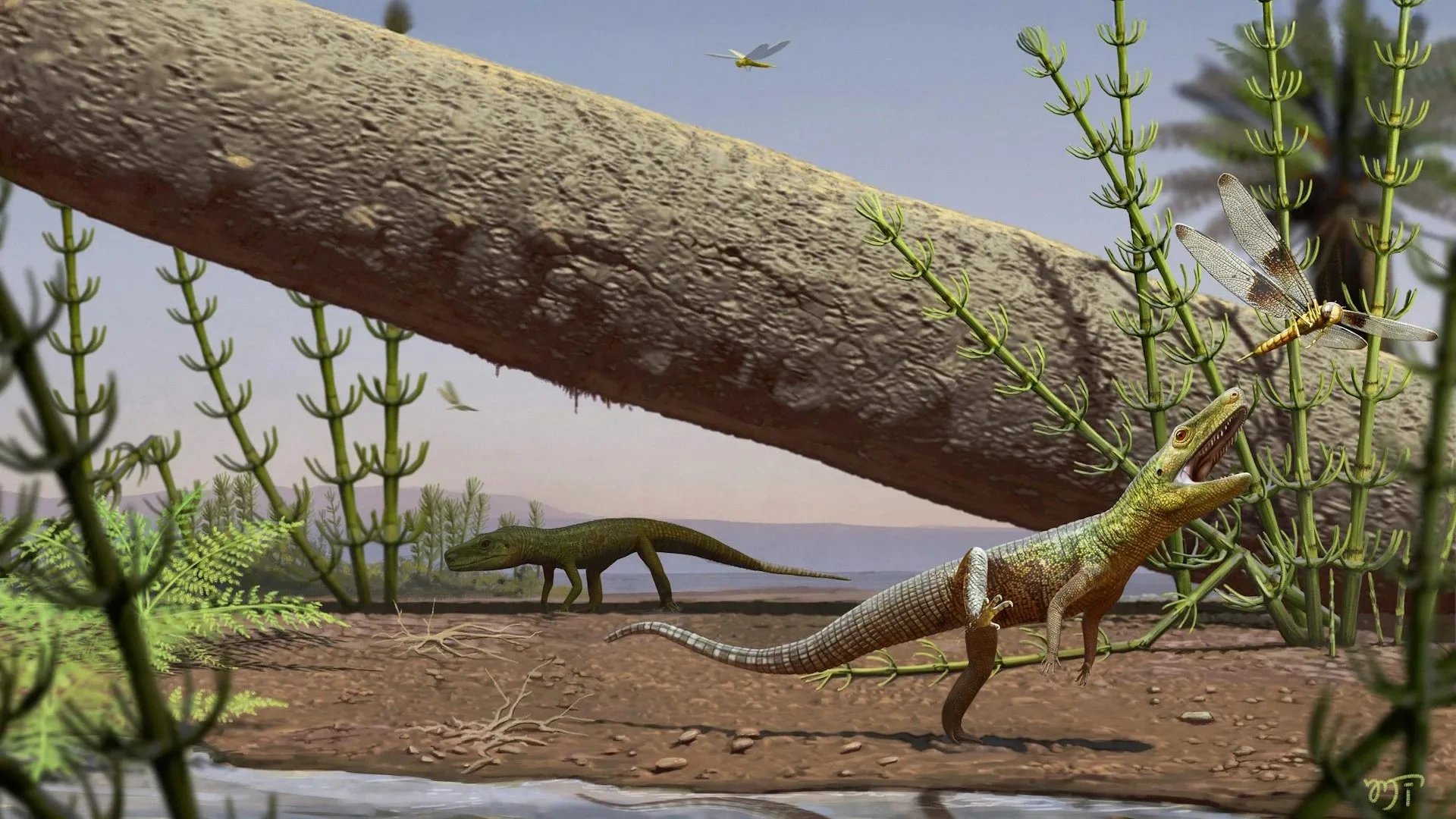
A 240-million-year-old reptile fossil found in central Brazil reveals a previously unknown chapter in archosaur evolution. Named Silescelida acristata, the small predator dates to the Middle Triassic and represents a lineage close to the ancestors of dinosaurs and crocodiles. The discovery, detailed in Scientific Reports, suggests these ancient reptiles spread more widely than previously thought.
The Discovery
The fossil was unearthed in Dona Francisca, Rio Grande do Sul, within the UNESCO Quarta Colônia Geopark. Silescelida acristata lived about 240 million years ago during the Middle Triassic, a period that followed the Permian-Triassic mass extinction 252 million years ago. Researchers from the Federal University of Santa Maria (CAPPA/UFSM), the Federal University of Rio Grande do Sul (UFRGS), and the Pontifical Catholic University of Rio Grande do Sul (PUCRS) described the small, four-limbed predator in the journal Scientific Reports.
Evolutionary Context
Silescelida acristata belongs to the archosauriforms, the reptile group that later gave rise to archosaurs—including dinosaurs, crocodiles, and birds. Its unusually positioned limbs suggest more efficient terrestrial movement than many earlier reptiles, hinting at adaptations that later proved crucial. The find fills a gap in the early evolution of these lineages, showing that archosauriforms were already diversifying body plans during the Triassic recovery.
Biogeographic Implications
Close relatives of Silescelida acristata were previously known mostly from other continents, indicating wide dispersal across the Triassic world. The Brazilian fossil extends the known range of this group into western Gondwana, challenging previous assumptions about their distribution. This underscores the importance of southern Brazilian fossil sites in understanding global Triassic ecosystems.
1 source
Time · lag behind first