
Abandoned UK farmland becomes species-rich meadow in 11 years
This digest was compiled by AI from multiple sources — links to the originals are below.
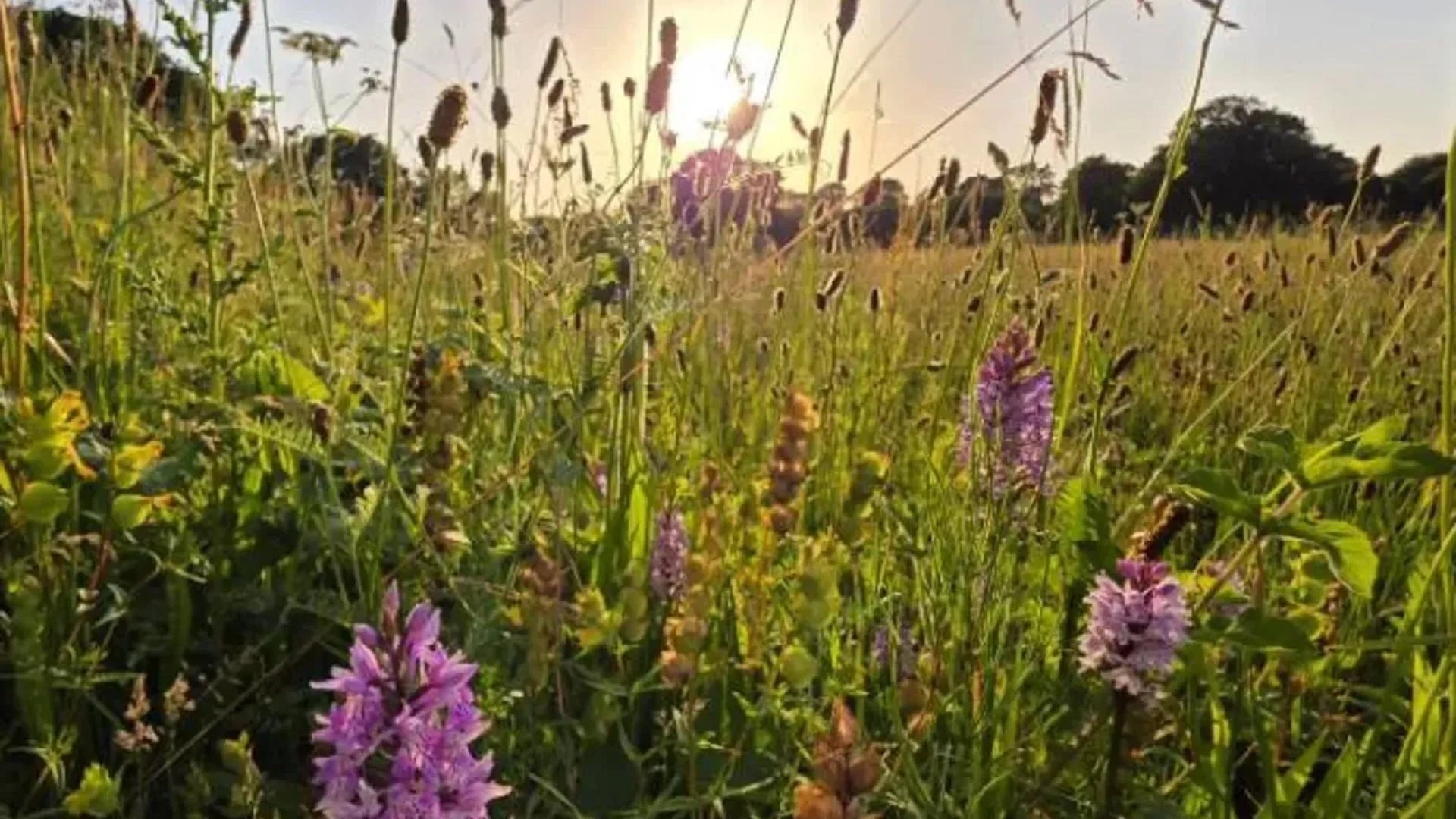
A two-hectare former arable field in North Norfolk developed into a species-rich wildflower meadow within 10-15 years after farming ended in 2005, according to an 11-year study led by UCL's Carl Sayer. The average number of plant species per survey plot doubled from about 10 in 2011 to nearly 20 by 2022, with thousands of orchids establishing naturally. The findings challenge the assumption that restoring species-rich grassland requires commercial seed mixes or other costly interventions.
Key Facts
- The study tracked plant life in a two-hectare field in North Norfolk from 2011 to 2022, after farming ended in 2005.
- The average number of plant species per survey plot doubled from about 10 in 2011 to nearly 20 by 2022.
- Thousands of orchids, including the locally rare southern marsh orchid, established naturally in the meadow.
- The study was published in Restoration Ecology and led by Professor Carl Sayer at UCL Geography.
Natural Recovery
The field, known as Sayer's Meadow in Bodham, North Norfolk, was left largely without intervention except for a traditional annual hay cut. Within 10-15 years, the former arable field developed into a species-rich wildflower meadow. Locally rare species such as southern marsh orchid, greater tussock-sedge, yellow rattle and common centaury appeared over time. Professor Carl Sayer said that resisting seeding and allowing nature to lead may be worth trying more often in wildflower meadow restoration.
Study Methods
Every two to three years, Professor Sayer and collaborator Pete Robinson conducted detailed vegetation surveys, recording every plant species identified across the meadow. The land is owned by Professor Sayer's father and co-author Derek Sayer. Long-term ecological studies of natural grassland restoration are uncommon because they require consistent monitoring over many years.
Restoration Implications
The findings call into question the common assumption that restoring species-rich grassland necessarily requires commercial seed mixes or other expensive measures. The researchers suggest that allowing natural ecological processes to unfold can restore biodiversity while preserving the genetic diversity of plants already adapted to the local area. Species-rich grasslands provide important habitat for pollinating insects, birds and mammals, and can strengthen ecosystem resilience and help landscapes adapt to climate change.
1 source
Time · lag behind first