
Scientists confirm Moon pit opens into underground cave in Sea of Tranquillity
This digest was compiled by AI from multiple sources — links to the originals are below.
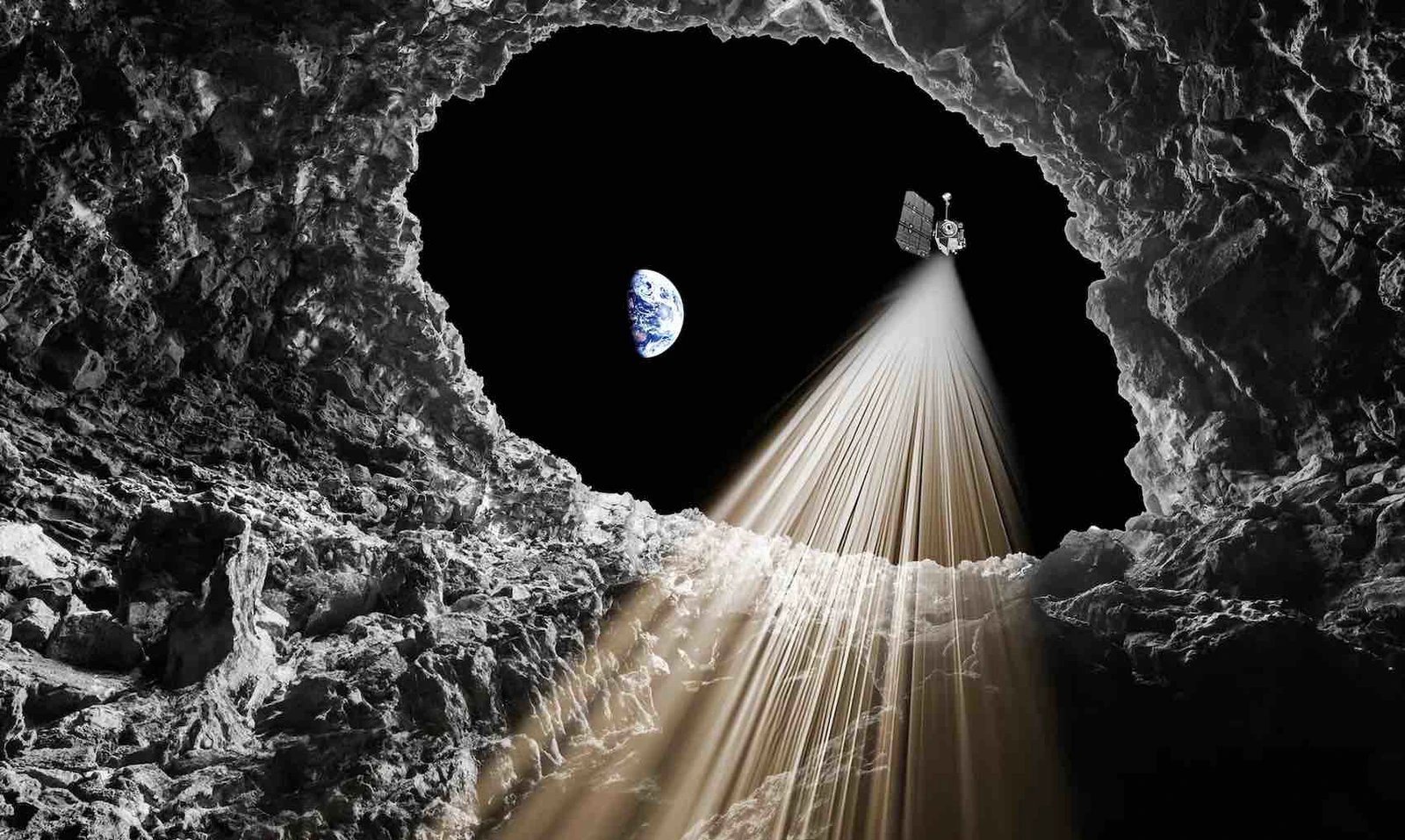
Scientists have confirmed that a pit in the Moon's Sea of Tranquillity opens into an underground cave, based on radar data from NASA's Lunar Reconnaissance Orbiter. The finding marks the first direct evidence of an accessible lunar pit leading to a cave conduit. The cave's measured portion is only tens of metres long, while its full extent remains unknown.
Key Facts
- Radar data from NASA's Lunar Reconnaissance Orbiter revealed a reflection extending beyond the visible floor of the Mare Tranquillitatis pit.
- Simulations showed the radar signal is best explained by a cave conduit continuing underground from the base of the pit.
- The measured portion of the cave is only tens of metres long, and its full extent remains unknown.
- Japan's Kaguya spacecraft confirmed the pit in 2009, and later LRO images showed a roughly 100-metre opening.
- More than 200 pits have been catalogued on the Moon, some of which may be skylights exposing cave voids.
The Pit and Its Discovery
Mare Tranquillitatis, the Sea of Tranquillity, is a broad plain of dark basalt created by ancient volcanic eruptions on the Moon's near side. Apollo 11 landed within the mare in 1969, although the pit lies roughly 370 kilometres northeast of the landing site. Japan's Kaguya spacecraft confirmed the pit in 2009, and later images from the Lunar Reconnaissance Orbiter showed a roughly 100-metre opening with steep or overhanging walls and a floor partly hidden by shadow. More than 200 pits have since been catalogued on the Moon, with some being simple collapse features and others possibly skylights exposing cave voids.
Radar Evidence and Confirmation
The evidence came from the Miniature Radio-Frequency instrument, known as Mini-RF, aboard the Lunar Reconnaissance Orbiter. The radar illuminated the Mare Tranquillitatis pit during a 2010 observation and measured the energy scattered back towards the spacecraft. Researchers found a bright response on the side opposite the radar's viewing direction that was difficult to generate from the known surface alone. The international team built three-dimensional models of the pit, sent simulated radar rays through them, and changed the geometry of a possible hidden conduit. Models without a cave failed to reproduce the full observation, confirming the presence of an underground cave conduit.
1 source
Time · lag behind first