
NASA Selects PSI-Led GIMLI Mission to Probe Marius Hills Pit for Lunar Lava Tube
This digest was compiled by AI from multiple sources — links to the originals are below.
NASA has selected a Planetary Science Institute-led mission to land instruments beside the Marius Hills Pit and determine whether it opens into a lunar lava tube. The GIMLI mission will deploy a lander and rover through the Commercial Lunar Payload Services program, with Honeybee Robotics building the seismic, gravimeter, and camera instruments. The Norwegian Space Agency will supply ground-penetrating radar.
Key Facts
- NASA selected the Planetary Science Institute-led GIMLI mission to investigate the Marius Hills Pit for a potential lunar lava tube.
- Honeybee Robotics, a Blue Origin company, will build the active-source seismic system, gravimeter, and cameras, and integrate all instruments onto the lander and rover.
- The Norwegian Space Agency is supplying the ground-penetrating radar for the mission.
- Co-investigators include Boise State University, Johns Hopkins University, the Lunar and Planetary Institute, and the University of Oslo.
Mission Selection
NASA picked the GIMLI mission through its Payloads and Research Investigations on the Surface of the Moon (PRISM) program. The mission will be funded under PRISM, which sends science instruments to the Moon aboard spacecraft flown by companies in the Commercial Lunar Payload Services (CLPS) initiative. GIMLI's instruments will travel on a lander and a rover provided through CLPS.
Instrumentation and Partners
Than Putzig, an associate director and senior scientist at PSI, leads the GIMLI effort. Honeybee Robotics will provide project management and build the active-source seismic system, the gravimeter, and the cameras. Honeybee will integrate all instruments onto the lander and rover and, together with PSI, lead their operations on the lunar surface. The Norwegian Space Agency supplies the ground-penetrating radar, with co-investigators from Boise State University, Johns Hopkins University, the Lunar and Planetary Institute, and the University of Oslo.
Scientific Rationale
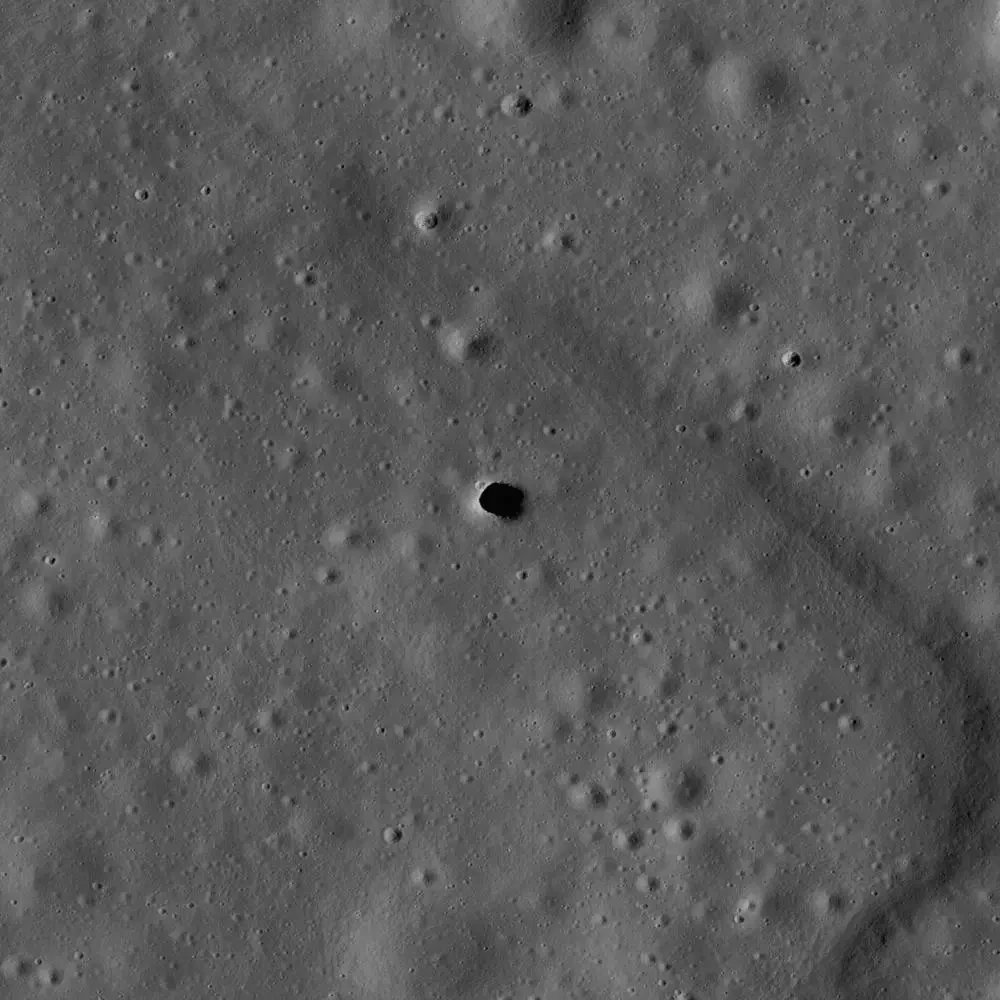
Observations from lunar orbit have built a strong case that caves and lava tubes exist beneath the Moon's surface. The Marius Hills Pit is a large hole in one of the most volcanically diverse parts of the Moon and may be an opening into these hidden spaces. Until now, scientists have only been able to study the site from orbit; GIMLI is designed to investigate it directly from the ground.
1 source
Time · lag behind first