
Climate Change Primed Nepal Glacier for Deadly Collapse, Scientists Say
This digest was compiled by AI from multiple sources — links to the originals are below.
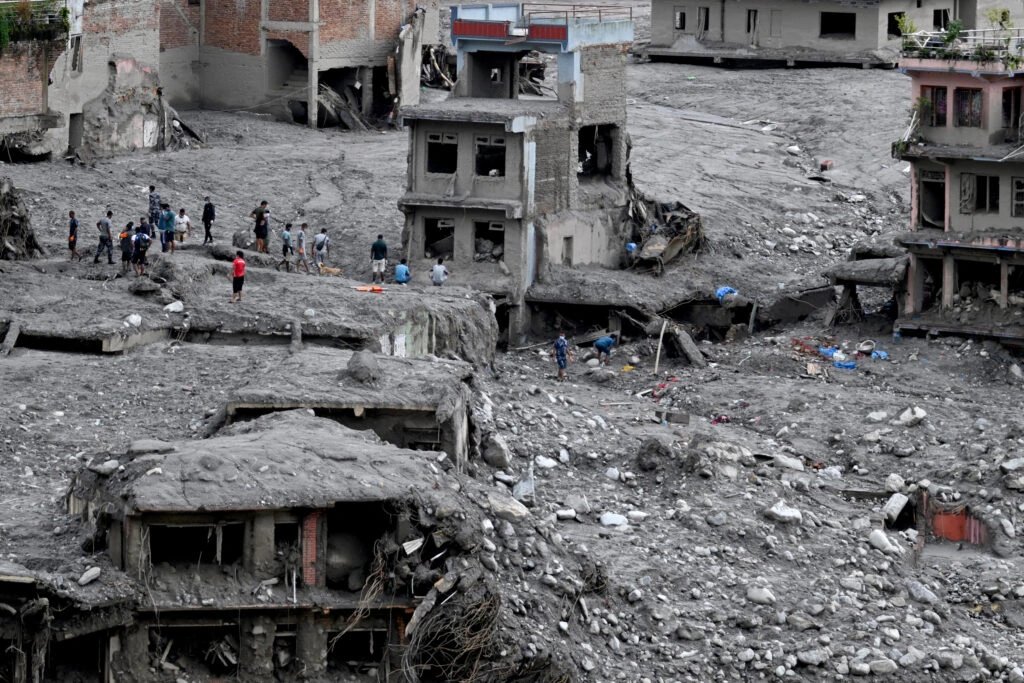
Climate attribution researchers say decades of global warming set the stage for the deadly rock and glacier collapse on Langtang Lirung Mountain in Nepal on Aug. 26. At least 1,300 people died and about 5,000 remain missing after a cascade of debris roared through the region at speeds up to 100 mph. Total losses are estimated at about $5 billion.
Key Facts
- At least 1,300 people died and about 5,000 are still missing after the Aug. 26 collapse on Langtang Lirung Mountain.
- The initial breakaway involved about 116 million cubic meters of rock and ice, roughly five times the volume of the 2021 Chamoli disaster in India.
- Total losses from the disaster are estimated at about $5 billion.
- Nepal has sought aid from a UN climate loss and damage fund that has only about $800 million pledged and roughly $350 million available for claims.
Climate Attribution Analysis
A team of scientists with World Weather Attribution highlighted that record-hot temperatures baked the region in the months before the disaster. That heat was preceded by unusually high snowfall in late 2025, a typically very dry time for the region. Additional meltwater from the snow was probably another element in a complex chain of climate-linked factors, said co-author Walter Immerzeel. Warming has hollowed out ancient ice and thawed permafrost, leaving high mountain slopes increasingly vulnerable to collapse.
Scale of the Collapse
About 116 million cubic meters of rock and ice initially broke away from the mountain face, equivalent to a 96-square-block area of Manhattan plunging several thousand vertical feet within minutes. The size of the initial disintegration is unprecedented in the Himalayas, said Immerzeel, a mountain hydrologist at Utrecht University. The volume is about five times that of the 2021 Chamoli disaster in Uttarakhand, India. The increasing frequency and scale of such collapses signal fundamental, irreversible shifts in Himalayan mountain environments, Immerzeel said.
Human and Economic Toll
The flood swept through the upper Lhende valley and settlements of Rasuwa district, including Rasuwagadhi and Timure, before surging through the Bhote Koshi and Trishuli river systems about 100 miles downstream. The disaster destroyed and damaged towns, farms, orchards, roads, bridges, and energy infrastructure. Nepal has sought aid from an international fund for climate losses and damage set up through the United Nations climate framework. The fund has only about $800 million pledged, with roughly $350 million available for claims, a fraction of the estimated damage from this single disaster.
2 sources
Time · lag behind first