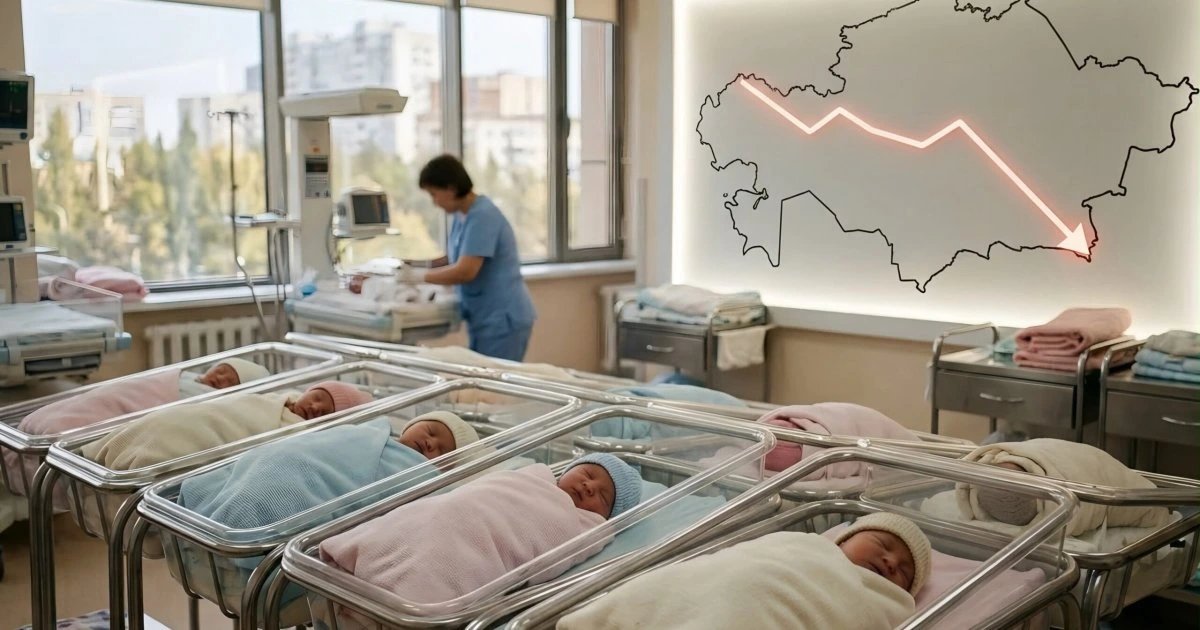
Global fertility falls below replacement level for first time in 2026
This digest was compiled by AI from multiple sources — links to the originals are below.

Global fertility fell below the replacement level for the first time in history in 2026, according to researchers at the University of Pennsylvania and Northwestern University. The average global fertility rate dropped to 2.2 children per woman or lower. The decline was most pronounced in poor and middle-income countries.
Key Facts
- The global fertility rate fell to 2.2 children per woman or lower in 2026, below the replacement level of about 2.1.
- Researchers at the University of Pennsylvania and Northwestern University published the study Terra Incognita: The Economics of a Shrinking World.
- If the trend continues, the world population will peak at 9 billion around 2056, then decline.
- The UN projects a later peak of 10.3 billion in the mid-2080s.
- Singapore's total fertility rate fell to 0.87 in 2025.
Study Findings
Researchers at the University of Pennsylvania and Northwestern University concluded that global fertility fell below replacement level for the first time in history in 2026. The average global fertility rate dropped to 2.2 children per woman or lower, according to the study Terra Incognita: The Economics of a Shrinking World. The decline covered most regions regardless of income, religion, or social structure. The fall was most pronounced in poor and middle-income countries.
Population Projections
If the trend continues, the world population will peak at 9 billion around 2056 and then begin to decline. This scenario differs from the UN forecast of a peak of 10.3 billion in the mid-2080s. Eurostat data indicate that Europe's population could shrink by 11 percent over 75 years. In many East Asian and Latin American countries, including South Korea, China, Colombia, and Chile, fertility rates fell to historic lows.
6 sources
Global fertility falls below replacement level for first time in 2026