
Aral Sea dried seabed has emitted 748 million tonnes CO2 since 1960s
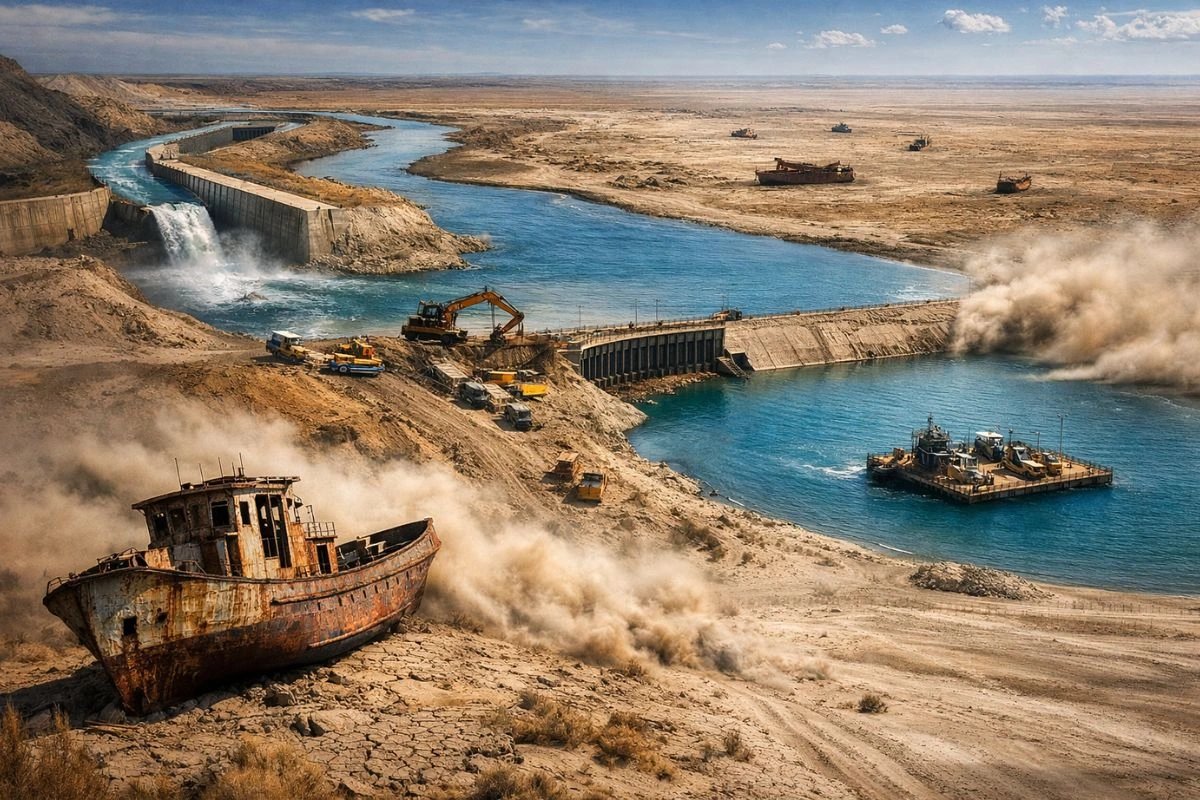
This digest was compiled by AI from multiple sources — links to the originals are below.
The dried seabed of the Aral Sea has emitted about 748 million tonnes of carbon dioxide since the 1960s, Spanish researchers estimated after a 2022 expedition. The sediments still hold an estimated 605 million tonnes of carbon dioxide that has not yet been released.
Key Facts
- Spanish researchers sampled sediment at 14 sites during a 2022 expedition and measured carbon dioxide flux and isotope composition.
- Avoided emissions from preserving the remaining carbon are valued at between $3.6 billion and $18 billion.
- The Aral Sea basin spans several countries, and most water in the basin has historically been used for agriculture and irrigation.
- Researchers list irrigation modernization, water-use efficiency, and transport optimization as necessary measures to expand the water area.
Carbon Release from Aral Seabed
Before its large-scale drying, the Aral Sea acted as a natural carbon store, with dead plants and organisms sinking and accumulating in seabed sediments. Exposure of the seabed to air began decomposing the stored organic matter and releasing carbon dioxide into the atmosphere. Spanish researchers collected sediment samples at 14 sites across the former seabed in a 2022 expedition. The team measured carbon dioxide fluxes and isotope composition, confirming the emissions come from buried organic material rather than other sources. Researchers estimate that about 748 million tonnes of CO2 have been released from the dried seabed since the 1960s, with another 605 million tonnes still stored in sediments.
Restoration Finance and Barriers
Researchers value avoided emissions from preserving the stored carbon at between $3.6 billion and $18 billion. Carbon financing is considered a potential funding source for restoration projects in the Aral Sea basin. Restoring the sea to its previous size requires changing water management across the entire basin, which spans several countries. Most water in the basin has historically been used for agriculture and irrigation, limiting the amount available for sea restoration. Researchers cite irrigation modernization, higher water-use efficiency, and transport optimization as necessary measures.
1 source
Time · lag behind first