
Alfred Wegener Institute: Arctic seabed traps most ancient permafrost carbon
This digest was compiled by AI from multiple sources — links to the originals are below.
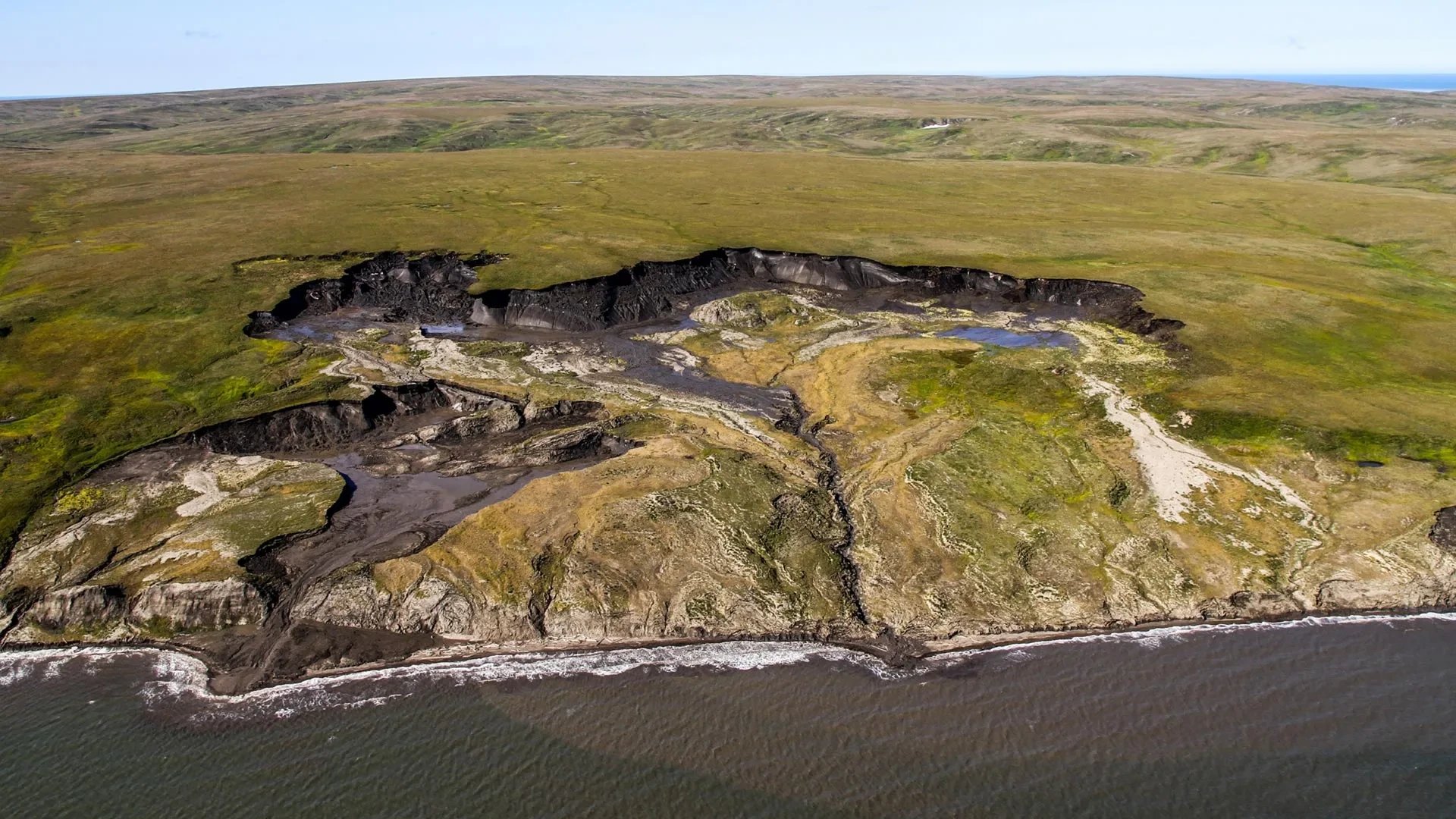
Most ancient permafrost carbon released into the Arctic Ocean becomes buried in the seabed rather than turning into greenhouse gases, researchers from the Alfred Wegener Institute and MARUM report Monday in Nature Geoscience. Only about 10% of the carbon is converted into gases, they found. The findings come as Arctic coastlines erode and permafrost thaws, releasing increasing amounts of carbon into the sea.
Vast Carbon Stores
Arctic permafrost holds about 1,300 gigatonnes of organic carbon, with an additional 400 gigatonnes stored in ocean sediments and river deltas. As the Arctic warms at a rate faster than the global average, thawing permafrost and eroding coastlines release carbon into the ocean via rivers and coastal erosion. Dr. Manuel Ruben of the Alfred Wegener Institute estimates that up to 0.02 gigatonnes enter the sea each year, a figure that could rise by 70 to 150 percent by 2100.
Sediment Core Findings
Researchers from the Alfred Wegener Institute and MARUM at the University of Bremen collected sediment cores at multiple sites off the coast of Qikiqtaruk (Herschel Island), Canada. Analysis revealed that large quantities of terrestrial carbon are preserved in seafloor sediments. Marine microorganisms were found to prefer consuming fresh marine carbon rather than the ancient permafrost-derived carbon, leaving most of the released carbon trapped in the seabed. Only about 10 percent is converted into greenhouse gases, according to the study published Monday in Nature Geoscience.
Climate Model Implications
The findings resolve a key uncertainty in carbon cycle projections by showing that the ocean floor acts as a major sink for permafrost carbon. Scientists had previously lacked data on how much of the released carbon returns to the atmosphere versus being buried. The study indicates that under current conditions, the seabed capture limits the immediate climate feedback from thawing permafrost, though the long-term stability of these deposits remains under investigation.
1 source
Time · lag behind first