James Webb Telescope Discovers New Star Type Powered by Black Hole, 100 Billion Times Brighter
This digest was compiled by AI from multiple sources — links to the originals are below.
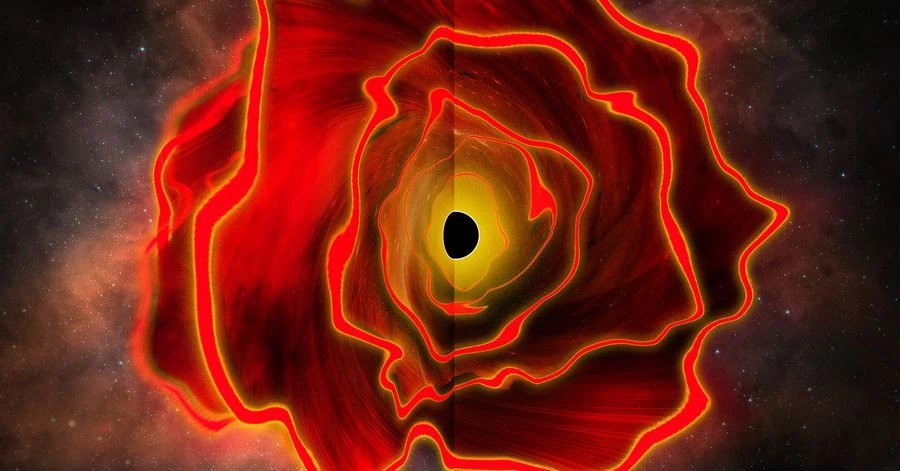
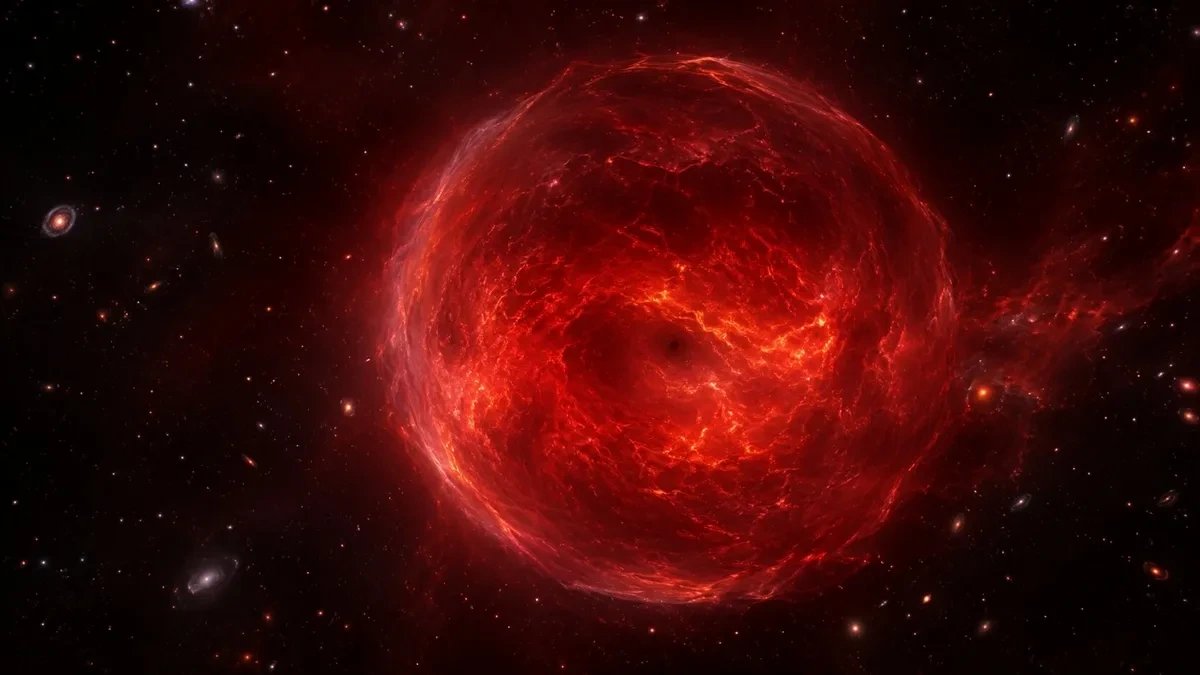
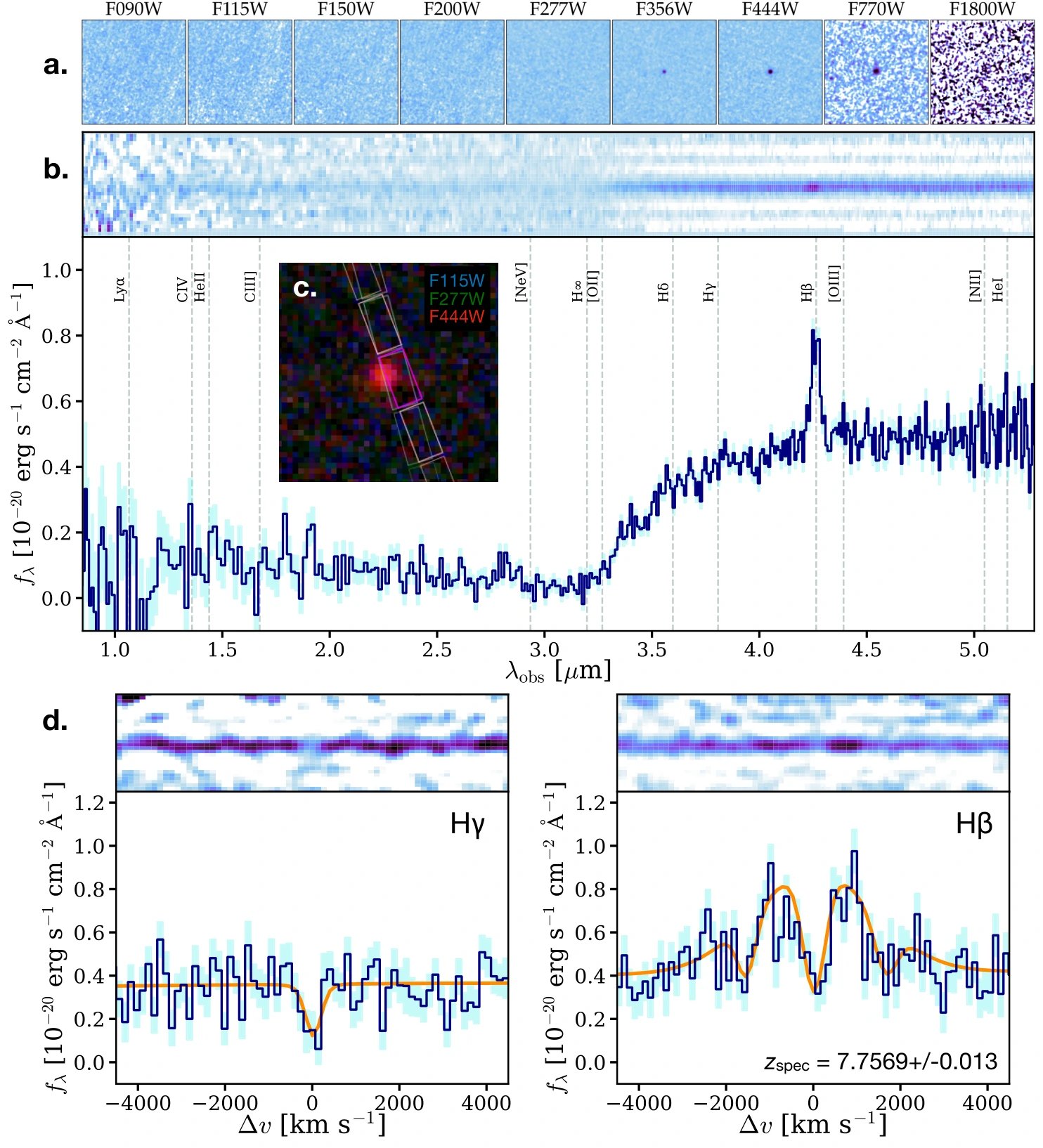
NASA’s James Webb Space Telescope discovers a new class of star powered by an embedded black hole instead of nuclear fusion. The object, a gas cloud surrounding a black hole 100,000 times the mass of the Sun, shines 100 billion times brighter than an ordinary star. Astronomers spot it as an unusually bright red dot while identifying the most distant known galaxy, Mom-Z14.
Key Facts
- NASA’s James Webb Space Telescope detected an object shining 100 billion times brighter than an ordinary star.
- Computer simulations reproduced the brightness with a black hole 100,000 times the mass of the Sun fully enclosed in a gas cloud.
- The object appeared as a bright red dot during the survey that identified galaxy Mom-Z14, the farthest known galaxy.
- The object is a new type of star powered by energy from a central black hole rather than by nuclear fusion.
- Similar red dots have been seen only in Webb’s deep images of the early universe and had no explanation before this work.
The Discovery
Researchers using NASA’s James Webb Space Telescope found an unexpectedly bright red dot while searching for the most distant galaxies. The survey also identified galaxy Mom-Z14, now the farthest known galaxy. Nearly every deep-space image from Webb had shown such red dots, which remained unexplained until this work. Scientists confirmed the object is a new class of star whose light comes from a central black hole, not from nuclear fusion. The object shines 100 billion times brighter than an ordinary star.
Simulation Results
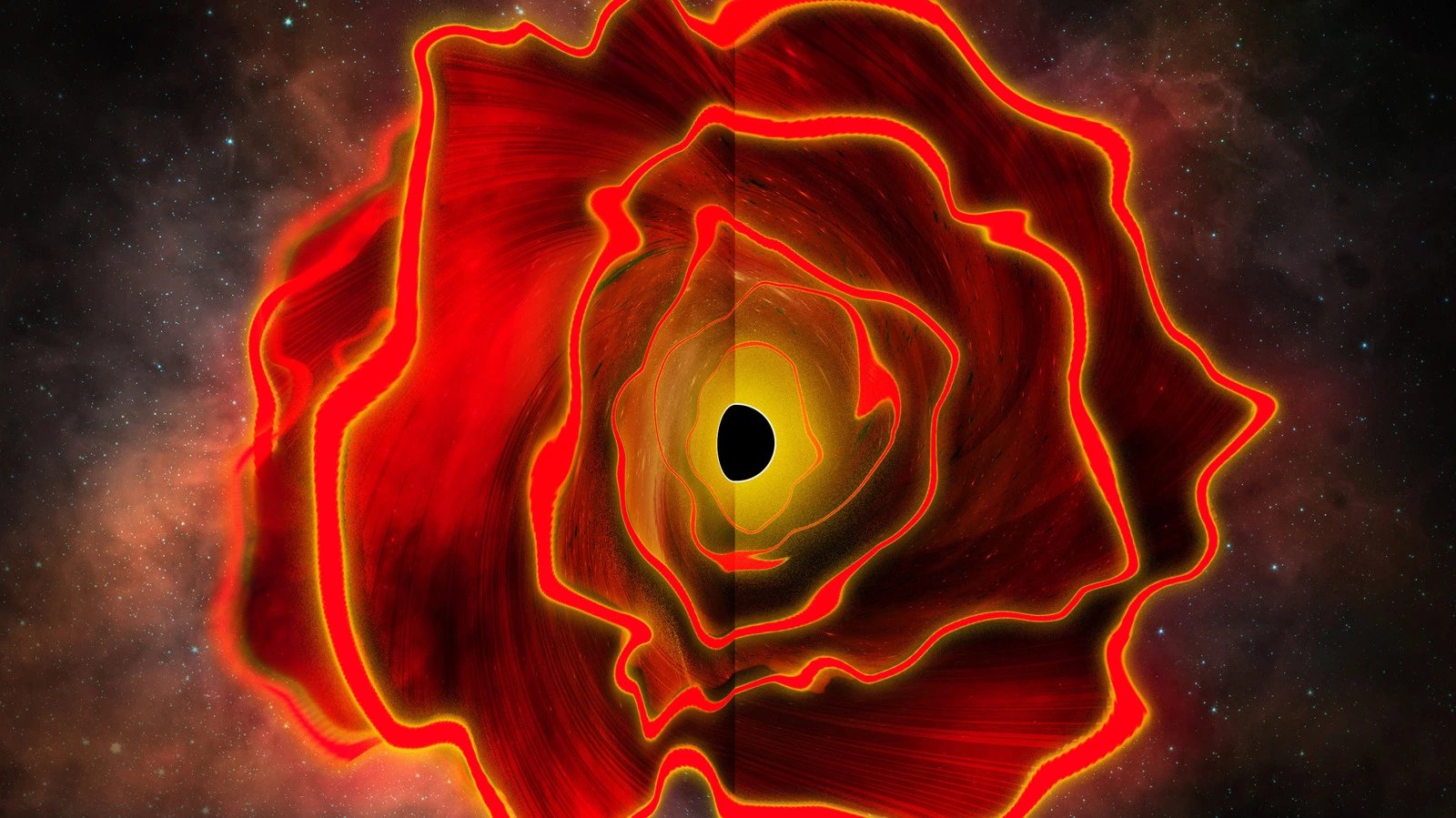
Scientists ran computer simulations to reproduce the dot’s extreme brightness. The match required a black hole with a mass 100,000 times that of the Sun fully enveloped by a gas cloud. This structure differs from a standard accretion disk, in which matter forms a flat spiral around the black hole. In the model, energy blasting from the black hole through the surrounding gas makes the cloud outshine its host galaxy. The black hole still hosts an accretion disk, but the entire system is enclosed in gas.
Early Universe Red Dots
All such red dots detected so far appear only in Webb’s images of the early universe. Because light travels at a finite speed, these objects are seen as they were billions of years ago. The new star type explains the previously unexplained red dots in Webb’s deep-field images.
2 sources
James Webb Telescope Discovers New Star Type Powered by Black Hole, 100 Billion Times Brighter