TROPOS balloon samples trace marine sugars from Spitsbergen to free troposphere
This digest was compiled by AI from multiple sources — links to the originals are below.
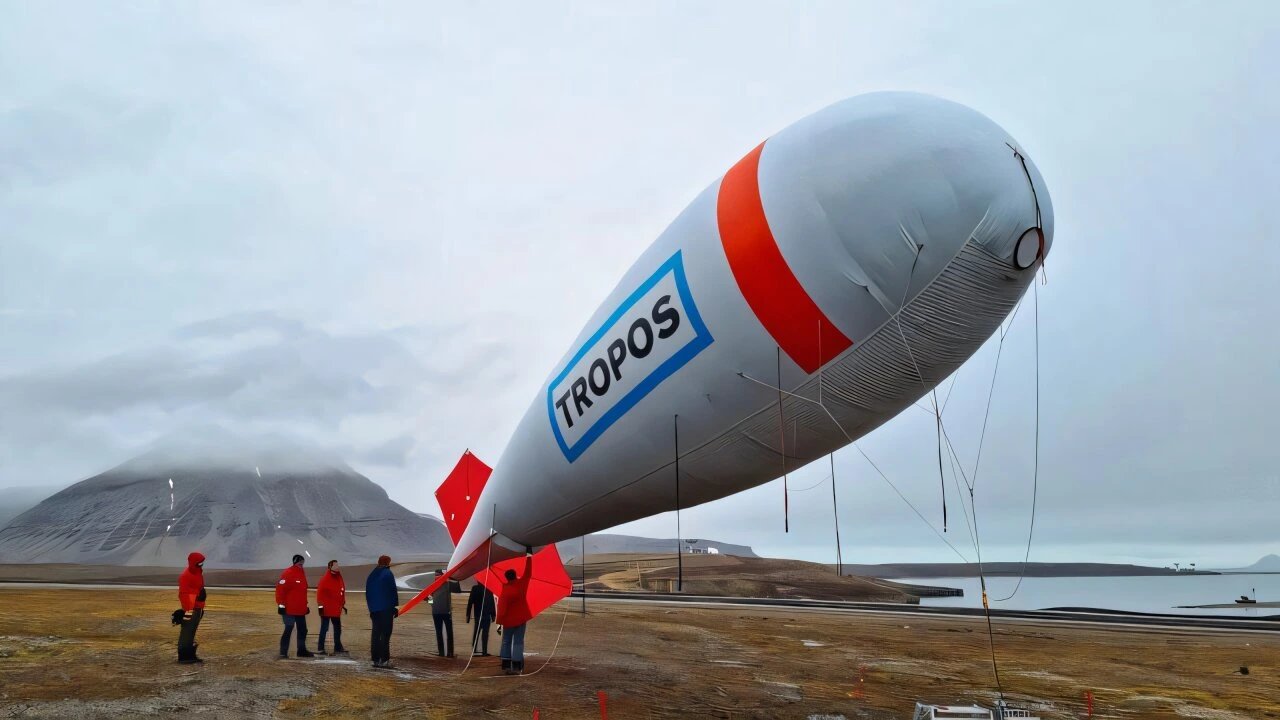
Balloon measurements over Spitsbergen by the Leibniz Institute for Tropospheric Research (TROPOS) traced marine salt and sugar from the ocean into the free troposphere, where they can influence cloud formation and Arctic climate. Samples were collected in autumn 2021 and spring 2022, and findings were published in Atmospheric Chemistry and Physics. The authors say the results help explain the complex interactions behind above-average Arctic warming.
The Spitsbergen Profiling
Scientists from TROPOS, the University of Cologne, the Alfred Wegener Institute, the Max Planck Institute for Marine Microbiology, the University of Oldenburg and the University of Bremen collected balloon samples over Spitsbergen in autumn 2021 and spring 2022. The payloads traced marine salt and sugar from the ocean to the free troposphere. The results appear in Atmospheric Chemistry and Physics and form part of the DFG Transregio 172 programme, led by Leipzig University since 2016.
Sea Spray Aerosol Composition
Sea spray aerosol particles are a major source of cloud formation in the central Arctic. They are released by breaking waves and bursting air bubbles, and consist of inorganic sea salt ions—sodium and chloride—plus organic material from the surface film and seawater. The organic fraction includes marine carbohydrates, most of which are complex, highly branched polysaccharides produced by algae and bacteria. As sea ice retreats, researchers expect the contribution of these particles to rise. A 2025 TROPOS study using laboratory and field data found that polysaccharides significantly influence the ice-nucleating activity of sea spray particles.
Ice Nucleation and Radiative Effects
Model simulations from that analysis show that marine polysaccharide ice-nucleating activity is concentrated mainly in the temperature range from –20°C to –15°C in remote ocean regions, where terrestrial ice-nucleating particles are minimal or absent. Ice-nucleating aerosol particles promote ice formation in clouds, affecting radiative properties and precipitation. The balloon observations extend this evidence to the free troposphere over Spitsbergen.
What's Next
Further measurements will be needed to quantify how much these marine sugars alter cloud radiative properties as Arctic sea ice retreat accelerates. It remains unclear whether the free-troposphere concentrations observed over Spitsbergen are representative of the wider Arctic Ocean.
1 source
TROPOS balloon samples trace marine sugars from Spitsbergen to free troposphere