
University of Birmingham scientists find melting Arctic sea ice triggers 50-fold rise in cloud particles
This digest was compiled by AI from multiple sources — links to the originals are below.
An international team led by the University of Birmingham has presented the first real-world evidence that melting Arctic sea ice fuels the formation of cloud-seeding particles. Near the ice edge, the number of particles capable of forming cloud droplets rose 50-fold in a single day, researchers report in Nature Geoscience on Aug. 5. The discovery reveals a previously unknown natural process that could alter cloud cover and the Arctic’s radiation balance.
The Field Campaign
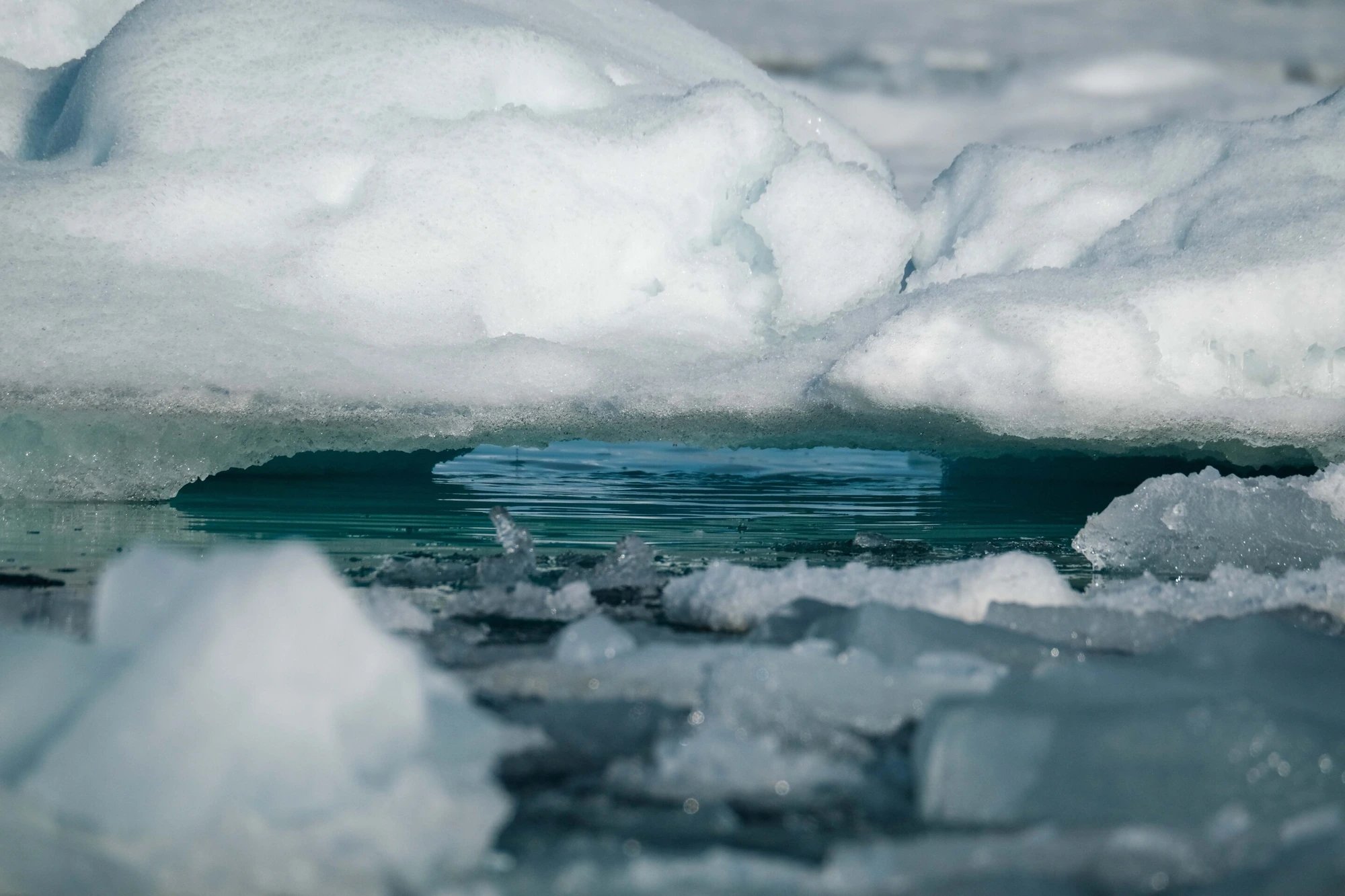
The data were gathered during a 2022 expedition of the Royal Research Ship Discovery around Greenland and Davis Strait in spring and summer. Researchers directly measured atmospheric particles at the ice edge, where melting sea ice meets the open ocean. They observed that particle concentrations capable of seeding clouds surged from background levels to a 50-fold increase within 24 hours.
The Chemical Cocktail
The particle formation is driven by a mix of iodine compounds from the ocean and sea ice, dimethylsulfide from marine algae, and organic compounds from land or ocean. These emissions react under sunlight to produce iodine oxoacids and sulfuric acid, a process previously only demonstrated in CERN’s CLOUD chamber. The study also identifies iodine-containing oxygenated organic molecules (I-OOMs) that help particles grow to sizes that can influence clouds.
Sunlight as a Driver
New particle formation occurred on over 80% of sunny days during the campaign, indicating the process is widespread in the sunlit Arctic. The rapid chemistry is triggered by sunlight, which transforms emitted compounds into cloud-seeding particles. Co-author Dr. James Brean noted that this is the first observation of such molecules, implying new pathways for iodine chemistry.
1 source
Time · lag behind first