
University of Birmingham-led scientists discover Arctic sea-ice cloud-forming process absent from climate models
This digest was compiled by AI from multiple sources — links to the originals are below.
An international team led by the University of Birmingham has found the first real-world evidence of a natural Arctic process that sharply increases the number of cloud-forming particles where sea ice meets open ocean. Measurements during a 2022 expedition around Greenland and the Davis Strait showed that particle numbers capable of forming cloud droplets increased fiftyfold in a single day on more than 80% of sunny days. The findings, published August 5 in Nature Geoscience, describe a mechanism involving iodine, sulfur and organic compounds that is absent from current climate models.
Key Facts
- Near the sea-ice edge, the number of particles capable of forming cloud droplets increased fiftyfold in a single day.
- The phenomenon was observed on more than 80% of sunny days.
- Researchers identified a new class of atmospheric compounds, iodine-containing oxygenated organic molecules (I-OOMs), that help particles grow to cloud-seeding size.
- Measurements were collected aboard the Royal Research Ship Discovery around Greenland and the Davis Strait in spring and summer 2022.
- The study was published August 5 in Nature Geoscience.
Arctic Particle Formation
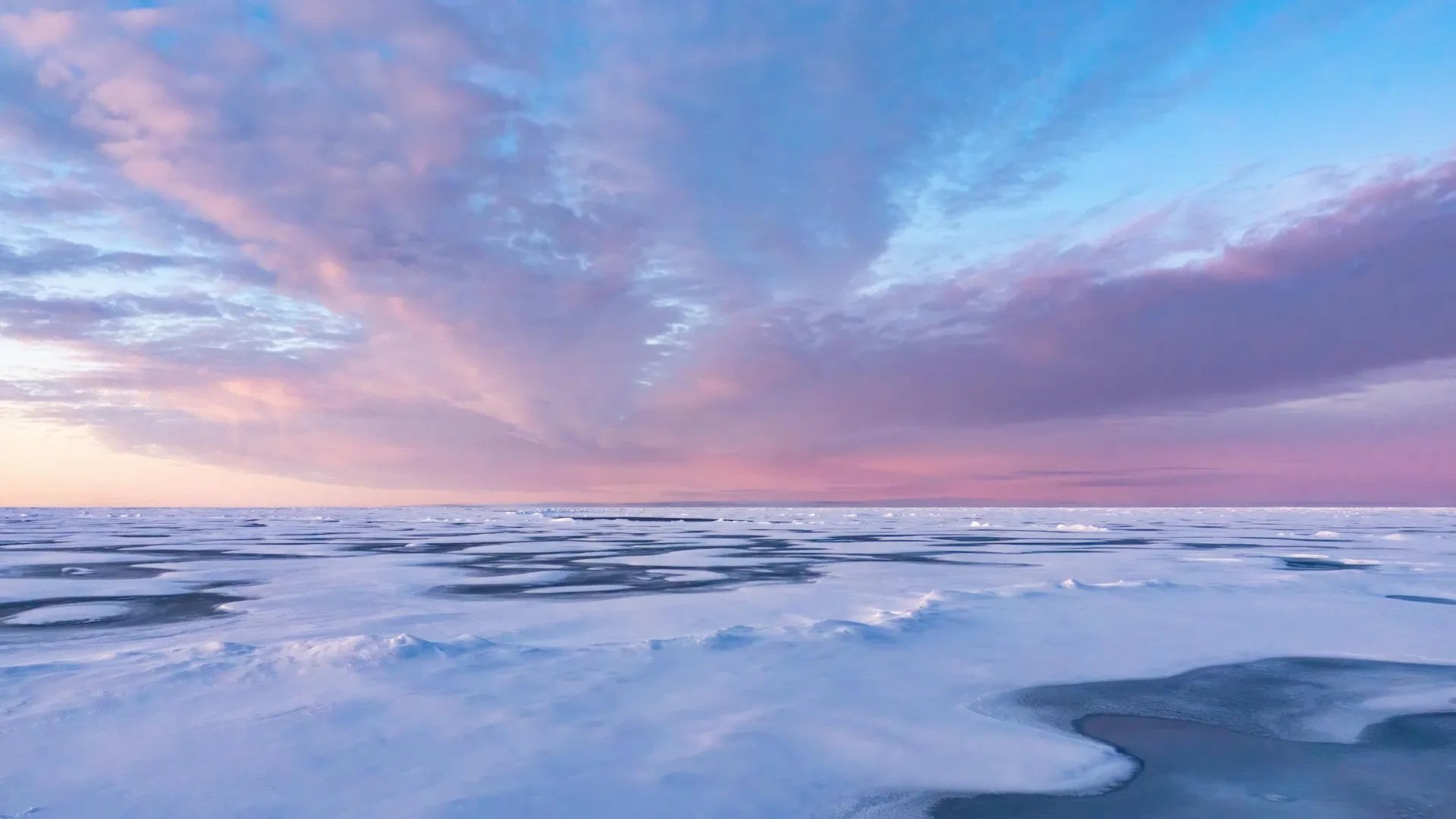
An international team led by the University of Birmingham, with collaborators in China and Spain, reports the first real-world evidence of a powerful particle-forming process where Arctic sea ice meets open ocean. Near the edge of the sea ice, researchers observed the number of particles capable of forming cloud droplets increase fiftyfold within a single day. The phenomenon appeared on more than 80% of sunny days, indicating the process is common in this part of the Arctic. The findings were published August 5 in Nature Geoscience.
Chemical Pathway
The process involves naturally occurring iodine, sulfur, and organic compounds released into the air at the biologically productive ice edge. Sunlight chemically transforms these compounds, driving the formation of new atmospheric particles. The team also detected a previously unknown class of atmospheric compounds called iodine-containing oxygenated organic molecules (I-OOMs). These compounds help small particles grow into larger particles that can seed clouds. Dr. James Brean of the University of Birmingham said the molecules imply important new pathways for iodine chemistry.
Field Evidence
Scientists collected measurements during an expedition aboard the Royal Research Ship Discovery around Greenland and the Davis Strait in spring and summer 2022. The research was supported by the Natural Environment Research Council (NERC). As Arctic sea ice melts, the biologically productive ice edge expands, increasing the area where particle formation can occur. The growing area of melting ice means the process exerts increasing influence on sunlight reflection and regional climate change.
2 sources
Time · lag behind first