
Inouye Telescope captures Kelvin-Helmholtz vortices on Sun’s surface
This digest was compiled by AI from multiple sources — links to the originals are below.
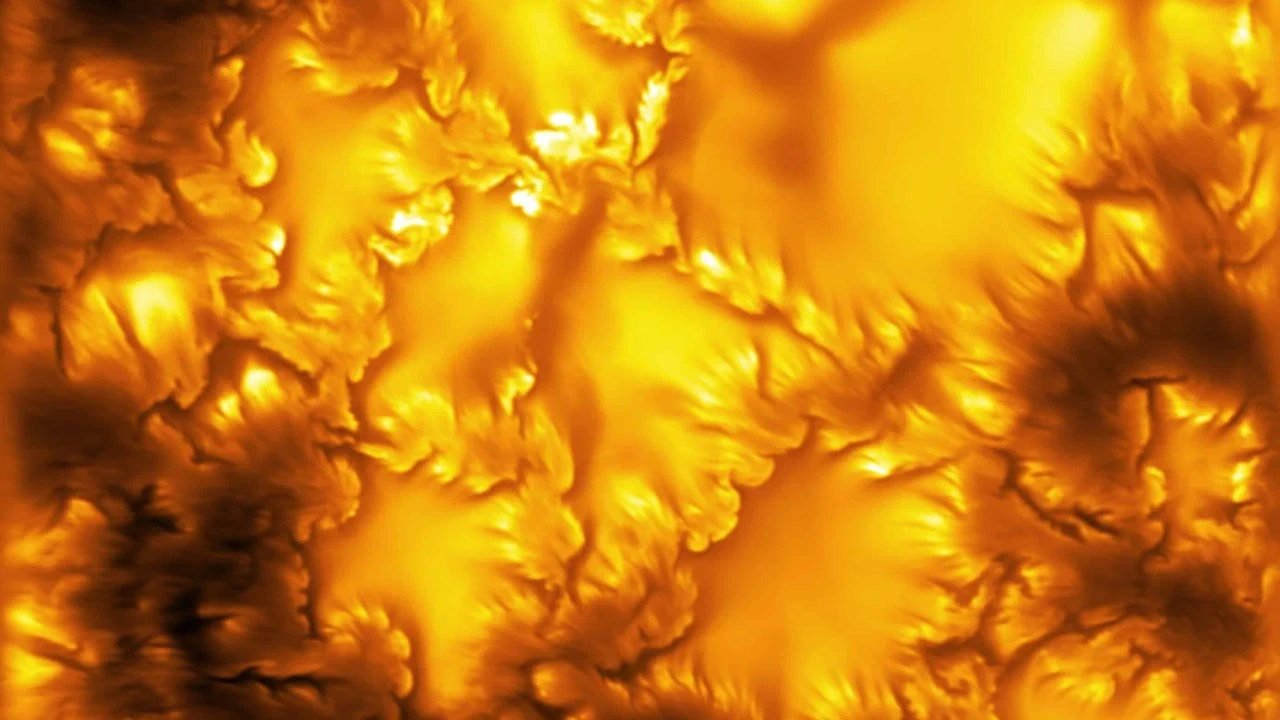
The Inouye Solar Telescope has obtained the first detailed images of Kelvin-Helmholtz instability in the Sun’s photosphere, confirming a phenomenon described by physicists over 150 years ago. The discovery, published in Nature and announced by the National Solar Observatory, reveals swirling vortex patterns that may drive the transport of magnetic energy. It marks a major step in understanding solar plasma dynamics even as the precise mechanisms behind coronal heating remain unresolved.
First Imaging
The Inouye Solar Telescope, operated by the National Solar Observatory on Haleakalā, Maui, captured the swirling patterns in the Sun’s photosphere using advanced adaptive optics. An international research team identified the signature of Kelvin-Helmholtz instability — small, twisting vortex-like features — and published the results in Nature on August 7, 2026. Deputy Director David Boboltz called the observation “an important step forward in our understanding of solar and stellar plasma dynamics.” The images provide the first visual confirmation of a phenomenon theoretically predicted by Lord Kelvin and Hermann von Helmholtz around 1870.
Kelvin-Helmholtz Instability
Kelvin-Helmholtz instability occurs when two fluids of different velocities shear against one another, creating wave-like or spiral vortices at their boundary. It has been observed on Earth in cloud formations, ocean waves, and even in the atmospheres of Jupiter and Saturn. On the Sun, the instability appears to arise where plasma flows of varying speeds meet, forming persistent whirlpools in regions of strong magnetic field. The new observations suggest these vortices are ubiquitous across the solar surface, potentially acting as a continuous engine that twists magnetic field lines.
Coronal Heating Mystery
Senior scientist Friedrich Wöger of the National Solar Observatory emphasized that the discovery may help resolve why the Sun’s outer atmosphere, the corona, is hundreds of times hotter than its surface. The vortices could facilitate the buildup and release of magnetic energy that powers solar flares and eruptions. Such activity affects space weather, posing risks to satellites, power grids, and communication systems on Earth. Researchers hypothesize that Kelvin-Helmholtz instability plays a central role in channeling energy from the photosphere into the corona, though direct causal links require further study.
2 sources
Time · lag behind first