
Scientists obtain clearest-ever images of Sun's surface
This digest was compiled by AI from multiple sources — links to the originals are below.
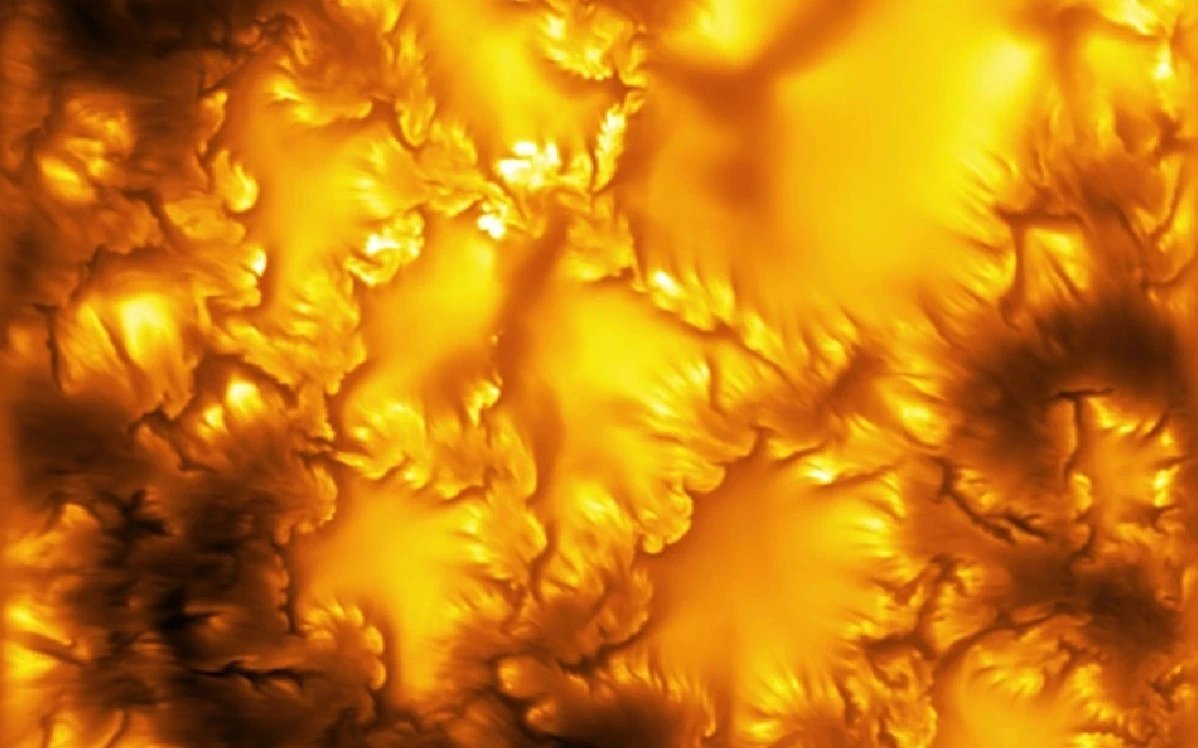
An international team of researchers has obtained the highest-resolution images of the Sun's surface to date. The images, captured by the Daniel K. Inouye Solar Telescope in Hawaii, reveal feather-like plasma structures that scientists compare to Van Gogh's Starry Night. The findings were published in Nature.
Unprecedented Resolution
The Daniel K. Inouye Solar Telescope on Maui, Hawaii, operated by the U.S. National Science Foundation, originally captured the images as part of a commissioning test. Upon analysis, scientists realized the data contained the highest-resolution view of the Sun's bright outer shell ever achieved. The feather-like structures were an unexpected find.
Plasma Ripples
The images show ripples formed by streams of magnetized plasma moving at different speeds, analogous to wind generating waves on water. Physicist Ruizhu Chen of Stanford University, who was not involved in the study, likened the patterns to the swirling sky in Vincent van Gogh’s “Starry Night.” Co-author Friedrich Wöger of the National Solar Observatory noted such detailed observations of this process are unprecedented.
Coronal Mass Ejections
Understanding solar surface dynamics is key to predicting coronal mass ejections, plasma bursts that can trigger geomagnetic storms on Earth, disrupting GPS and satellite communications while generating bright auroras. On July 27, a separate M1.0-class solar flare lasted 16 minutes, underscoring the Sun’s active behavior. The Nature study’s insights into plasma flows may lead to more accurate space weather forecasts.
3 sources
Time · lag behind first