D-Wave develops two-qubit gate that flags its errors as photon losses
This digest was compiled by AI from multiple sources — links to the originals are below.
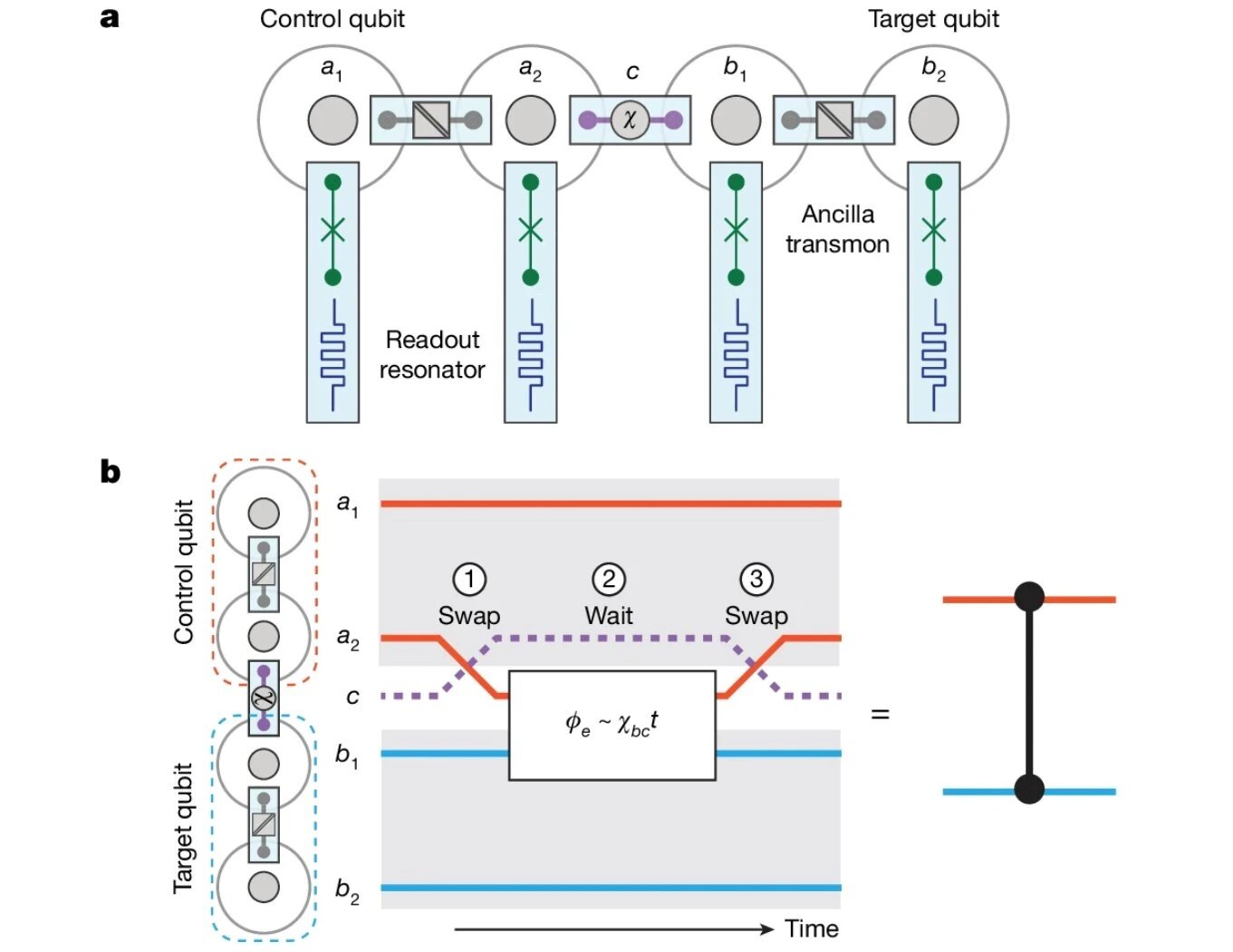
D-Wave Quantum Inc. scientists have developed a two-qubit entangling gate that automatically flags its most common errors as detectable photon losses, according to a paper published in Nature. The gate operates in just 500 nanoseconds and preserves error-detection, ensuring most errors are flagged rather than becoming hidden glitches, even as typical quantum error correction demands large overheads of extra qubits.
The Gate Mechanism
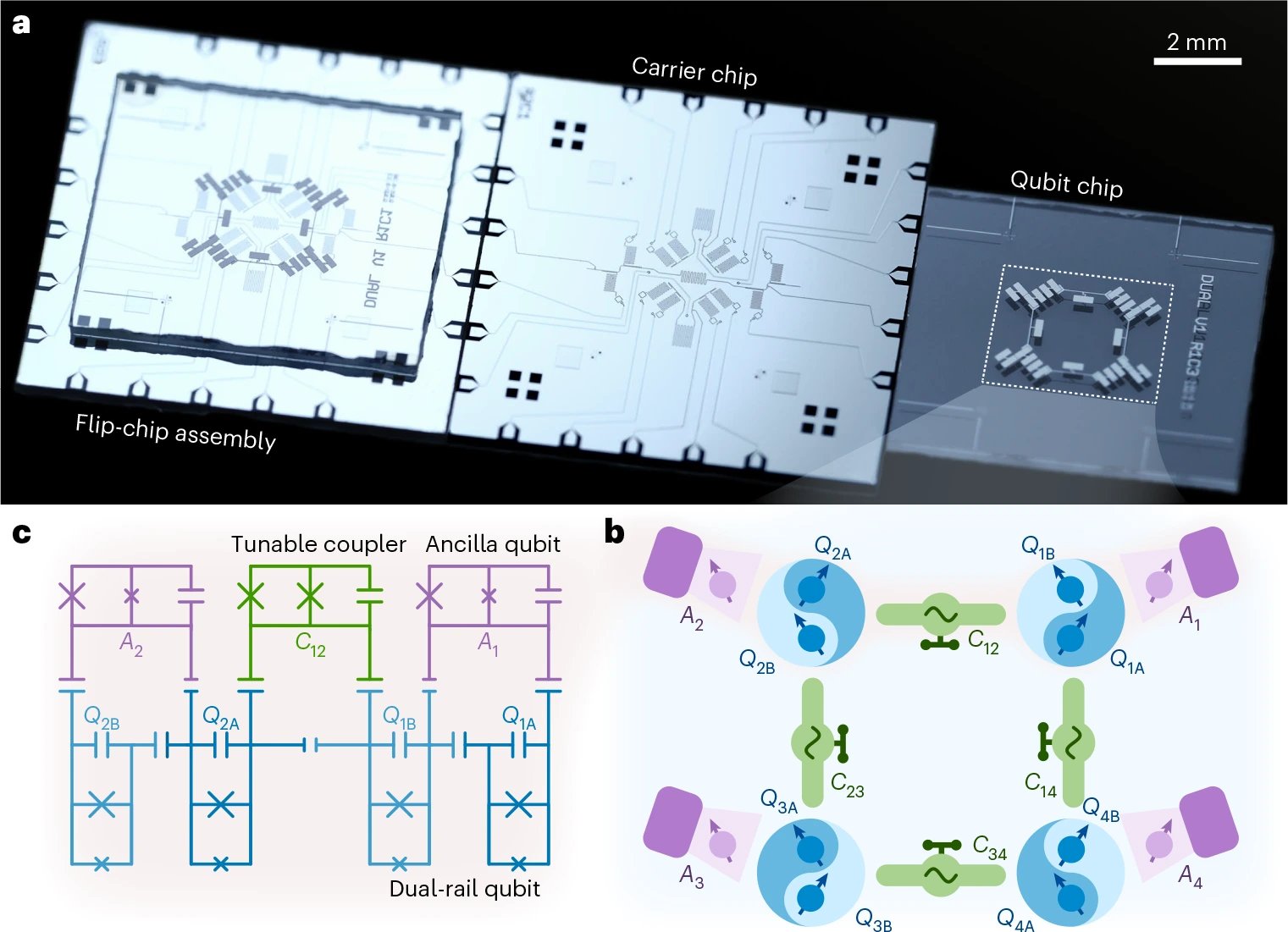
The hardware splits each qubit across two superconducting microwave cavities. To entangle them, a photon is briefly shifted into a central bridge, allowing interaction, then shifted back. This ultrafast controlled-Z gate completes in 500 nanoseconds. Critically, the process preserves the built-in error-detection of D-Wave's qubits, which previous designs often broke, turning flagged errors into hidden glitches.
Error Rates and Hierarchy
The team tested the gate by building an entangled two-qubit state and running random operations. About 0.5% of operations produced detectable photon losses that were automatically flagged. Remaining hidden errors were below 0.1% per gate, and bit-flip errors—disastrous state flips—occurred roughly once per million operations. The authors confirm the error hierarchy is largely preserved, meaning most errors remain flagged.
Scaling Potential
Computer simulations show that because errors stay flagged rather than hidden, larger quantum computers using these gates can suppress errors more effectively as they grow. While the control qubit experiences slightly more stress, the overall advantage in error mitigation is substantial. This approach provides a faster route to error-corrected systems that rapidly suppress errors at scale.
What's Next
The next step for D-Wave is to integrate this gate into larger qubit arrays and demonstrate error suppression in multi-qubit systems. It remains unclear how the gate's performance will hold under the increased complexity of full-scale quantum processors and whether industrial manufacturing can replicate these results consistently.
1 source
D-Wave develops two-qubit gate that flags its errors as photon losses