Dual-rail qubit entangling gate preserves error hierarchy, shows 0.5% erasure rate
This digest was compiled by AI from multiple sources — links to the originals are below.
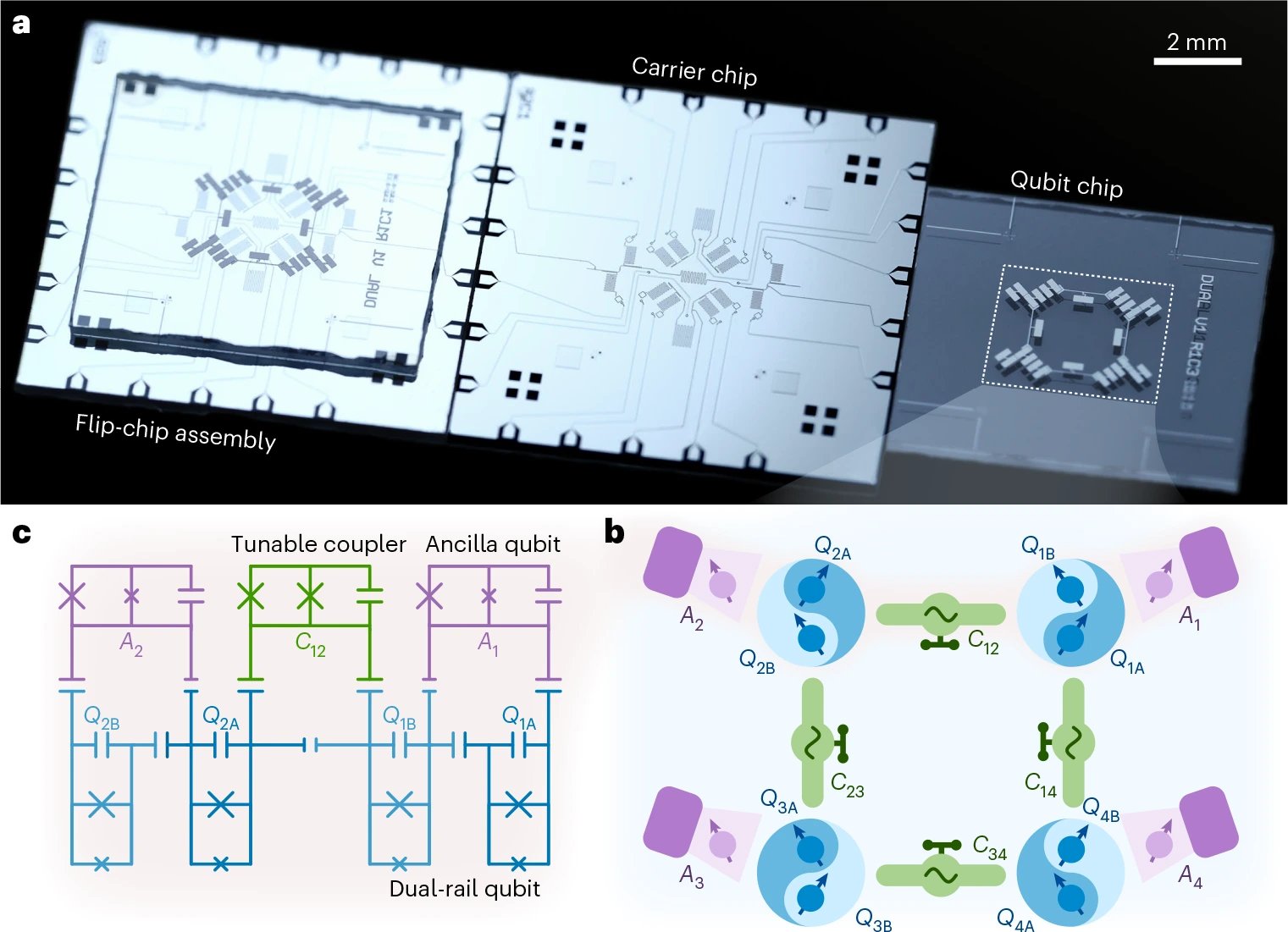
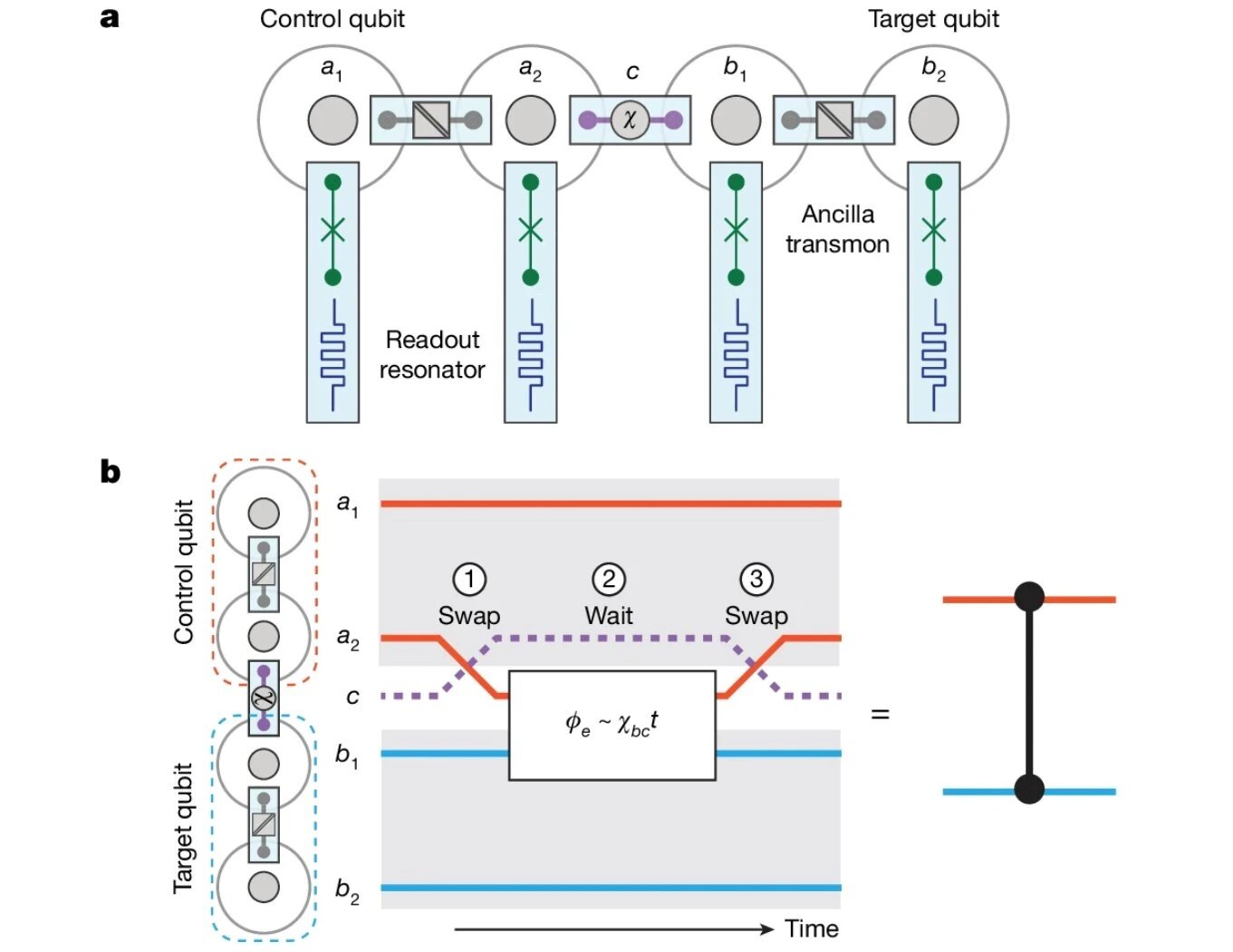
Researchers have demonstrated a two-qubit entangling gate for dual-rail cavity qubits, a type of erasure qubit. The gate operates in about 500 nanoseconds, shows an erasure rate of approximately 0.5% per gate, and keeps residual Pauli errors below 0.1%. The result preserves the error hierarchy crucial for quantum error correction.
Gate Performance
The new entangling gate operates on dual-rail qubits encoded in superconducting microwave cavities. It completes in approximately 500 nanoseconds, with an erasure rate of just 0.5% per gate. Residual Pauli errors remain below 0.1%, and bit-flip errors are suppressed to the 10⁻⁶ level. Dephasing dominates the remaining error budget.
Error Hierarchy Preservation
The gate largely preserves the error hierarchy characteristic of erasure qubits. Dominant errors are detectable erasures rather than stochastic Pauli errors, allowing quantum error correction schemes to correct them more effectively. Surface code simulations confirm that this preservation enables higher error thresholds and improved scaling with code distance.
Implications for Quantum Computing
Erasure qubits with structured noise can achieve substantially higher thresholds for error correction. The demonstration that the error hierarchy survives a two-qubit gate marks a critical step toward fault-tolerant quantum computing. The gate's low error rates and strong bias toward dephasing simplify the design of surface code circuits.
What's Next
The researchers plan to integrate these gates into larger surface code circuits to test error suppression at scale. It remains unclear whether the error hierarchy can be maintained in larger qubit arrays and over thousands of operations.
1 source
Dual-rail qubit entangling gate preserves error hierarchy, shows 0.5% erasure rate