
Inner core gravity may drive decades-long shifts in Earth's rotation
This digest was compiled by AI from multiple sources — links to the originals are below.
A new study in Nature proposes that gravitational pull from Earth's inner core, competing with core-mantle interactions, drives small accelerations and decelerations in the planet's spin over decades. Researchers reconstructed the effect between 1964 and 2019 using seismic estimates and models of outer core flows. The model closely reproduced the timing and magnitude of observed gradual changes in day length.
Key Facts
- The study was published this week in Nature.
- The outer core is a 1,400-mile-thick layer of ultra-hot liquid metal beneath the mantle.
- The model reconstructed the interaction's influence on Earth's spin between 1964 and 2019.
- Mathieu Dumberry, a geophysicist at the University of Alberta, was involved in the study.
The Core-Mantle Mechanism
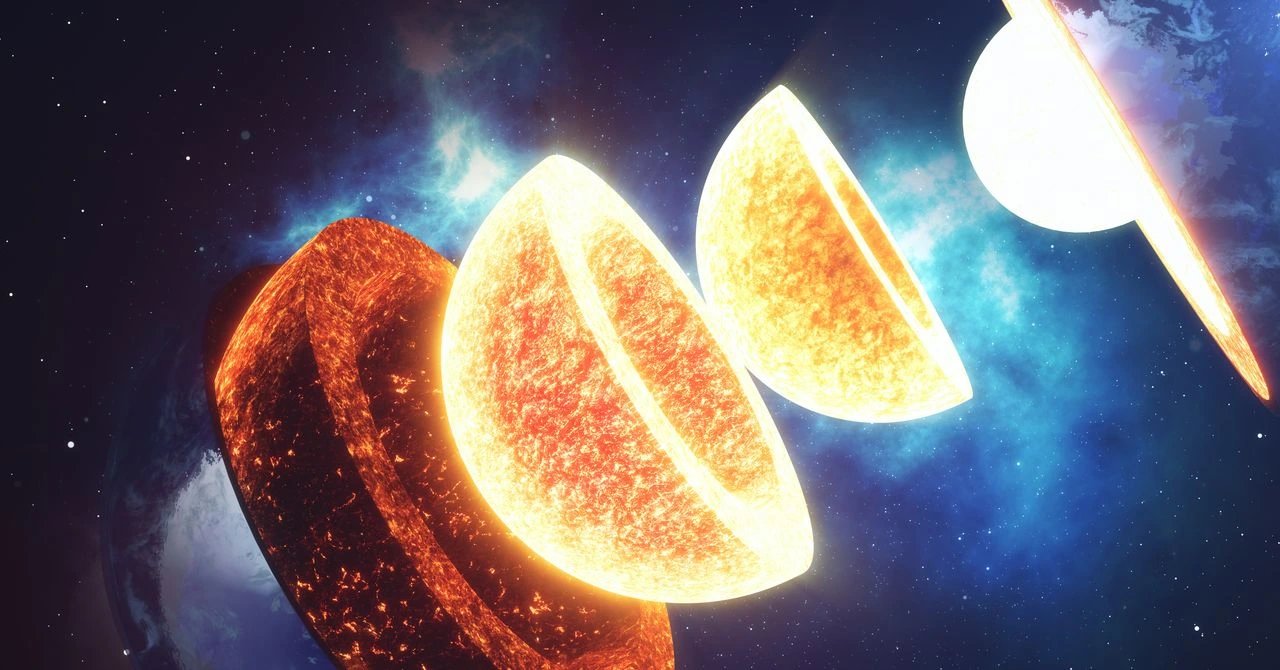
The inner core does not rotate at the same rate as the rest of the planet, causing it to become slightly misaligned with mass irregularities in the mantle. Gravity tries to pull the layers of the inner Earth back into a more harmonic position, which influences the rotation of the planet's surface. The researchers propose that the gravity of the inner core pushes rotation in one direction, while other interactions between the core and the mantle oppose it. The result of this competition, accumulated over decades, would be small accelerations and decelerations in the planet's spin.
Model Validation
The authors reconstructed how this interaction influenced Earth's spin between 1964 and 2019 using seismic estimates of the inner core's rotation and models of liquid metal flows in the outer core. Their gravitational model closely reproduced both the timing and the magnitude of real gradual changes that had been observed over the decades. Other yet-unknown factors are likely involved, but this proposal unravels a major component of our variable days. The model did not account for all the competing forces involved, but it did not need to in order to produce a compelling result.
1 source
Time · lag behind first