
Earth's solid shell becomes less flattened at poles, study finds
This digest was compiled by AI from multiple sources — links to the originals are below.
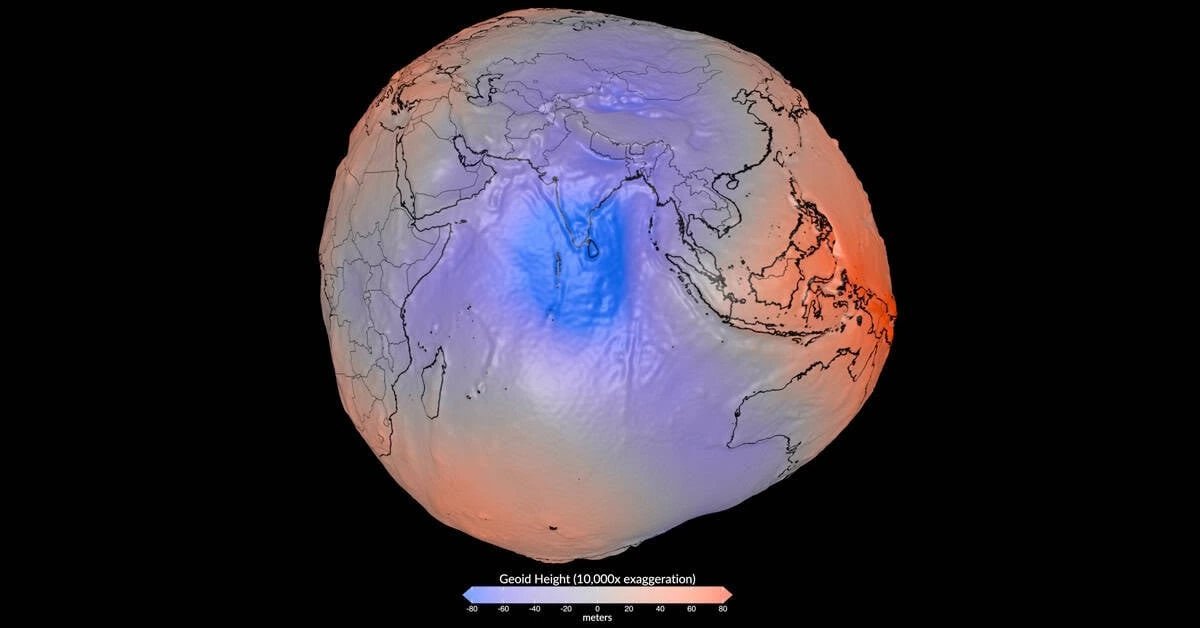
Researchers from Aristotle University of Thessaloniki found that Earth's solid shell is becoming less flattened at the poles, with polar uplift rates nearly doubling from about 0.5 mm per year in the late 1990s to about 1 mm per year by 2015. The study, published in Journal of Geophysical Research: Solid Earth, links the change to ice loss in Greenland and Antarctica and the redistribution of meltwater toward the equator. The gravitational shape of the planet, by contrast, is becoming more flattened.
Key Facts
- Polar uplift rates nearly doubled from about 0.5 mm per year in the late 1990s to about 1 mm per year by 2015, according to GNSS data from 1997–2015.
- The study was published in Journal of Geophysical Research: Solid Earth.
- Researchers from Aristotle University of Thessaloniki conducted the analysis.
- Ice loss in Greenland and Antarctica is identified as a contributing cause of the crustal uplift.
- The gravitational shape of Earth is becoming more flattened as meltwater moves toward lower latitudes.
Polar Uplift Acceleration
Using data from the global GNSS satellite navigation network covering 1997–2015, scientists measured the rate at which Earth's surface rises in polar regions. The uplift rate nearly doubled, from about 0.5 mm per year in the late 1990s to about 1 mm per year by 2015. The researchers attribute the acceleration to the melting of glaciers in Greenland and Antarctica. As ice mass is removed, the crust beneath rebounds upward, while meltwater flowing into oceans adds pressure elsewhere, particularly near the equator.
Gravitational Shape Divergence
While the solid Earth becomes less flattened at the poles, the gravitational shape of the planet is becoming more flattened. The redistribution of water from polar regions toward lower latitudes alters Earth's gravity field. The study notes that these changes are very small and do not directly affect human life.
3 sources
Time · lag behind first