
TU Dortmund physicists synchronize distant time crystals in semiconductor
This digest was compiled by AI from multiple sources — links to the originals are below.
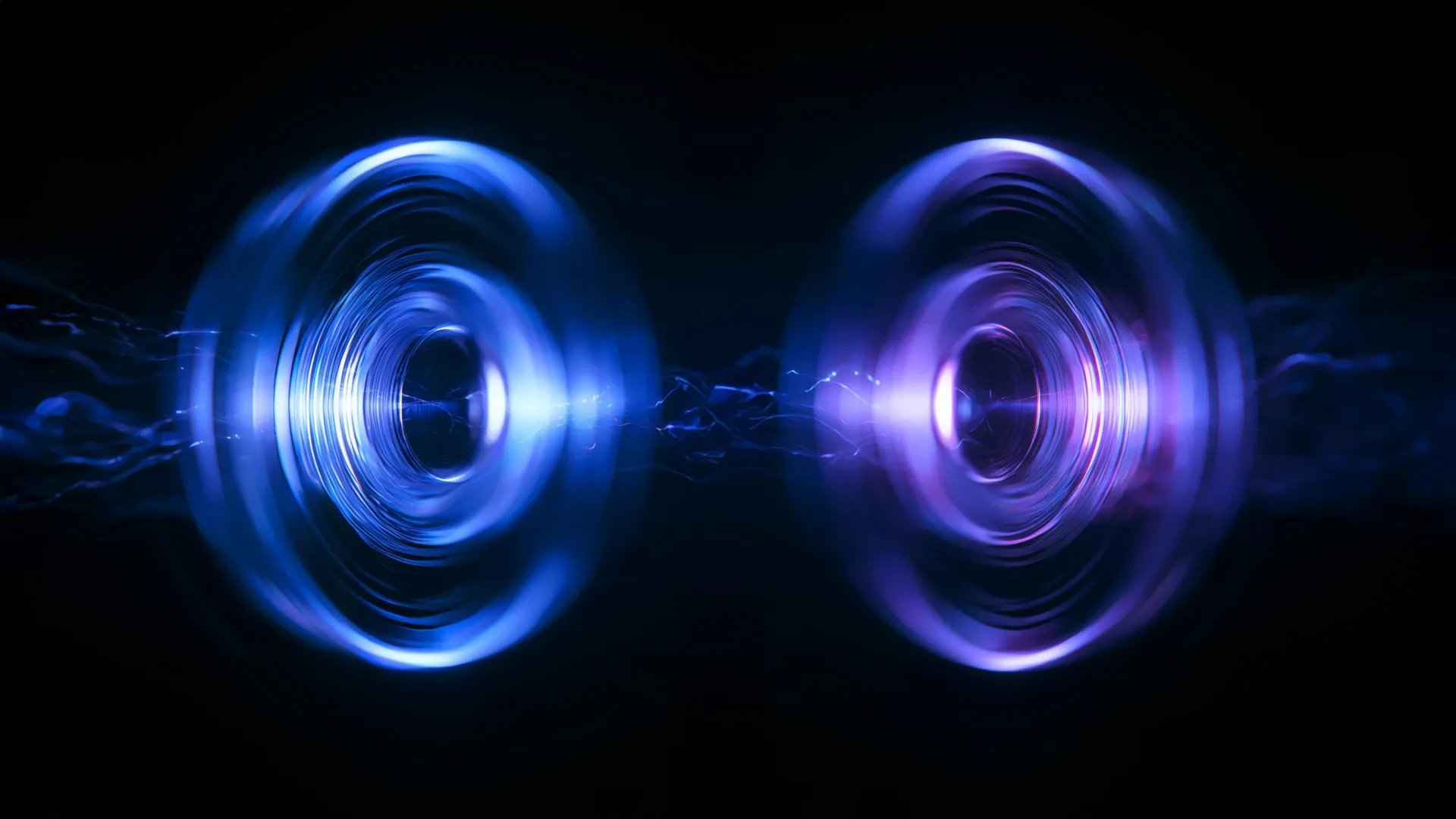
Physicists at TU Dortmund University have synchronized multiple time crystals inside a gallium arsenide semiconductor, with oscillations locking together across distances up to 40 micrometers. The effect, reported in Nature Communications, occurs when a broad laser beam couples separate electron-nuclear spin oscillations through spin-polarized electrons. The synchronization persists even though the crystals are more than one thousand times farther apart than the size of a single oscillator.
Key Facts
- The time crystals formed in a semiconductor made from gallium arsenide with small amounts of indium and silicon.
- At temperatures close to -270 °C, each electron interacts with roughly one million nearby nuclear spins.
- Time crystals located as far as 40 micrometers apart could still synchronize, more than one thousand times greater than the characteristic size of a single oscillator.
- The synchronization effect is reminiscent of Christiaan Huygens' 1665 observation of pendulum clocks gradually synchronizing through a shared support.
- The findings could help lay the groundwork for future networks of controllable spin oscillators and spin-based technologies.
Time Crystal Formation
The time crystals form inside a semiconductor made from gallium arsenide with small amounts of indium and silicon, which create localized electrons within the material. At temperatures close to -270 °C, each electron interacts with roughly one million nearby nuclear spins. To initiate the process, the researchers use a pump laser to align the electron spins, which then transfer their polarization to the surrounding nuclear spins. When a weak magnetic field is applied, the polarization of those nuclear spins begins to rotate, and feedback between the electron spins and nuclear spins keeps the oscillations going. A second laser allows the researchers to monitor how those oscillations develop over time.
Synchronization Mechanism
Different regions of the semiconductor are not perfectly identical at the microscopic level, so time crystals that form in separate areas would normally oscillate at slightly different frequencies. When the researchers illuminate many regions at once with a broad laser beam, the separate oscillations can lock together and begin operating at the same frequency. The effect is reminiscent of an observation made by Christiaan Huygens in 1665 involving two pendulum clocks that gradually synchronized because of weak mechanical interaction transmitted through a shared structure. In the semiconductor, the connection works differently: instead of mechanical vibrations, the time crystals become coupled through the movement of spin-polarized electrons.
Distance and Implications
The team found that time crystals located as far as 40 micrometers apart could still synchronize, a distance more than one thousand times greater than the characteristic size of a single oscillator. Once the separation becomes larger, however, the individual time crystals no longer lock together and instead continue oscillating independently. The findings demonstrate non-local coupling between spatially separated spin systems. They could also help lay the groundwork for future networks of controllable spin oscillators, potentially opening new possibilities for spin-based technologies.
1 source
Time · lag behind first