
Six youth-led uprisings reshape South Asia's political landscape
This digest was compiled by AI from multiple sources — links to the originals are below.
Six anti-establishment uprisings led by young people have transformed South Asia's political landscape over the past five years. The movements, driven by digital literacy and economic discontent, produced sharply different outcomes depending on how each political system responded. Myanmar descended into civil war, while Sri Lanka saw a constitutional transfer of power.
Key Facts
- Six youth-led anti-establishment uprisings have occurred in South Asia over the past five years.
- In Myanmar, the February 2021 military coup sparked mass protests and led to the formation of civilian self-defense forces.
- Sri Lanka's Aragalaya movement in March 2022 forced President Gotabaya Rajapaksa to resign within the constitutional order.
- In Bangladesh, July 2024 student protests against civil service quotas led to the collapse of Sheikh Hasina's government and the formation of an interim government.
- Nepal elected a 35-year-old prime minister in September 2025 after youth protests against the oligarchic political class.
Myanmar's Civil War
The military's February 2021 overthrow of the democratically elected government triggered mass protests. The new regime brutally suppressed the protests, leaving young people no choice but to form civilian self-defense forces alongside ethnic armed organizations. The result was a protracted civil war.
Sri Lanka's Constitutional Transition
The Aragalaya movement emerged in March 2022 amid economic collapse, with empty fuel stations, prolonged power cuts, and state insolvency undermining the legitimacy of the Rajapaksa dynasty. Protests spread across the island, and demonstrators eventually occupied the presidential palace. Unlike Myanmar, Sri Lanka did not experience a surge in violence or a protracted armed conflict; President Gotabaya Rajapaksa resigned within the constitutional order.
Divergent Regime Responses
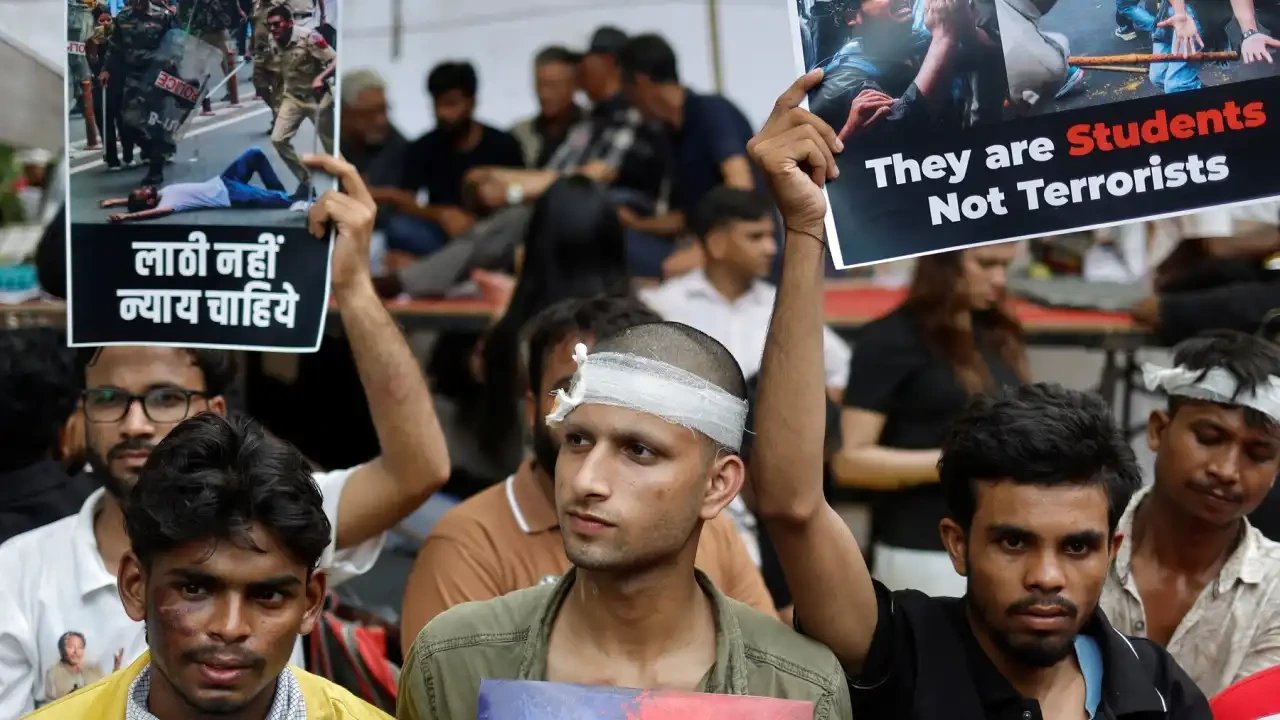
Pakistan's May 2023 unrest following the arrest of former Prime Minister Imran Khan was met with troop deployment, internet shutdowns, and the dismantling of opposition party structures, preserving the hybrid regime. In Bangladesh, July 2024 student protests against civil service quotas led Prime Minister Sheikh Hasina to deploy troops for a curfew, but the military refused orders, causing the government to collapse and an interim government to form. Nepal's September 2025 protests against the oligarchic political class, fueled by a ban on major social media platforms that pushed youth to use VPNs, resulted in the election of a 35-year-old prime minister without destroying the parliamentary system. India's summer 2025 student protests over leaked exam questions led the government to accept the education minister's resignation and propose reforms to channel dissent into parliamentary processes.
1 source
Time · lag behind first