
Arctic sea ice motion explained by collisions between floes, study finds
This digest was compiled by AI from multiple sources — links to the originals are below.
A new study led by UC Riverside researchers finds that collisions between individual ice floes explain puzzling patterns in Arctic sea ice motion that wind alone cannot account for. The model, published in Physical Review Letters, reproduced observed spreading rates, speed ranges, and motion changes over hours to days using data from the Fram Strait. The findings could improve forecasts of sea ice movement as the Arctic warms.
Key Facts
- The study was published in Physical Review Letters and led by Bryan Shaddy, formerly of UC Riverside and now at the University of Southern California, along with UCR researchers Alex Greaney and Bhargav Rallabandi.
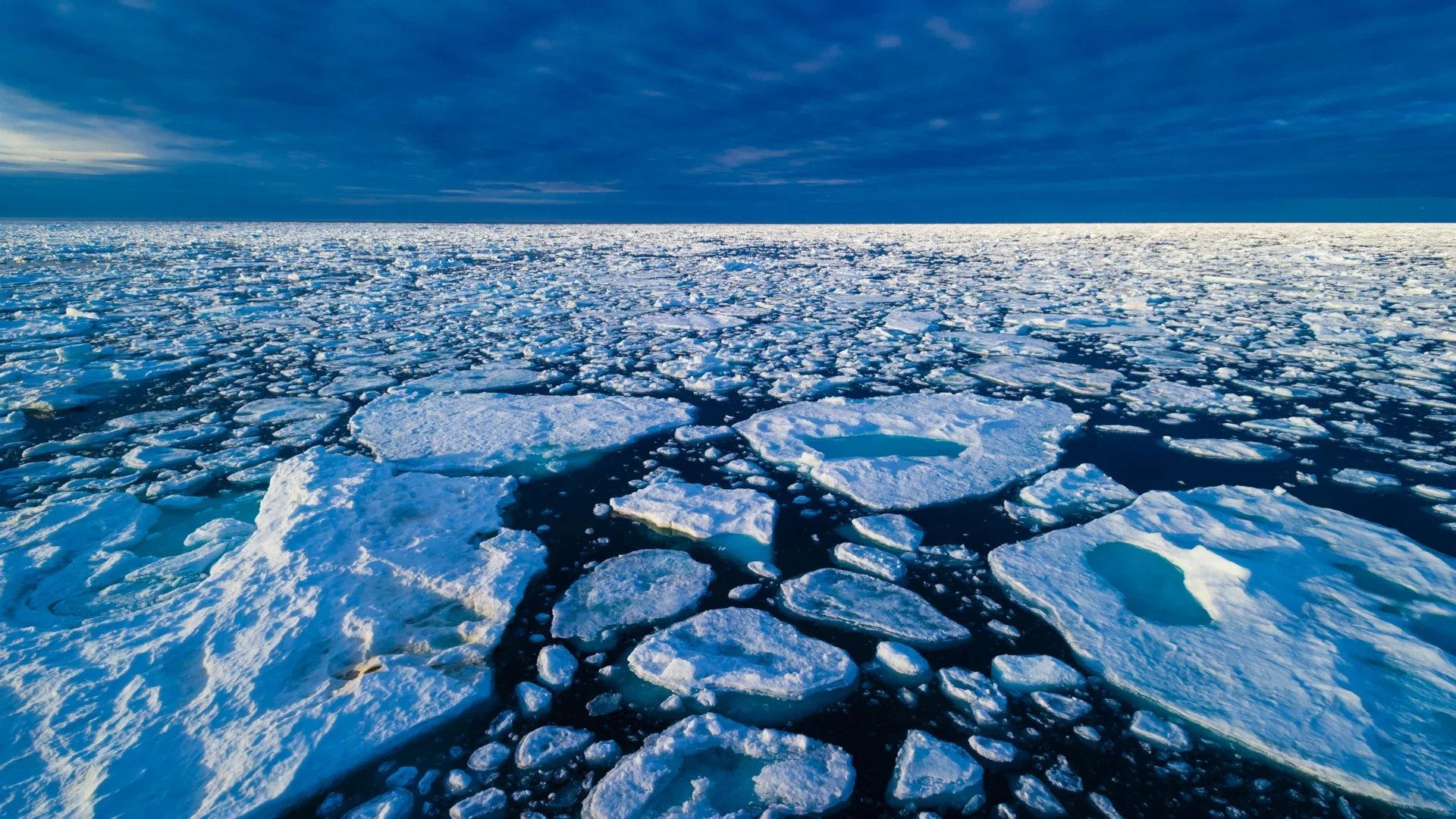
- Arctic sea ice consists of separate floes ranging from several meters to several kilometers across, which drift and collide under wind and ocean forces.
- The researchers' computer model, which treats ice floes like grains in a silo, successfully reproduced three previously unexplained observations: spreading rate, range of floe speeds, and motion changes over hours to days.
- The model was validated using real measurements from the Fram Strait, a passage between Greenland and Svalbard through which large amounts of Arctic sea ice move toward the Atlantic Ocean.
Collision Mechanism
Wind is a primary driver of sea ice motion, but observations have long shown that ice often travels at speeds and spreads at rates that simple wind-based models cannot predict. The new research suggests that repeated collisions between neighboring floes transfer energy and explain these puzzling patterns. Bhargav Rallabandi, associate professor of mechanical engineering at UC Riverside, stated that when many ice floes are packed together with wind, they bump into each other and transfer energy to neighbors, and that this is the only ingredient needed to explain the observations. In dense ice fields, individual floes hit nearby pieces much more often than the wind itself changes, making collisions a dominant factor.
Model Validation
The researchers created a computer model that treats floating ice like grains moving through a silo, but with the grains floating on water and pushed by turbulent winds. The simulation includes ocean drag and repeated collisions among floes. Using measured local wind and ice conditions from the Fram Strait, along with one additional parameter that had little effect on the outcome, the model reproduced the observed spreading rate, range of floe speeds, and motion changes over periods from hours to days. The Fram Strait is a passage between Greenland and the Norwegian archipelago of Svalbard through which large amounts of Arctic sea ice move toward the Atlantic Ocean.
2 sources
Time · lag behind first