
WMO reports global freshwater reserves and glaciers continued shrinking in 2025
This digest was compiled by AI from multiple sources — links to the originals are below.
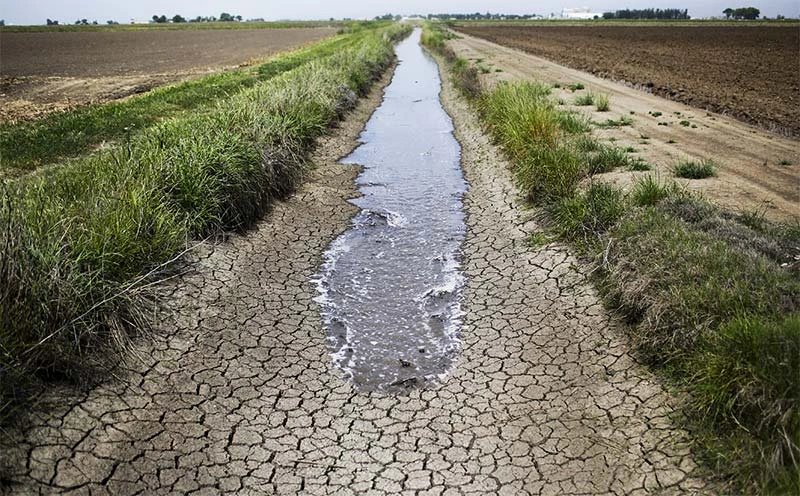
The World Meteorological Organization reported that global freshwater reserves on land continued to decline in 2025, with glaciers losing mass for a fourth consecutive year. River flows worldwide experienced one of the driest periods in over three decades, with below-normal conditions across 36% of river basins. The report warns that the depletion of slowly changing water stores, including groundwater and glaciers, poses growing risks to water security.
Key Facts
- In 2025, river flow was below normal across 36% of the world's river basins, marking one of the driest years for river discharge in 35 years.
- Glaciers lost a combined 1,400 gigatons of water mass between 2023 and 2025, equivalent to about 560 million Olympic swimming pools.
- For the seventh consecutive year, the share of river basins with normal conditions remained below the 1991–2020 average of 46%, ranging from 34% to 38%.
- In 2025, terrestrial water storage was below normal in parts of Eastern Europe, Central Asia, and some regions of the Russian Federation.
Declining Freshwater Reserves
The WMO report states that terrestrial water storage, which includes groundwater, lakes, rivers, soil moisture, vegetation, ice, and snow, has been declining since the mid-2010s. WMO Secretary-General Celeste Saulo compared these slowly changing reserves to a 'planetary savings account' that helps societies withstand dry years and reduces the risk of water crises from individual droughts. Since 2014–2016, there has been a persistent downward trend in land water storage, with the water balance shifting further toward deficit in 2025 compared to 2024. Groundwater showed a similar pattern, with the balance moving further into deficit relative to the previous year.
River Flow Anomalies
River discharge in 2025 was below normal on 36% of the planet's river basin area, making it one of the driest years for river flow in 35 years. The proportion of river basins with normal conditions remained between 34% and 38% for the seventh year in a row, well below the 1991–2020 average of 46%. The report notes that precipitation, river flow, and soil moisture respond to weather conditions within days or weeks, while groundwater, glaciers, and seasonal snow cover change over seasons, decades, or longer.
Glacier Mass Loss
2025 was the fourth consecutive year of large-scale glacier mass loss in all major glaciated regions of the Earth. Between 2023 and 2025, glaciers lost mass every year, with a combined global loss of 1,400 gigatons of water. This volume is roughly equivalent to the water needed to fill 560 million Olympic swimming pools, or about one-third of annual global freshwater withdrawals. The WMO warns that continued glacier loss creates short-term risks, including flooding, and long-term threats to water security.
4 sources
Time · lag behind first