
Himalayan ice-rock avalanche exposes rising flood risk from thawing permafrost
This digest was compiled by AI from multiple sources — links to the originals are below.
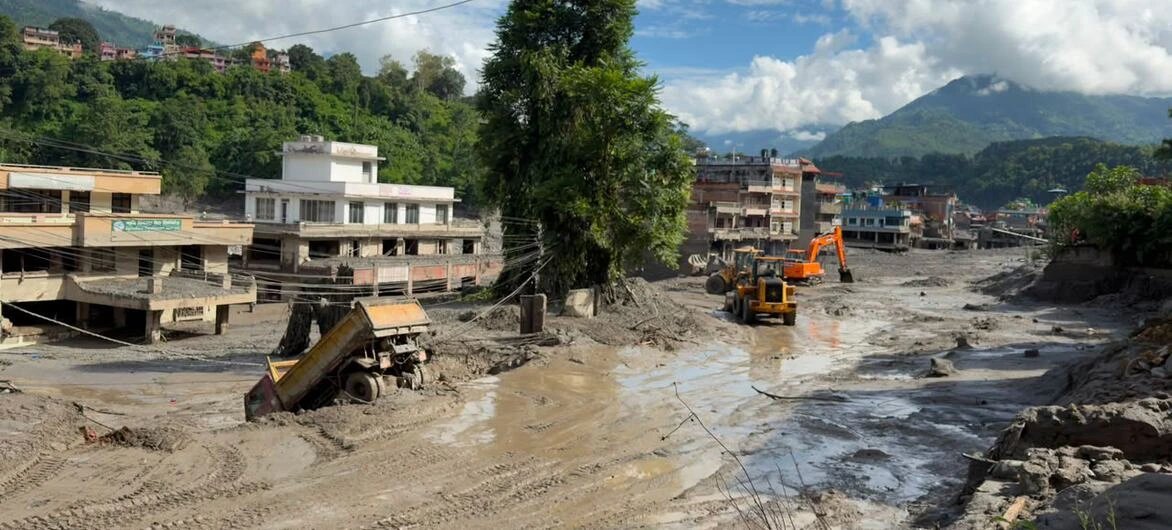
A massive ice-rock avalanche struck the Himalayas on Wednesday at 8:37 a.m. local time, sending debris 1,200 meters down into the Lhende Khola tributary of the Bhote Koshi River. The resulting flood destroyed settlements along a key Nepal-China trade route and killed more than 500 people in Nepal and Tibet by Friday. Scientists say the event, which registered a seismic pulse equivalent to a magnitude 5.2 earthquake, reflects a broader pattern of destabilizing high-mountain environments as glaciers and permafrost thaw.
Key Facts
- The avalanche occurred at 8:37 a.m. local time on Wednesday and traveled about 1,200 meters vertically into the Lhende Khola tributary of the Bhote Koshi River.
- Seismic instruments registered a pulse equivalent to a magnitude 5.2 earthquake.
- By Friday, the death toll in Nepal and Tibet exceeded 500, with more than 1,500 people missing, including hundreds of foreign tourists.
- At one hydrological station, the water level rose by nine meters in just half an hour.
- The frequency of glacial lake outburst floods has increased roughly fivefold since 1950, from seven to 34 events per decade, according to a UN University dataset covering 493 cases through 2024.
The Avalanche
At 8:37 a.m. local time on Wednesday, a massive ice-rock avalanche struck the Himalayas when the bedrock beneath a glacier lost stability. The mass of ice and rock plunged about 1,200 meters vertically into the Lhende Khola, a tributary of the Bhote Koshi River. Seismic instruments recorded a pulse equivalent to a magnitude 5.2 earthquake. The avalanche sent a mixture of water, sediment, and boulders into river channels, destroying several settlements along a major trade route between Nepal and China. At one hydrological station, the water level rose by nine meters in just half an hour.
Casualties and Damage
By Friday, the death toll in Nepal and Tibet exceeded 500 people. More than 1,500 people remain missing, including hundreds of foreign tourists. The family of climate scientist Deepesh Chapagain, who grew up in eastern Nepal, was not harmed. Chapagain, who works at the UN University branch in Bonn, said the threats facing the region are noticeably different from those of his childhood.
Scientific Analysis
Analysis of satellite imagery shows that bedrock beneath the glacier lost stability, triggering the ice and rock slide into the Lhende Khola. The mechanism differs from glacial lake outburst floods, which Chapagain studies under the UN University's mountain research program. Preliminary assessment suggests no intermediate lake formed; the rock and ice mass collapsed all at once. Researchers are also checking whether debris briefly dammed the river and created a temporary barrier that then burst under water pressure. According to the program's dataset covering 493 cases through 2024, the frequency of glacial lake outburst floods has increased roughly fivefold since 1950, from seven to 34 events per decade.
1 source
Time · lag behind first