
240-million-year-old Tanzanian fossil species reshapes dinosaur timeline
This digest was compiled by AI from multiple sources — links to the originals are below.
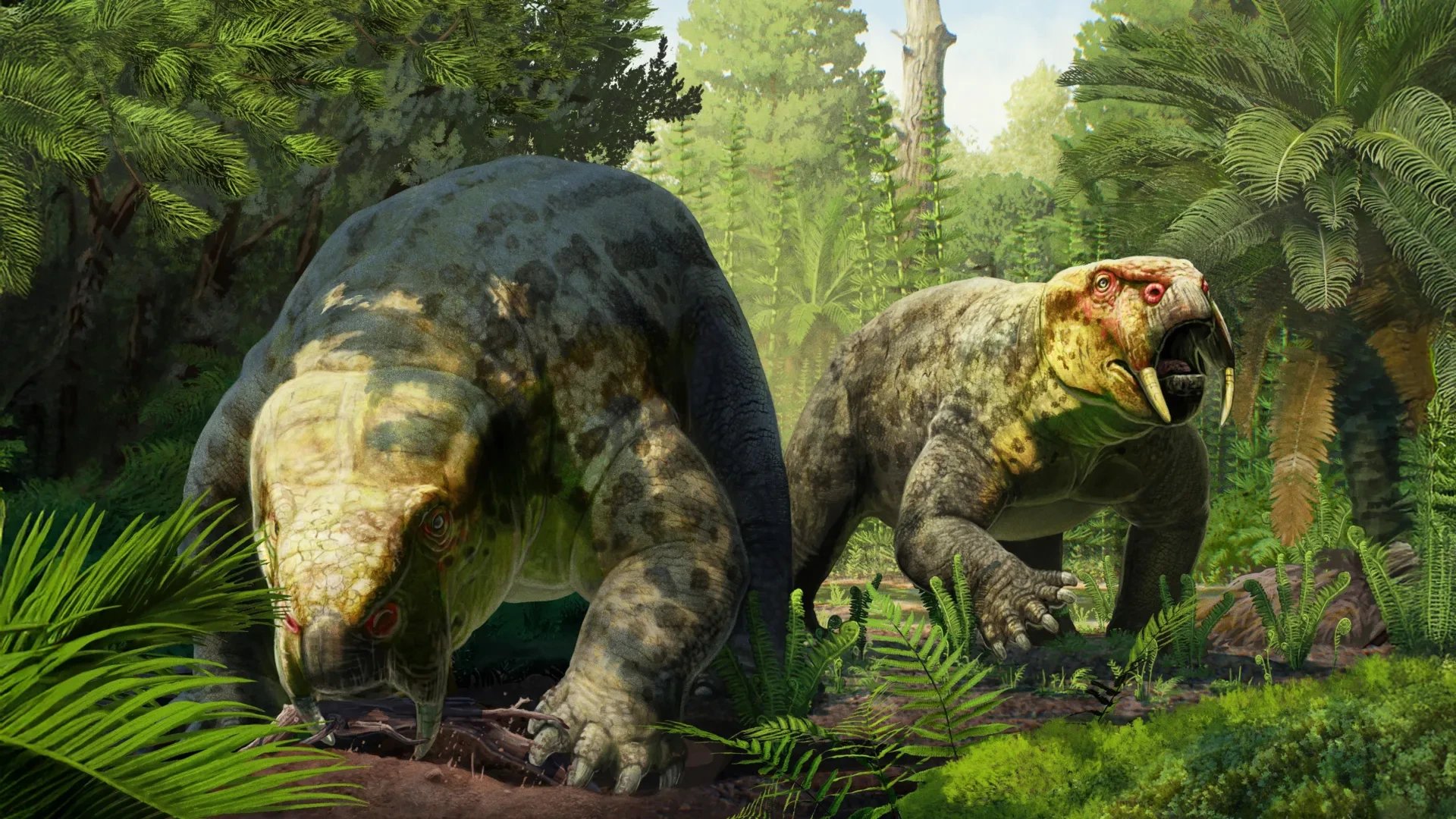
Researchers identified a new dicynodont species, Dinodontosaurus isiyavamanda, from 240-million-year-old Tanzanian fossils. The discovery, published September 15 in the Journal of Vertebrate Palaeontology, suggests some Tanzanian fossils once considered candidates for the earliest dinosaurs may be younger than previously thought.
Key Facts
- The new species Dinodontosaurus isiyavamanda lived about 240 million years ago in what is now Tanzania during the Triassic period.
- The findings were published September 15 in the Journal of Vertebrate Palaeontology.
- The genus Dinodontosaurus was previously confirmed only in South America.
- The fossils were collected in 1963 by a British expedition and later housed at the Natural History Museum, London.
- The species name isiyavamanda refers to the land of the Wamanda people in Tanzania.
Fossil Discovery
An international research team led by the University of Bristol identified the new species from an associated skeleton and a fragmentary skull. The skeleton was collected in 1963 by a British expedition in Tanzania and later placed in the Natural History Museum, London. The specimen remained partially examined until researchers compared it with a more recently discovered skull. Anatomical comparison showed both fossils belonged to the genus Dinodontosaurus, previously known only from South America. The Tanzanian fossils represent a species new to science, named Dinodontosaurus isiyavamanda.
Dating Implications
The rocks containing Dinodontosaurus isiyavamanda are the same deposits that have produced fossils proposed as among the oldest possible dinosaurs. Scientists had previously correlated those Tanzanian rocks with Middle Triassic deposits in South Africa based on shared fossil genera. The presence of Dinodontosaurus in both Tanzania and South America provides a new way to correlate the fossil-bearing rock sequences. The discovery indicates the Tanzanian deposits are likely equivalent in age to those in South America. This suggests some Tanzanian fossils once considered candidates for the earliest dinosaurs may be younger than previously thought.
1 source
Time · lag behind first