
Oklahoma paleontologists identify 450-million-year-old crinoid fossil with preserved soft tissue
This digest was compiled by AI from multiple sources — links to the originals are below.
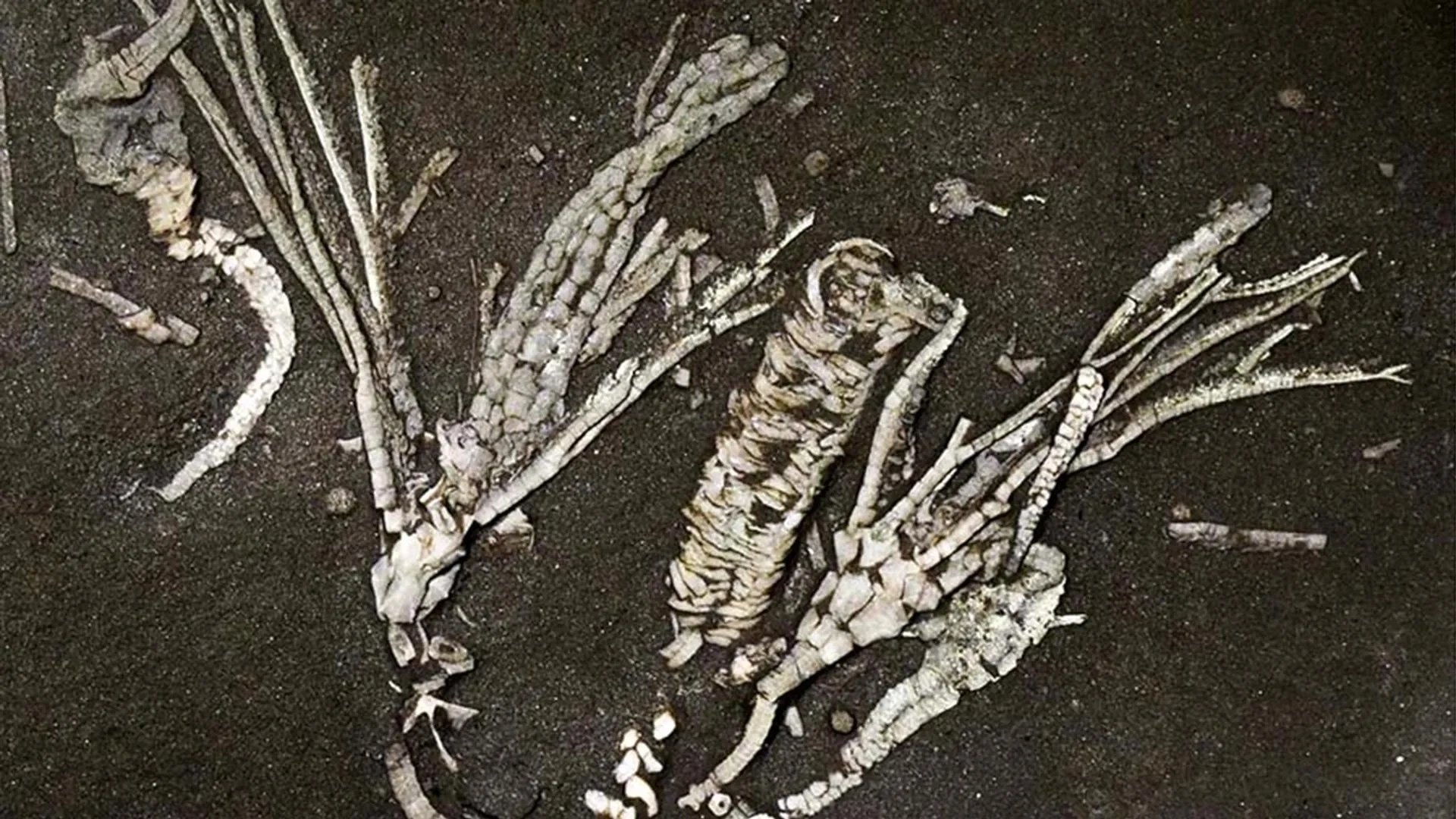
University of Oklahoma paleontologists describe a crinoid fossil from more than 450 million years ago that preserves tube feet, the second known crinoid with soft tissue. The specimen, Dendrocrinus simcoensis, is the oldest soft-tissue crinoid found and over 200 million years older than the oldest dinosaur.
Key Facts
- The fossil belongs to Dendrocrinus simcoensis and preserves tube feet, delicate structures that almost never survive fossilization.
- Only two known crinoid fossils have ever been found with preserved soft tissue; this specimen is the oldest example discovered so far.
- The preserved tissues date back more than 450 million years, making them more than 200 million years older than the oldest dinosaur.
- Drs. Lena Cole and David Wright, University of Oklahoma paleontologists and assistant curators at the Sam Noble Oklahoma Museum of Natural History, co-authored the study.
The Fossil Specimen
The specimen belongs to Dendrocrinus simcoensis, is more than 450 million years old, and preserves tube feet, delicate structures that rarely survive fossilization. Dr. Lena Cole, University of Oklahoma paleontologist and assistant curator of invertebrate paleontology at the Sam Noble Oklahoma Museum of Natural History, said soft tissues are preserved only in rare natural refrigerator or vacuum-sealer conditions. Dr. David Wright, another OU paleontologist and assistant curator at the same museum, co-authored the study.
Preservation Rarity
Only two known crinoid fossils have ever been found with preserved soft tissue, and this specimen is the oldest example discovered so far. The preserved tissues date back more than 450 million years, making them more than 200 million years older than the oldest dinosaur. Cole described the preservation as 'truly one in a million,' noting crinoid fossils number in the millions. The specimen is helping fill part of the missing picture of how these ancient animals lived.
Tube Feet and Feeding
Crinoids were thriving in some of Earth's earliest coral reefs more than 450 million years ago, long before dinosaurs appeared and before animals or plants had spread widely across dry land. For crinoids, tube feet play an important role in feeding, responding to water currents and occupying different ecological niches. Their size, spacing and overall form can vary depending on the animal's surroundings and feeding method. Wright explained that crinoid tube feet can be thought of in a similar way to mammal teeth, because differences in their structure tell about environments and how a species fed.
1 source
Time · lag behind first