
Minnesota solar farms with native plants triple insect numbers over five years
This digest was compiled by AI from multiple sources — links to the originals are below.
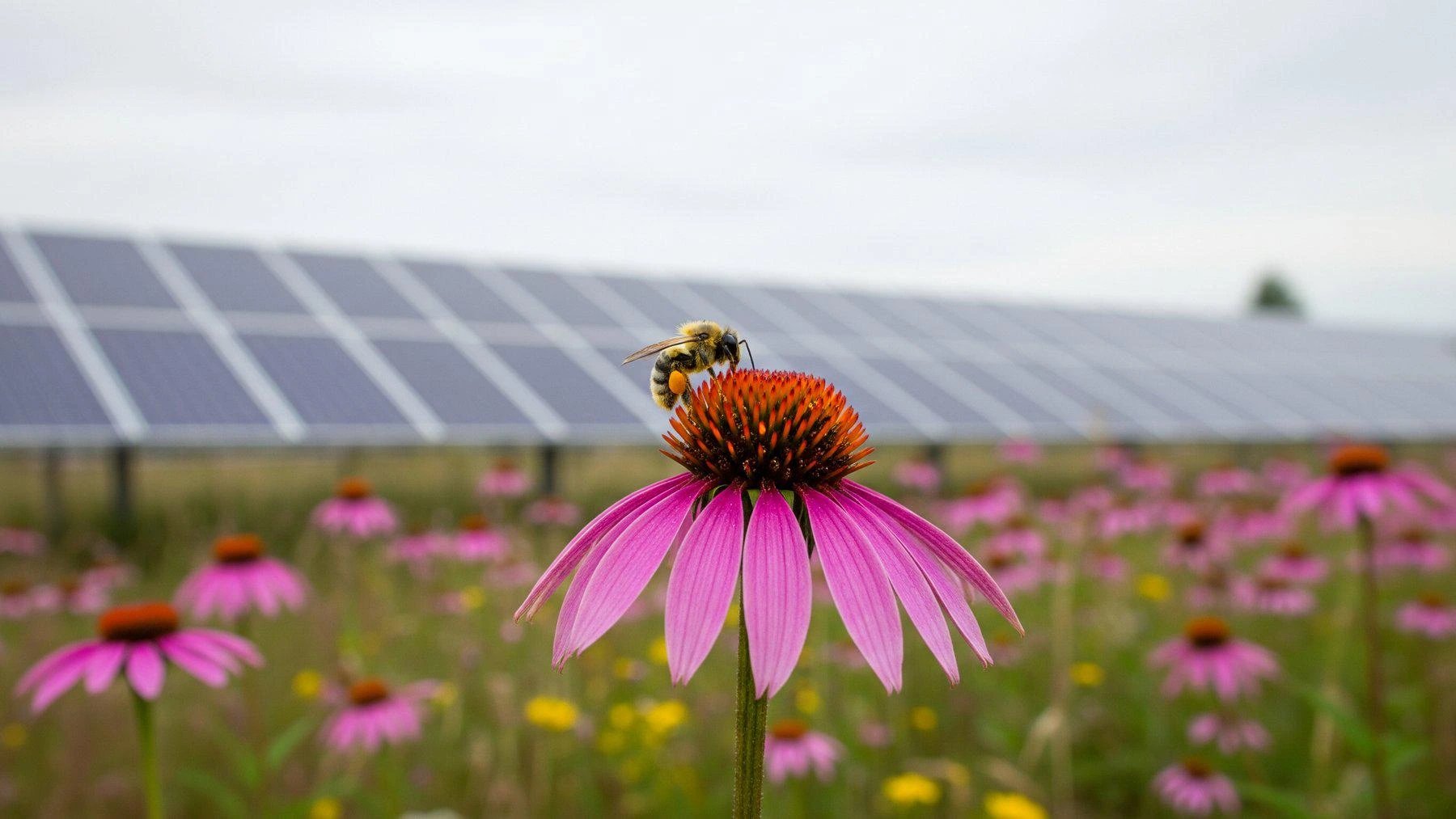
Two Minnesota solar farms planted with native grasses and wildflowers saw total insect numbers roughly triple and native bees increase about twentyfold over five years, according to a peer-reviewed study. Researchers from Argonne National Laboratory and the National Renewable Energy Laboratory conducted 358 surveys from August 2018 through August 2022. The restored habitat also boosted bee visits to soybean flowers in adjacent crop fields.
Key Facts
- The two solar sites are operated by Enel Green Power North America and were built on retired farmland.
- Researchers logged almost 11,000 insects from helpful groups, with beetles and hoverflies making up a large share.
- The peer-reviewed study reports that proximity to the solar habitat boosted bee visits to soybean flowers in nearby crop fields.
Study Design
The two large solar sites, operated by Enel Green Power North America, were built on retired farmland. Rather than leaving bare gravel or mowed grass beneath the panels, the developers planted native grasses and flowering plants. Researchers from Argonne National Laboratory and the National Renewable Energy Laboratory ran 358 surveys from August 2018 through August 2022, tallying flowers and insects on repeat visits.
Insect and Bee Increases
Over the five years, the habitat improved on every measure: more kinds of native plants, more flowers, and more insects to match. By the end of the study, total insect numbers roughly tripled, and native bees increased about twentyfold. Author Heidi Hartmann described the change as something the team watched unfold on the ground, noting that the numbers and types of flowering plants increased as the habitat matured. The team logged almost 11,000 insects from helpful groups, with beetles (mostly goldenrod soldier beetles) and hoverflies making up a large share.
Spillover to Crops
The bees didn’t treat the solar site’s fence as a boundary. The peer-reviewed study reports that proximity to the solar habitat boosted bee visits to soybean flowers in nearby crop fields. Bees raised next to the panels were showing up on the crop itself.
1 source
Time · lag behind first