
Antarctic meteorite reveals strong magnetic field in early solar nebula
This digest was compiled by AI from multiple sources — links to the originals are below.
Paleomagnetic measurements of the Antarctic meteorite DOM 08006 show the solar nebula had a magnetic field of 150–600 microtesla before the Sun and planets formed. The field's upper limit is about 12 times stronger than Earth's current magnetic field. The study, published in Proceedings of the National Academy of Sciences, suggests magnetism played a larger role in solar system formation models.
Key Facts
- The meteorite DOM 08006 was found in Antarctica in 2008 and is exceptionally well preserved.
- Calcium- and aluminum-rich particles inside the meteorite are thought to have formed within the first 200,000 years of the solar system.
- The magnetic field strength in the early solar nebula was calculated to be between 150 and 600 microtesla.
- The upper limit of the measured field is about 12 times stronger than Earth's current magnetic field.
- The study was published in Proceedings of the National Academy of Sciences.
Meteorite Evidence
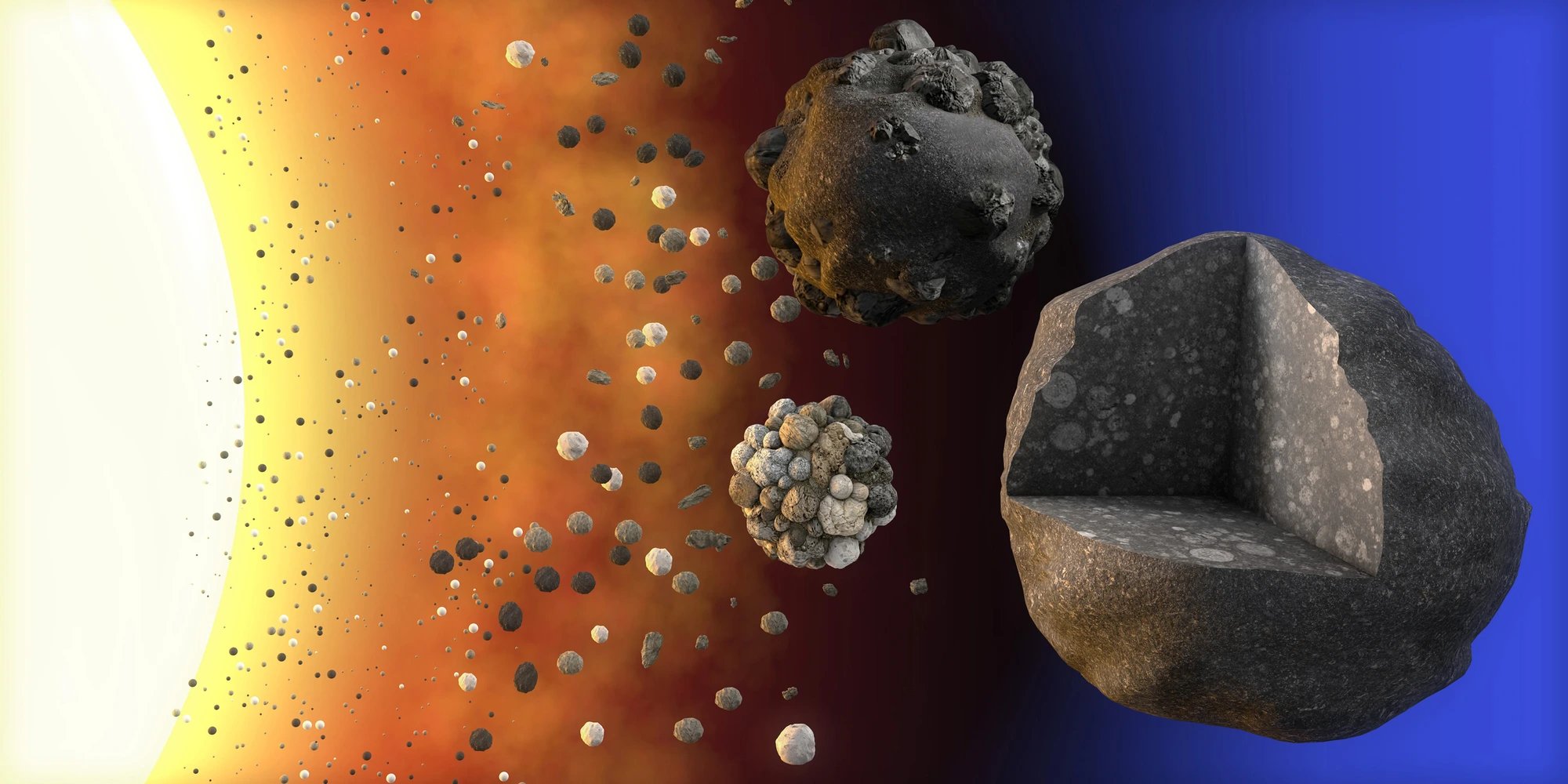
The research centered on the meteorite DOM 08006, found in Antarctica in 2008 and exceptionally well preserved. Calcium- and aluminum-rich particles inside the meteorite are thought to have formed within the first 200,000 years of the solar system. These particles act as 'fossils' recording the conditions of the early solar system. The particles have undergone very little chemical change, allowing reliable measurement of magnetic conditions from billions of years ago.
Magnetic Field Strength
Paleomagnetic measurements revealed a strong magnetic field in the solar nebula before the Sun and planets formed. The field strength was calculated to be between 150 and 600 microtesla. The upper limit is about 12 times stronger than Earth's current magnetic field. About 4.6 billion years ago, a giant cloud of gas and dust collapsed into a flat planet-forming disk. Researchers say magnetic fields contributed to this transformation and transported gas from the inner disk to the young Sun.
Implications for Formation Models
The study, published in Proceedings of the National Academy of Sciences, shows that magnetism's influence should be given more weight in models of Sun and planet formation.
1 source
Time · lag behind first