
FAST and DESI find star formation halved while hydrogen supply stays stable
This digest was compiled by AI from multiple sources — links to the originals are below.
An international team led by the Chinese Academy of Sciences measured neutral atomic hydrogen across 4.5 billion years using FAST and DESI data. They found star formation fell to less than half its previous rate while hydrogen declined only modestly. The results were published in Nature Astronomy on Sept. 1.
Key Facts
- Star formation rate fell to less than half its previous level over the past 4.5 billion years.
- Neutral atomic hydrogen (HI) decreased only modestly over the same period.
- The study used FAST radio telescope and DESI optical spectroscopy data covering about 2.5 million galaxies across nearly one-third of the sky.
- Findings were published online in Nature Astronomy on Sept. 1.
Star Formation Decline
The universe is producing fewer stellar 'babies,' with the rate of new star formation falling to less than half its previous level over the past 4.5 billion years. This decline contrasts with the supply of neutral atomic hydrogen (HI), an important cold gas reservoir within galaxies, which has decreased only modestly. The mismatch challenges the straightforward explanation that galaxies have simply consumed the cold gas needed to produce stars. If dwindling cold gas were primarily responsible, astronomers would expect a similarly large decline in available gas, but observations have not shown such sharp depletion.
Observational Methods
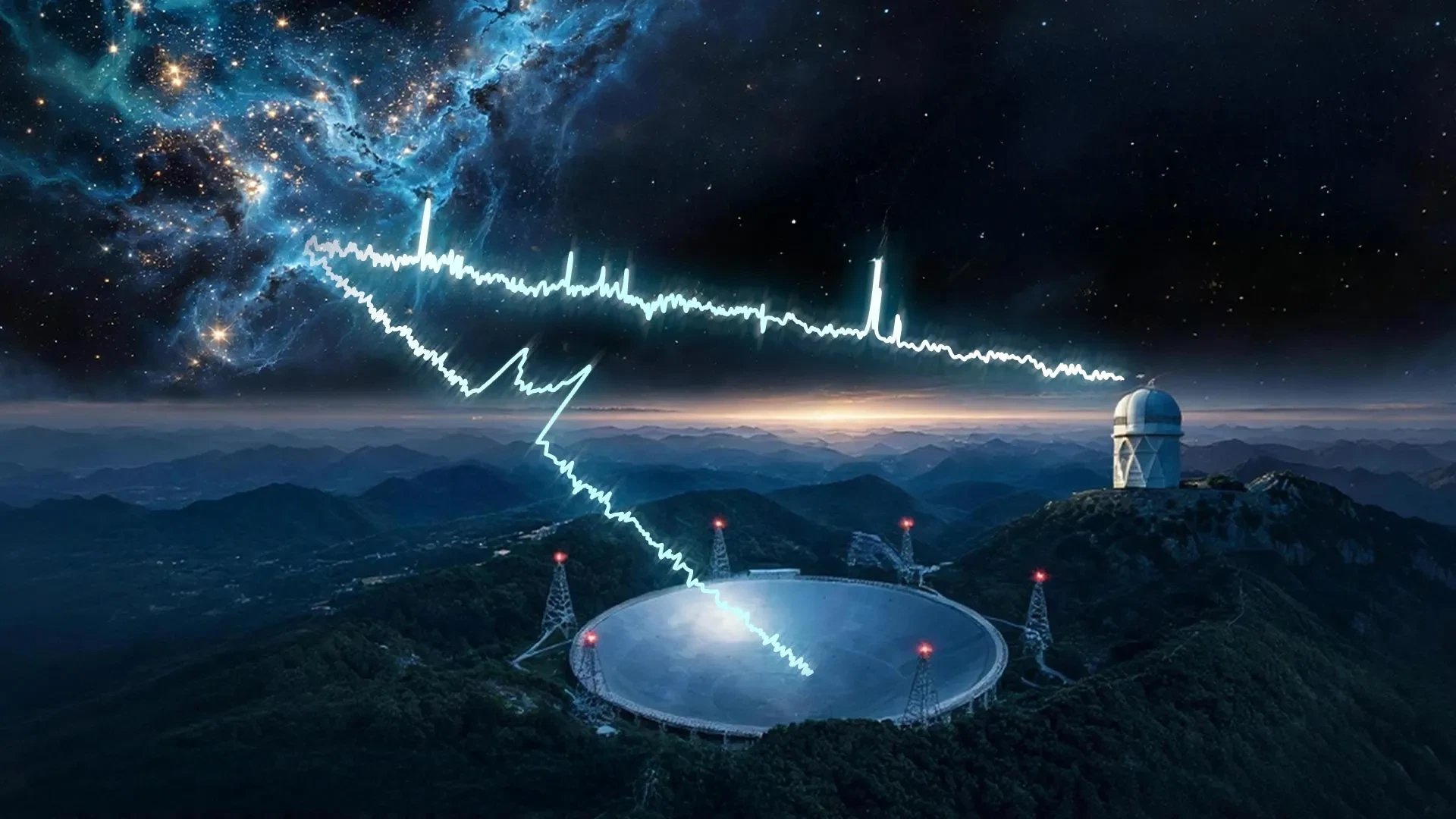
The research team, led by scientists from the Chinese Academy of Sciences, combined the exceptional radio sensitivity of China's FAST telescope with the enormous optical spectroscopy dataset from the Dark Energy Spectroscopic Instrument (DESI). They studied about 2.5 million galaxies spread across nearly one-third of the sky. Using an HI spectral stacking method, the researchers combined radio signals too faint to detect individually, aligning them by precise redshift measurements to extract the average HI signal from background noise. This approach overcame the previous limitation where deep surveys lacked sky coverage and wide surveys lacked sensitivity.
2 sources
Time · lag behind first