
Ancient meteorite grains show strong magnetic field shaped early Solar System
This digest was compiled by AI from multiple sources — links to the originals are below.
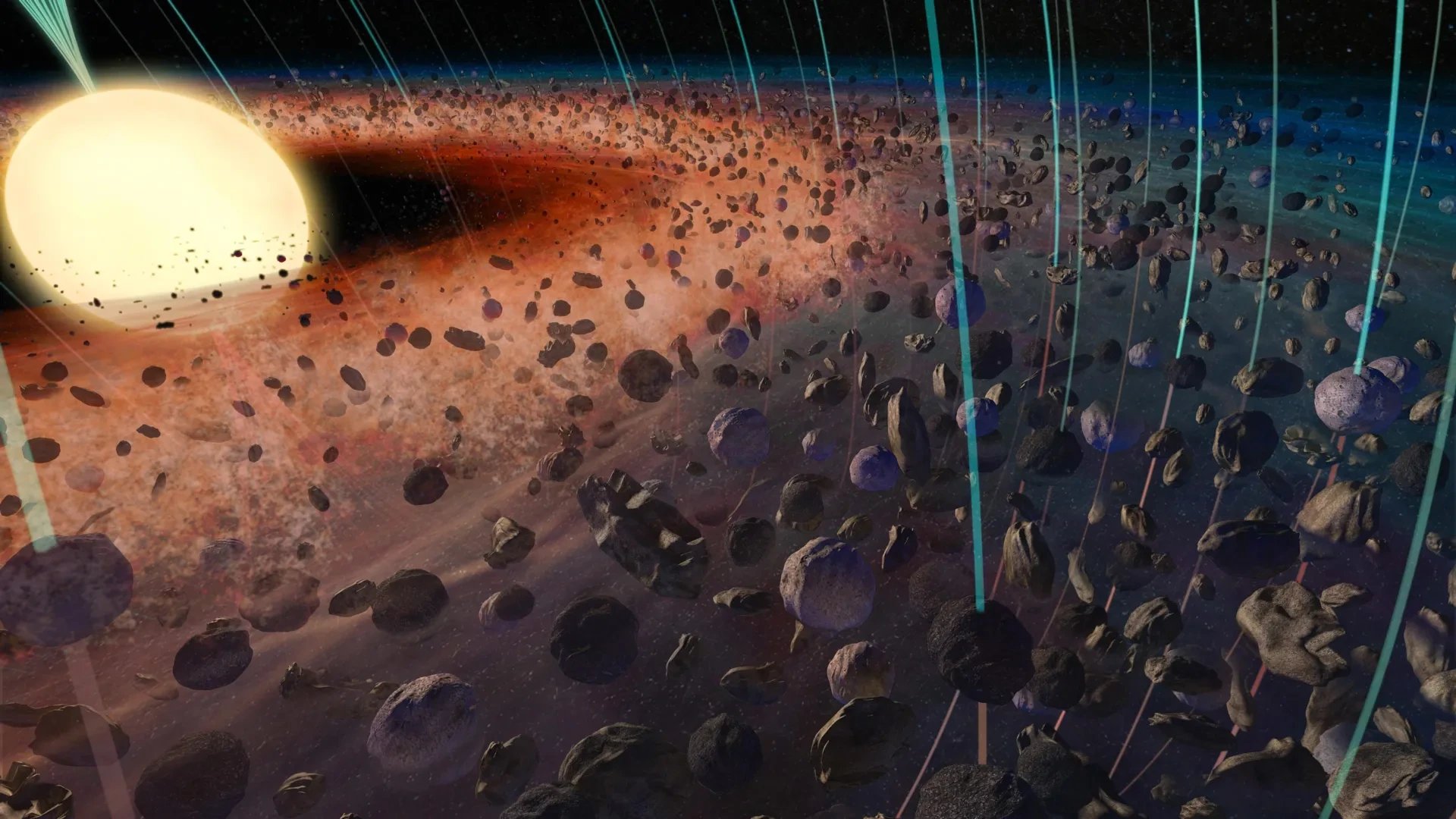
MIT scientists found evidence of a strong magnetic field in the early Solar System preserved in ancient meteorite grains. The field, stronger than Earth's today, may have helped move material inward as the young sun formed. The findings challenge the view that gravity alone drove the collapse of the solar nebula into a disk.
Key Facts
- The magnetic field recorded in calcium-aluminum-rich inclusions (CAIs) was stronger than Earth's current magnetic field.
- The CAIs formed during the first 200,000 years of the Solar System and are the oldest known material from that period.
- The meteorite containing the CAIs was discovered in Antarctica in 2008.
- The findings were reported in the Proceedings of the National Academy of Sciences.
Magnetic Evidence in Ancient Grains
Researchers studied microscopic grains called calcium-aluminum-rich inclusions, or CAIs, inside a meteorite discovered in Antarctica in 2008. These CAIs formed during the solar system's first 200,000 years and represent the oldest known material from that period. Their magnetic signatures indicate that a substantial magnetic field was already present during the solar nebula stage. The researchers estimate that this field was stronger than Earth's magnetic field today.
Implications for Solar System Formation
The magnetic field may have helped move primordial material inward as the young sun formed. Benjamin Weiss, the Robert R. Shrock Professor of Earth and Planetary Sciences at MIT, said the transition from a spherical cloud to a protoplanetary disk is one of the most significant events in solar system history. Weiss added that gravity has long been theorized to cause this transition, but the measurements show magnetism likely played a role. The study's MIT co-authors include first author Cauê Borlina, Elias Mansbach, and Nilanjan Chatterjee.
1 source
Time · lag behind first