
MIT engineers bacteria into living transistors for biological circuits
This digest was compiled by AI from multiple sources — links to the originals are below.
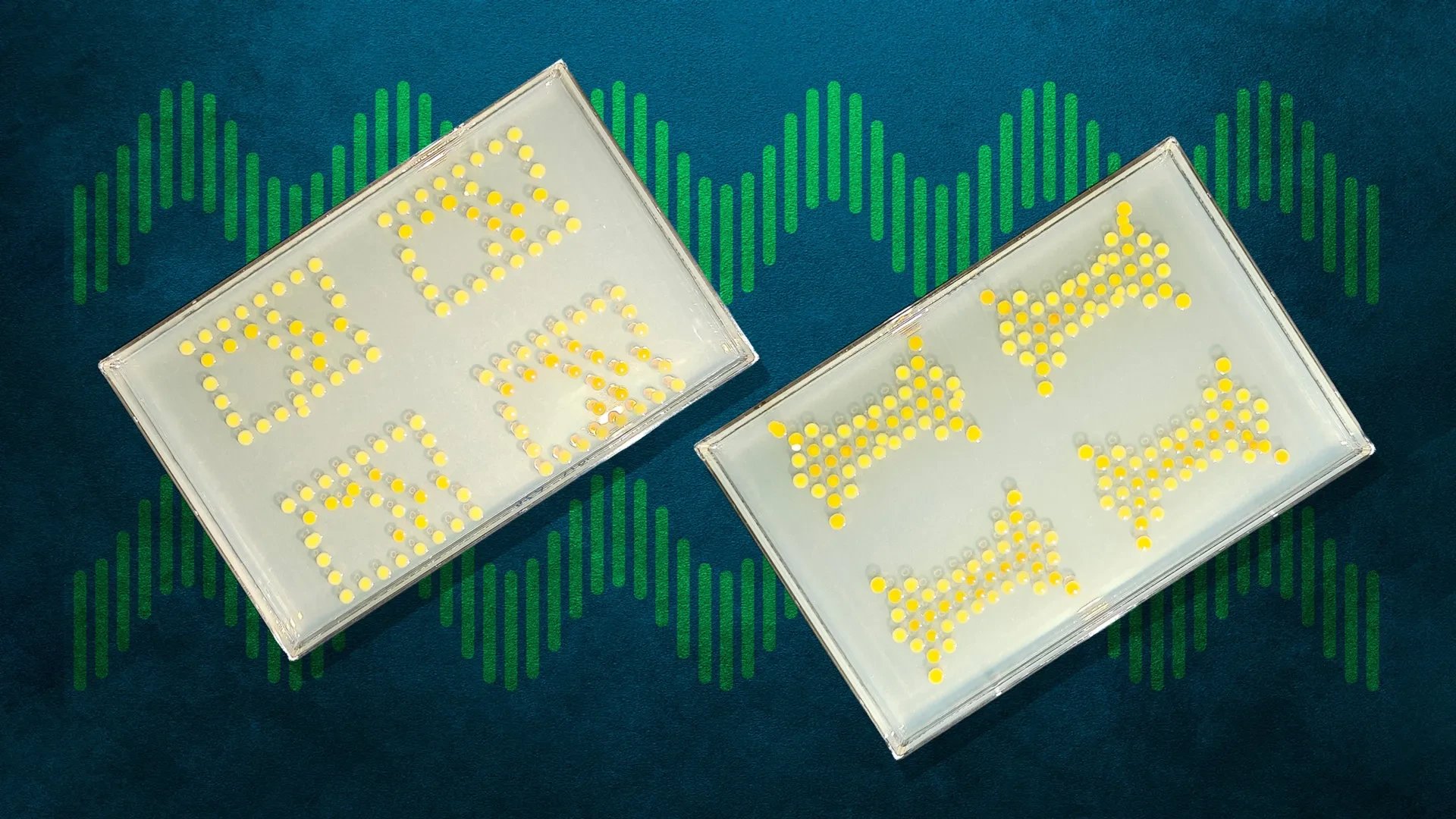
MIT researchers have engineered bacteria to function as transistors, creating living circuit boards that can be printed onto growth material in a Petri dish. The team built two types of bacterial transistors and three relay strains, demonstrating circuits that can add inputs or route signals. The work was published in Nature Chemical Biology.
Key Facts
- MIT researchers engineered two types of bacterial transistors and three relay strains from Pantoea agglomerans.
- The bacterial transistors respond to signaling molecules OC 6 and OC 12.
- The study was published in Nature Chemical Biology with Christopher Voigt as senior author.
- Hamid Doosthosseini, an MIT postdoc, is the lead author of the study.
Bacterial Transistor Design
The MIT team engineered Pantoea agglomerans, a bacterium that commonly grows on surfaces including plants, to act as transistor-like components. They created two versions of bacterial transistors that respond to a molecule called OC 6. One type switches on when it encounters OC 6, while the other switches off. Each transistor also senses a second target molecule, OC 12.
Circuit Assembly and Function
The researchers combined the two transistor types with three additional bacterial strains that act as relays. Together, these five strains provide a modular set of components that can be arranged to build nearly any kind of circuit. In the study, the team demonstrated circuits capable of adding two or three inputs and directing a single input toward a selected destination. Hamid Doosthosseini, an MIT postdoc and lead author, stated that any operation can be built with these five strains.
Potential Applications
One potential use is to place these living circuits on plant leaves or roots. There, the bacteria could process information about environmental conditions, helping plants detect and respond to stresses such as drought or pest attacks. Christopher Voigt, head of MIT's Department of Biological Engineering, is the senior author of the paper.
1 source
Time · lag behind first