
Bacteria sacrifice themselves to shield peers from antibiotics
This digest was compiled by AI from multiple sources — links to the originals are below.
A study by the University of Cologne and Wageningen University reveals that dying bacteria release an enzyme that degrades antibiotics, protecting surviving cells. The finding, published in PNAS, offers a new understanding of bacterial survival mechanisms. It may inform strategies to improve antibiotic efficacy.
The Discovery
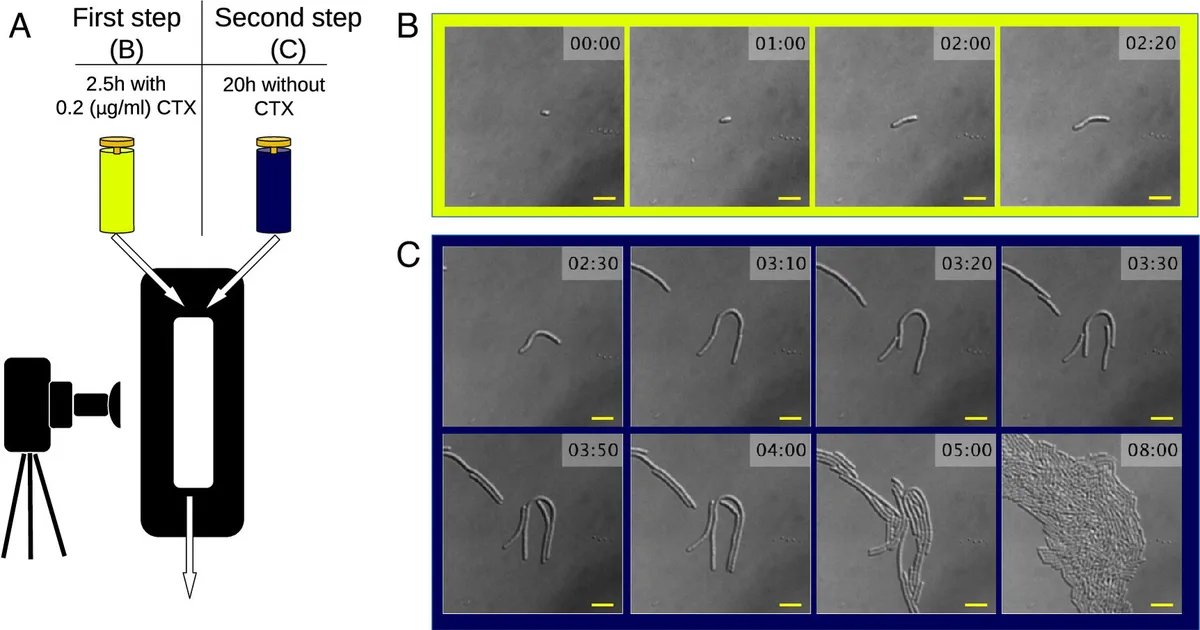
Researchers from the Institute for Biological Physics at the University of Cologne and Wageningen University & Research found that bacteria can sacrifice themselves to render antibiotics ineffective. Dying cells release an enzyme that degrades the antibiotic, shielding the remaining population. The study was published in the Proceedings of the National Academy of Sciences.
Mechanism and Implications
The enzyme, produced by a subset of bacterial cells, breaks down antibiotic molecules before they can kill other bacteria. This altruistic behavior helps the colony survive despite antibiotic exposure. Understanding this process could lead to new approaches to counteract bacterial resistance, a growing global health threat.
1 source
Time · lag behind first