
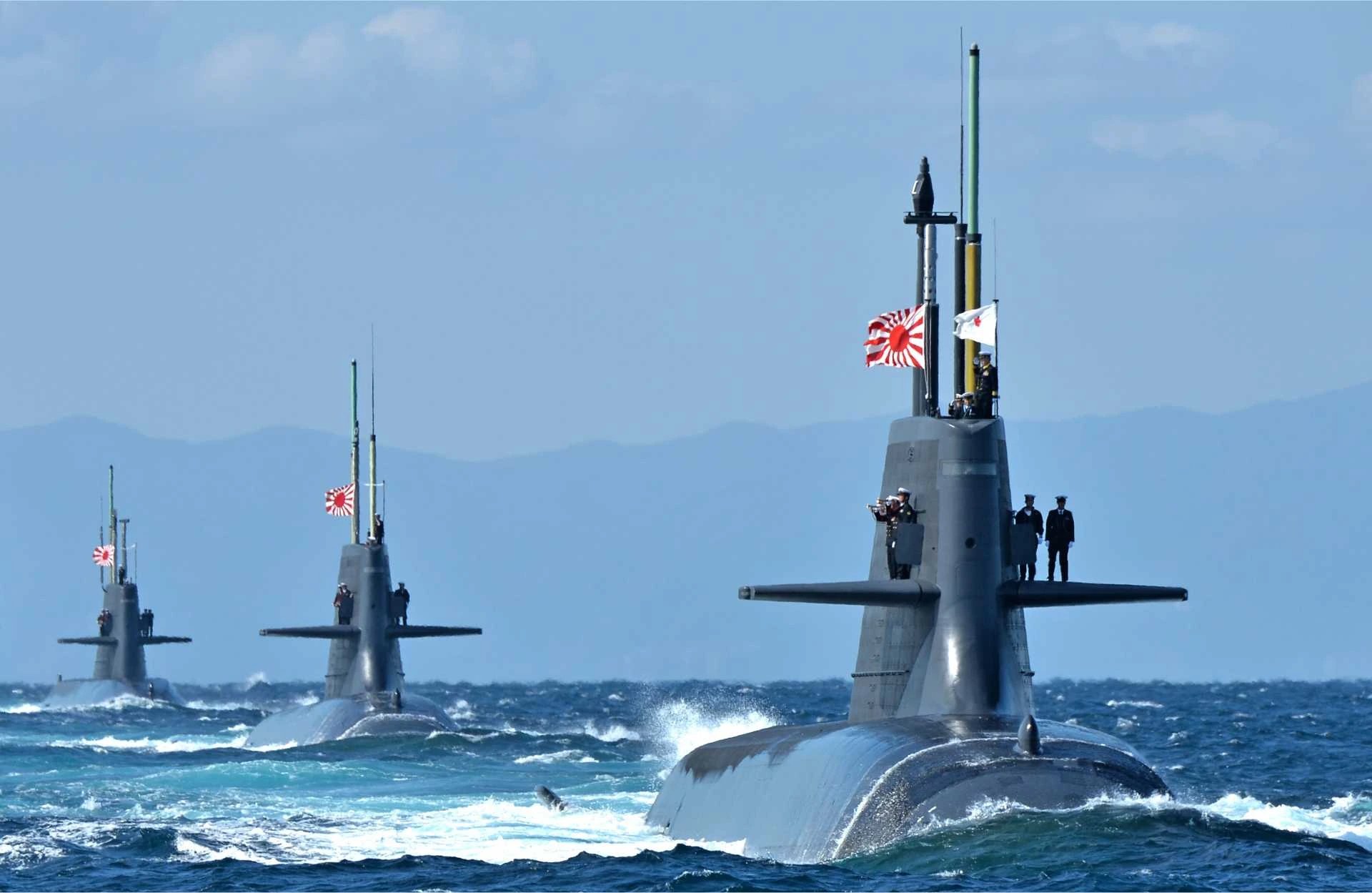
US, Japan, South Korea Submarines Conduct Undersea Warfare Drill in Western Pacific
This digest was compiled by AI from multiple sources — links to the originals are below.
U.S., Japanese, and South Korean submarines conducted anti-submarine warfare training in the Western Pacific from August 25–27, 2026. The exercise included mutual tracking and simulated engagements, with a Royal Australian Air Force P-8A Poseidon providing airborne support. The drill strengthens allied coordination against China's expanding submarine fleet.
Key Facts
- The exercise took place from August 25–27, 2026, in the Western Pacific.
- A Royal Australian Air Force P-8A Poseidon provided airborne surveillance and targeting support.
- The U.S. Navy Commander, Submarine Group Seven, disclosed the exercise from Yokosuka, Japan, on September 4.
- The submarines practiced joint water-space management to prevent friendly interference and avoid confusing allied submarines with hostile contacts.
Exercise Details
The U.S. Navy, Japan Maritime Self-Defense Force, and Republic of Korea Navy conducted direct anti-submarine warfare training in the Western Pacific. The submarines tracked one another, maneuvered at close range, and simulated undersea engagements. A Royal Australian Air Force P-8A Poseidon added airborne surveillance and targeting support, creating a four-nation undersea warfare scenario. The exercise strengthens allied ability to detect and counter hostile submarines in waters critical to operations beyond the first island chain.
Operational Significance
The most important feature was placing submarines from the United States, Japan, and South Korea into the same tactical problem. Submarine cooperation is more sensitive than surface or air exercises because it involves acoustic signatures, covert operating procedures, and restricted communications. The U.S. Navy said the submarines conducted mutual tracking and simulated engagements rather than simply operating alongside one another. Each crew had to detect and classify another submarine, maintain contact, maneuver without revealing unnecessary acoustic information, and react to the possibility of being tracked in return. Joint water-space management is essential to prevent friendly interference, preserve freedom of maneuver, and avoid confusing allied submarines with hostile contacts.
1 source
Time · lag behind first