
Japan reviews nuclear-powered submarine option amid China, Russia Pacific pressure
This digest was compiled by AI from multiple sources — links to the originals are below.
Japan has formally included nuclear-powered submarines in its defense posture review, opening the way for Tokyo to assess a future SSN capability alongside its conventional fleet. Defense Minister Shinjiro Koizumi confirmed on September 11, 2026, that nuclear-powered submarines had not been excluded from the ongoing review, citing their ability to remain submerged for extended periods and sustain higher speeds. The move comes as Japan seeks to maintain a sustained presence at long range in response to evolving Chinese and Russian naval capabilities in waters surrounding Japan.
Key Facts
- Japan has formally included nuclear-powered submarines in its defense posture review, opening the way for Tokyo to assess a future SSN capability alongside its conventional fleet.
- Defense Minister Shinjiro Koizumi confirmed on September 11, 2026, that nuclear-powered submarines had not been excluded from the ongoing review.
- Nuclear propulsion would allow Japanese submarines to remain submerged for longer periods, sustain higher speeds, and operate at greater distances than the diesel-electric Taigei class.
- The Taigei-class submarines have a standard displacement of about 3,000 tonnes and use lithium-ion batteries, which provide greater energy capacity and longer submerged endurance than older lead-acid batteries.
- The United States is emerging as the most likely partner for any future nuclear submarine program, with the United Kingdom or France representing other possible sources of expertise.
Defense Posture Review
Japan has formally included nuclear-powered submarines in its defense posture review, opening the way for Tokyo to assess a future SSN capability alongside its conventional fleet. The Japanese government is not presenting the possibility as a procurement decision, with nuclear propulsion remaining one of several options under review as Tokyo prepares an early revision of its three main strategic documents. The debate is focused less on the immediate creation of a new submarine class than on the performance needed to maintain a sustained presence at long range, reduce the energy constraints of conventional platforms, and respond to evolving Chinese and Russian naval capabilities in waters surrounding Japan.
Ministerial Confirmation
During his press conference on September 11, 2026, Defense Minister Shinjiro Koizumi confirmed that nuclear-powered submarines had not been excluded from the ongoing review. Koizumi cited their ability to remain submerged for extended periods, conduct longer deployments, and sustain higher speeds. He also highlighted the constraints associated with such an architecture, including cost, vessel size, the need for nuclear expertise, and factors related to acoustic discretion.
Conventional Fleet Limitations
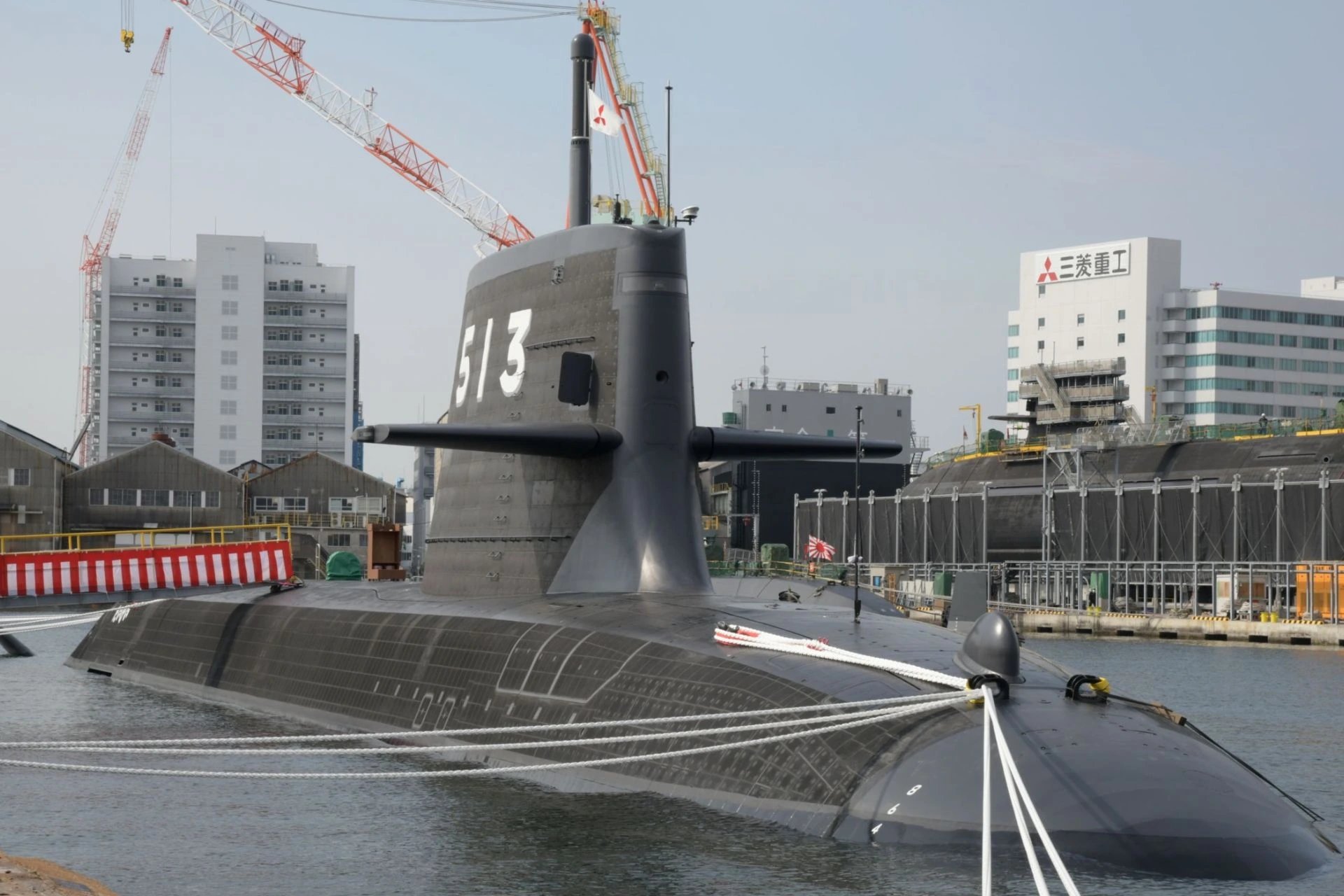
The Japan Maritime Self-Defense Force already operates an advanced conventional submarine fleet, with Taigei-class submarines having a standard displacement of about 3,000 tonnes and a length of roughly 84 meters. They use lithium-ion batteries, which provide greater energy capacity and longer submerged endurance than older lead-acid batteries. The class is also fitted with six 533 mm torpedo tubes and can exceed 20 knots while submerged. Its diesel-electric propulsion, however, retains an inherent limitation because available energy remains dependent on battery capacity and requires periodic recharging.
1 source
Time · lag behind first