
China expands maritime inspections near Taiwan in new coercion phase
This digest was compiled by AI from multiple sources — links to the originals are below.
China conducted its first special maritime operation east of Taiwan from June 6 to June 10, inspecting 198 vessels and rectifying violations on three ships. The operation marks a shift toward systematic, institutionalized patrols that Beijing says justify its jurisdiction over the island. The United Kingdom, Germany, and France issued a joint statement expressing alarm over the activities.
Key Facts
- China's Ministry of Transport carried out its first special operation east of Taiwan from June 6 to June 10.
- Chinese maritime authorities inspected 198 passing vessels and rectified violations involving three ships during the operation.
- The Global Times declared on July 4 that China's maritime patrols had entered a new phase defined by a more systematic, institutionalized, and long-term framework.
- The United Kingdom, Germany, and France issued a joint statement expressing alarm over the maritime activities.
- Australia raised concerns directly with Chinese officials over the operations.
The June Operation
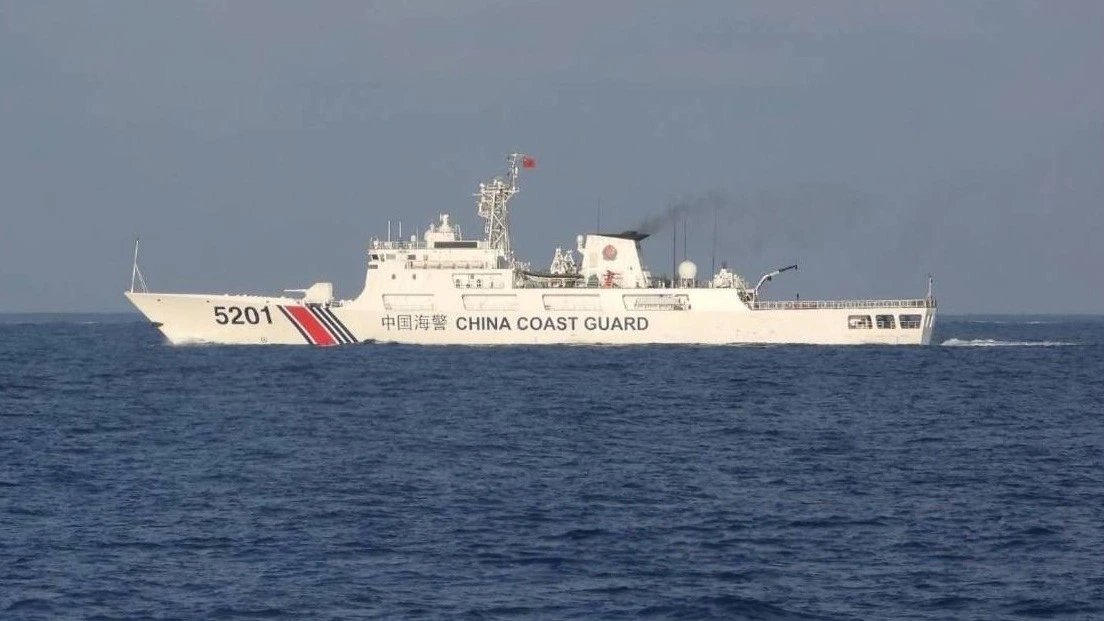
Between June 6 and June 10, China's Ministry of Transport carried out its first special operation in waters east of Taiwan, halting commercial vessels and requesting information on their points of origin and destination. Chinese Coast Guard ships conducted inspections en masse through radio communications with all transiting commercial vessels. Even foreign commercial vessels, including three vessels from Singapore, Benin, and Liberia, reported receiving radio messages from Chinese authorities to comply with requests. According to Chinese state news agency Xinhua, across those four days, Chinese maritime authorities inspected 198 passing vessels and rectified violations involving three ships.
Normalization and Jurisdiction
The Global Times declared on July 4 that China's maritime patrols had entered a new phase, defined by a move towards a more systematic, institutionalized, and long-term framework and away from isolated military exercises or patrols. The sheer quantity of reported inspections, followed by a public announcement of the results, demonstrates China's ability to govern vessel traffic in Taiwan's waters. Beijing uses that as grounds to assert jurisdiction over the island and to push the narrative that cross-strait dynamics are China's internal affairs. In July, China's Coast Guard began rotating its formations to regularize its law-enforcement presence. The Global Times has noted the advantages of maintaining a constant presence because a normalized presence itself exerts pressure.
International Reactions
The United Kingdom, Germany, and France issued a joint statement expressing alarm over the maritime activities. Australia raised concerns directly with Chinese officials. How forceful Beijing judges the pushback to be will affect the intensity of operations. In the event of an actual quarantine, responses are likely to be more pronounced.
1 source
Time · lag behind first