
Mars southern mantle 200-400°C hotter than north, study finds
This digest was compiled by AI from multiple sources — links to the originals are below.
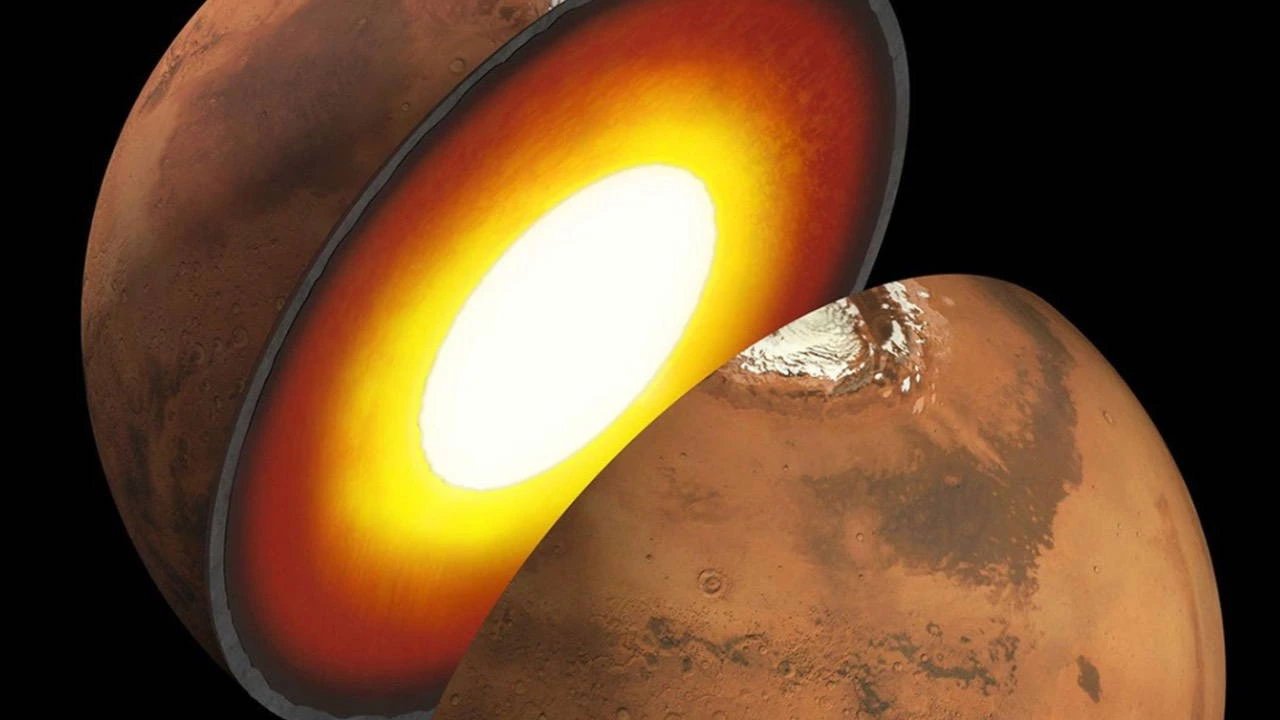
An international team led by the University of Arizona and Caltech found that Mars' southern hemisphere mantle is 200 to 400 degrees Celsius hotter than the northern hemisphere. The temperature difference suggests the mantle may be partially molten in some southern regions. The findings could help explain Mars' magnetic field variations and seismic wave patterns detected by NASA's InSight lander.
Key Facts
- The study analyzed decades of gravity data from Mars Global Surveyor, Mars Odyssey, and Mars Reconnaissance Orbiter.
- Lead author Dr. Alexander Berne said gravity data enables three-dimensional mapping of planetary interiors.
- Caltech researcher Amirhossein Bagheri said the temperature imbalance may hold clues to Mars' past hydrology and the evolution of liquid water on its surface.
- Scientists suggested the temperature difference may have resulted from a giant meteorite impact or thick geological structures trapping heat.
Temperature Anomaly
Researchers found that the mantle beneath Mars' southern hemisphere is 200 to 400 degrees Celsius hotter than the northern hemisphere. The high temperatures at depth in the southern hemisphere indicate that the mantle may be partially molten in some regions. Dr. Alexander Berne, the study's lead author, noted that scientists often assume planetary interiors have global symmetry, but this is not always true.
Implications for Mars History
The findings may help explain magnetic field differences in Mars' south and seismic wave movements detected by NASA's InSight lander. Amirhossein Bagheri, a Caltech researcher and co-author, said the temperature imbalance between north and south could hold critical clues about Mars' past hydrological structure and the evolution of liquid water once thought to exist on the surface. Scientists evaluated that the temperature difference may have been caused by a giant meteorite impact or by thick geological structures trapping heat.
2 sources
Time · lag behind first