
Physicists derive exact formula for microscopic black hole formation
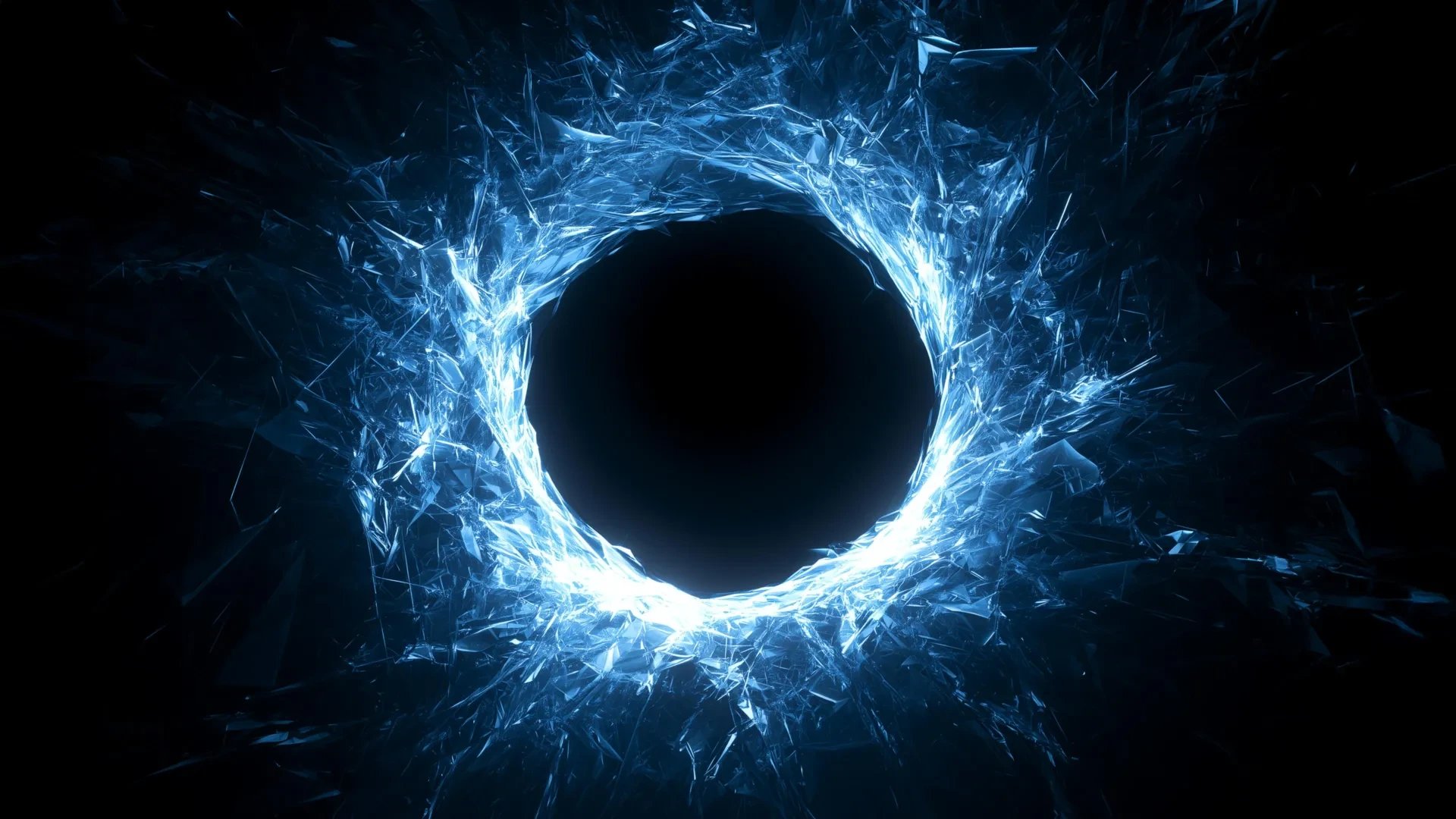
This digest was compiled by AI from multiple sources — links to the originals are below.
Researchers from Goethe University Frankfurt and TU Wien have derived an exact mathematical formula describing how microscopic black holes can form from critical spacetime states. The formula, obtained analytically, reproduces results previously seen only in computer simulations. The work suggests such conditions may have existed in the early universe, potentially producing primordial black holes.
Key Facts
- Researchers from Goethe University Frankfurt and TU Wien derived an exact formula for microscopic black hole formation using an analytical approach.
- The formula describes a critical state in which spacetime organizes into a repeating, crystal-like pattern known as a spacetime crystal.
- Computer simulations had previously indicated that such critical structures are possible, but no exact mathematical description existed until now.
- Prof. Daniel Grumiller from TU Wien compares the process to water freezing at zero degrees Celsius, where a tiny change triggers a dramatic transformation.
- Christian Ecker from Goethe University Frankfurt explains that even small masses curve spacetime, albeit to a lesser extent than massive stars.
Critical Collapse Mechanism
The researchers focused on a phenomenon known as critical collapse, where spacetime enters an unusual critical state. In this state, even a tiny addition of energy can determine whether the system disperses or collapses into a black hole. Computer simulations had already shown that these critical structures should be possible, but a mathematical description was lacking. The new formula can be worked out analytically, using what the scientists describe as essentially paper and pencil.
Spacetime Crystal Analogy
Prof. Daniel Grumiller from TU Wien draws an analogy to water freezing at zero degrees Celsius. A very small change is enough to make the water freeze, with molecules spontaneously arranging into a regular pattern. Einstein's theory of relativity suggests that spacetime can undergo something conceptually similar. Under critical conditions, spacetime curvature can arrange itself into a repeating pattern across space and time, forming a spacetime crystal. Grumiller describes the spacetime crystal as a very peculiar and fascinating object.
Early Universe Implications
Conditions like these may have existed in the early universe, shortly after the Big Bang. Matter and energy were packed into an intensely chaotic environment at that time. Such circumstances could potentially have produced primordial black holes. Christian Ecker from Goethe University Frankfurt notes that large objects such as stars curve spacetime strongly, while smaller masses produce curvature to a lesser extent.
1 source
Time · lag behind first