
Einstein relativity may explain impossible black hole merger GW231123
This digest was compiled by AI from multiple sources — links to the originals are below.
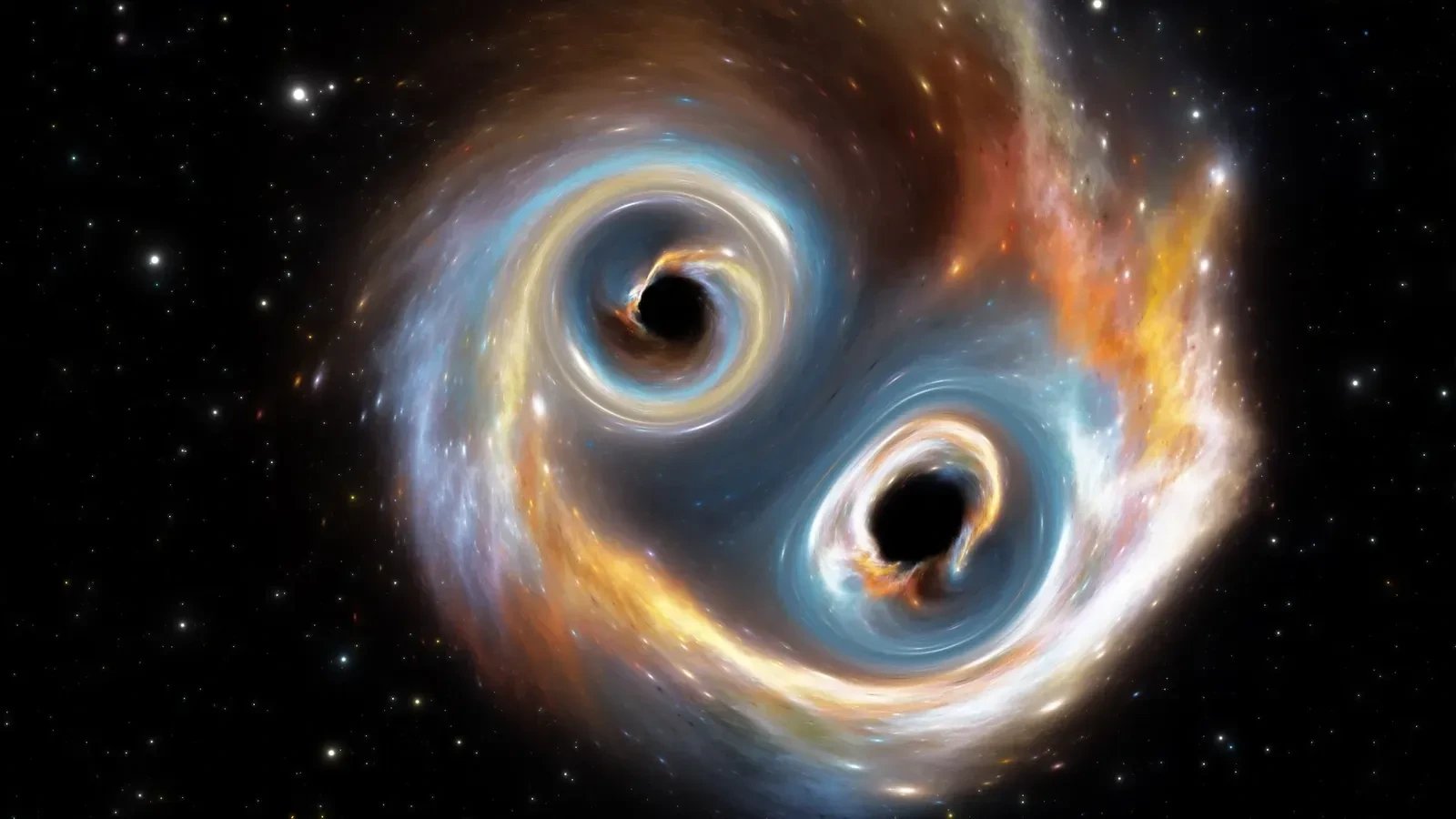
Astronomers propose a never-before-seen space-time variation to explain the anomalous black hole merger GW231123 detected by LIGO on Nov. 23, 2023. The merger, involving black holes around 2 billion light-years away, had puzzled experts for years. The proposed explanation, if correct, raises an entirely new mystery.
Key Facts
- LIGO detected gravitational wave signal GW231123 on Nov. 23, 2023, from colliding black holes about 2 billion light-years from Earth.
- The black hole merger had been considered 'impossible' and puzzled experts for years.
- Astronomers suspect a never-before-seen variation of a space-time phenomenon could explain the merger.
- If the theory is true, it creates an entirely new mystery to solve.
The Anomalous Merger
On Nov. 23, 2023, both LIGO detectors in Washington and Louisiana recorded gravitational waves from a pair of colliding black holes. The signal, designated GW231123, originated roughly 2 billion light-years from Earth. The merger's characteristics had long been considered impossible under standard astrophysical models. Gravitational waves are ripples in space-time triggered by events such as exploding stars and rapidly spinning neutron stars.
Proposed Explanation
Astronomers suspect a never-before-seen variation of a space-time phenomenon could account for the merger. The proposed mechanism relies on Einstein's theory of relativity. If confirmed, the explanation would resolve the long-standing puzzle of GW231123. However, the theory itself introduces an entirely new mystery that remains to be solved.
1 source
Time · lag behind first