Scimitar-horned oryx returns to Chad after decade-long reintroduction
This digest was compiled by AI from multiple sources — links to the originals are below.
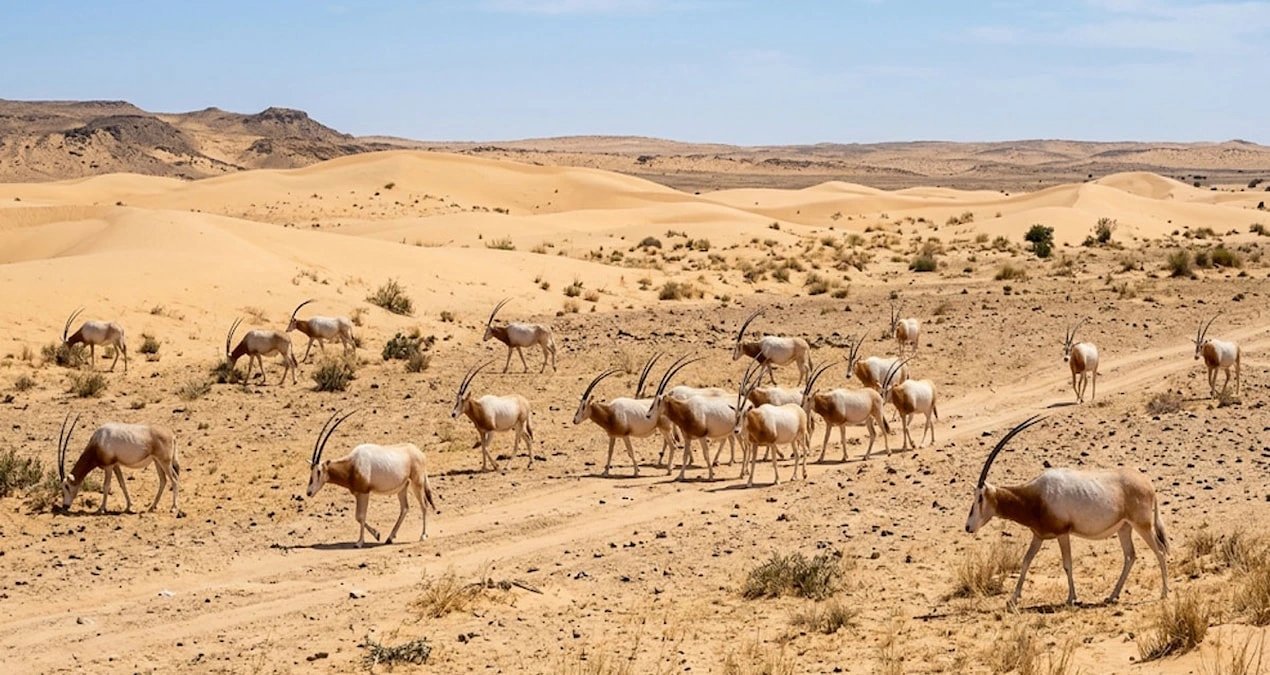
The scimitar-horned oryx, extinct in the wild since 2000, has been reintroduced to Chad's Ouadi Rime-Ouadi Achim Wildlife Reserve. The population has surpassed 600 individuals, prompting the IUCN to downgrade its status from Extinct in the Wild to Endangered in December 2023. The project has also faced losses, with over 100 oryx dying during the 2024 dry season.
Key Facts
- The scimitar-horned oryx was classified as Extinct in the Wild by the IUCN in 2000.
- The reintroduction project began in 2016 with 25 individuals brought from Abu Dhabi to Chad.
- By the end of 2023, the wild-born calf count exceeded 500 and the total population surpassed 600.
- In December 2023, the IUCN updated the species' status from Extinct in the Wild to Endangered.
- In November 2024, 50 additional oryx were transferred from Abu Dhabi, bringing the total released since 2016 to 361.
Reintroduction Milestones
The scimitar-horned oryx disappeared from its natural habitat due to overhunting, habitat loss, and severe droughts. In 2000, the IUCN classified the species as Extinct in the Wild. The reintroduction project began in 2016 with 25 individuals brought from Abu Dhabi to the Ouadi Rime-Ouadi Achim Wildlife Reserve in Chad. The project is considered one of Africa's most comprehensive large mammal reintroduction initiatives.
Population Growth and Status Change
By the end of 2023, the number of wild-born calves exceeded 500, and the total population surpassed 600 individuals. In December 2023, the IUCN updated the species' conservation status from Extinct in the Wild to Endangered. In November 2024, 50 additional oryx were transferred from Abu Dhabi, bringing the total number released since 2016 to 361. The total number of wild-born calves recorded during the project reached 580.
Climate Challenges and Conservation Impact
During the 2024 dry season, high temperatures caused the deaths of over 100 oryx, mainly newly released and young individuals. The return of a large herbivore species contributes to restoring the natural balance between grasslands and oases in the Sahel ecosystem. The project has facilitated the protection of over 78,000 square kilometers and serves as a model for conserving other endangered species such as the addax antelope and dama gazelle.
1 source
Scimitar-horned oryx returns to Chad after decade-long reintroduction