Atacama Telescope Data Support 13.8-Billion-Year Universe Age
This digest was compiled by AI from multiple sources — links to the originals are below.
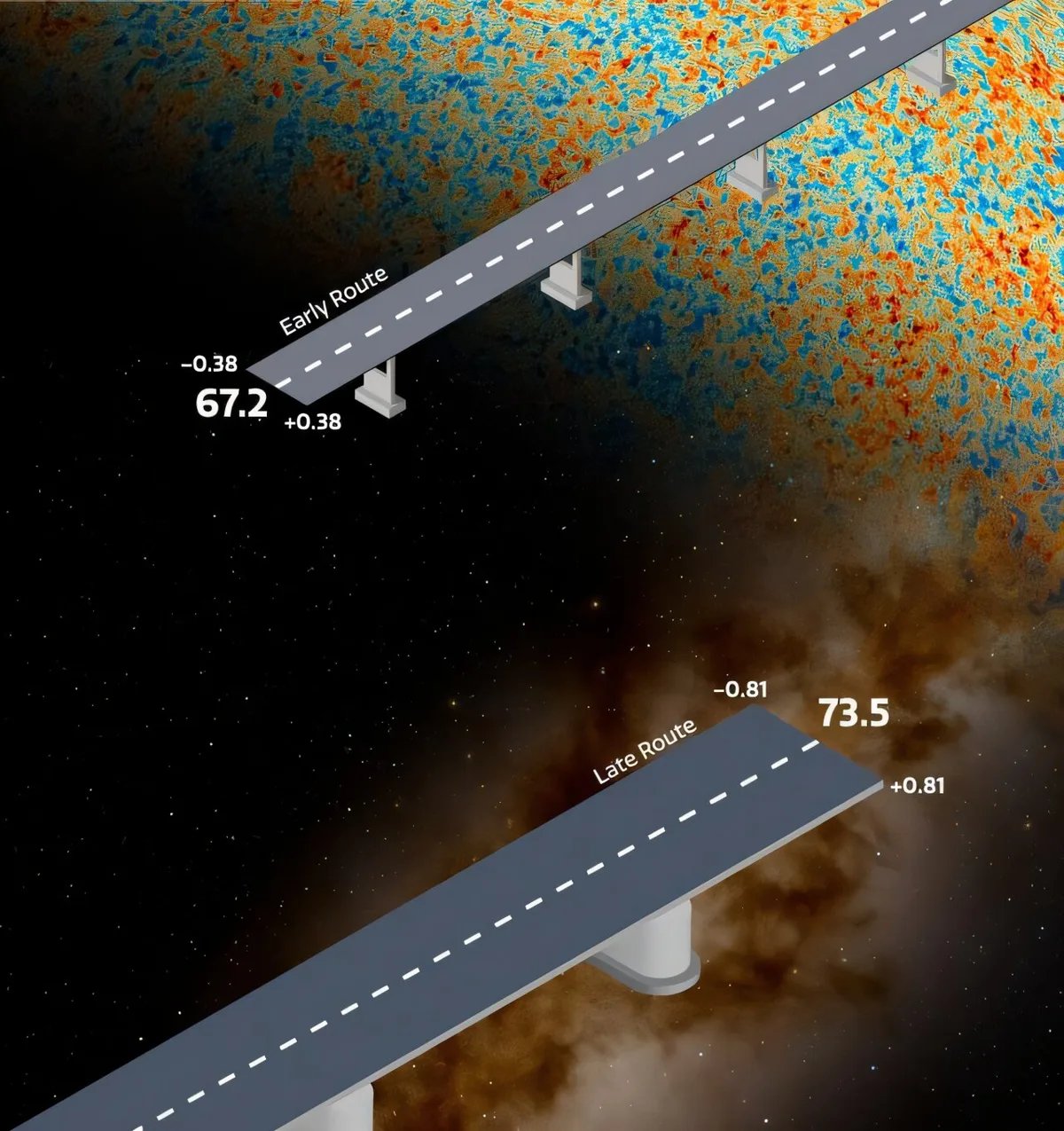
The Atacama Cosmology Telescope's final cosmic microwave background measurements fit a universe about 13.8 billion years old, matching the Planck satellite. The alternative 26.7-billion-year figure stems from an unconventional model by University of Ottawa physicist Rajendra Gupta, not a second direct measurement.
Key Facts
- The Atacama Cosmology Telescope's final measurements of the cosmic microwave background fit a universe about 13.8 billion years old.
- The alternative 26.7-billion-year figure comes from a model by Rajendra Gupta, an adjunct professor of physics at the University of Ottawa.
- ACT operated in the Chilean Andes from 2007 until 2022 and mapped 19,000 square degrees in frequency bands centered on 98, 150 and 220 gigahertz.
- In March 2025, the collaboration released what Princeton described as its clearest images of the infant universe.
Cosmic Microwave Background
The cosmic microwave background was released when the universe was roughly 380,000 years old, after the primordial plasma cooled enough for electrons to bind to nuclei. The CMB's average temperature is now about 2.7 kelvins, with tiny variations marking regions that were slightly denser or thinner than average. Gravity eventually amplified those initial differences into the large-scale structure of galaxies and clusters.
ACT Instrument and Data
The six-metre Atacama Cosmology Telescope operated high in the Chilean Andes from 2007 until 2022. Its final release mapped 19,000 square degrees in frequency bands centered on 98, 150 and 220 gigahertz. ACT had about five times Planck's angular resolution and lower polarisation noise over the scales it targeted. In March 2025, the collaboration released what Princeton described as its clearest images of the infant universe.
Age Determination and Alternative Model
The age of 13.8 billion years comes from asking which combination of ingredients and expansion history would produce the observed pattern today. Rajendra Gupta, an adjunct professor of physics at the University of Ottawa, changed the model used to convert redshift into distance and time. He combined an expanding universe with a tired-light effect and allowed several quantities normally treated as physical constants to vary together. The 26.7-billion-year figure is the output of one unconventional model, not a second direct measurement of the universe's birthday.
1 source
Atacama Telescope Data Support 13.8-Billion-Year Universe Age