Star census of 155,000 Milky Way stars supports 13.8-billion-year universe age
This digest was compiled by AI from multiple sources — links to the originals are below.
Astronomers used ages of over 155,000 Milky Way stars to independently estimate the universe's age at 13.8 billion years. The result aligns with the standard cosmological model. The study was submitted to arXiv on July 1.
The Stellar Census
Researchers analyzed data from the Gaia satellite and other surveys to determine ages of over 155,000 stars in the Milky Way. By comparing the oldest stars' ages to the universe's expansion rate, they derived a universe age of 13.8 billion years. The result matches the Planck satellite's 2018 estimate of 13.787 billion years.
Cosmological Implications
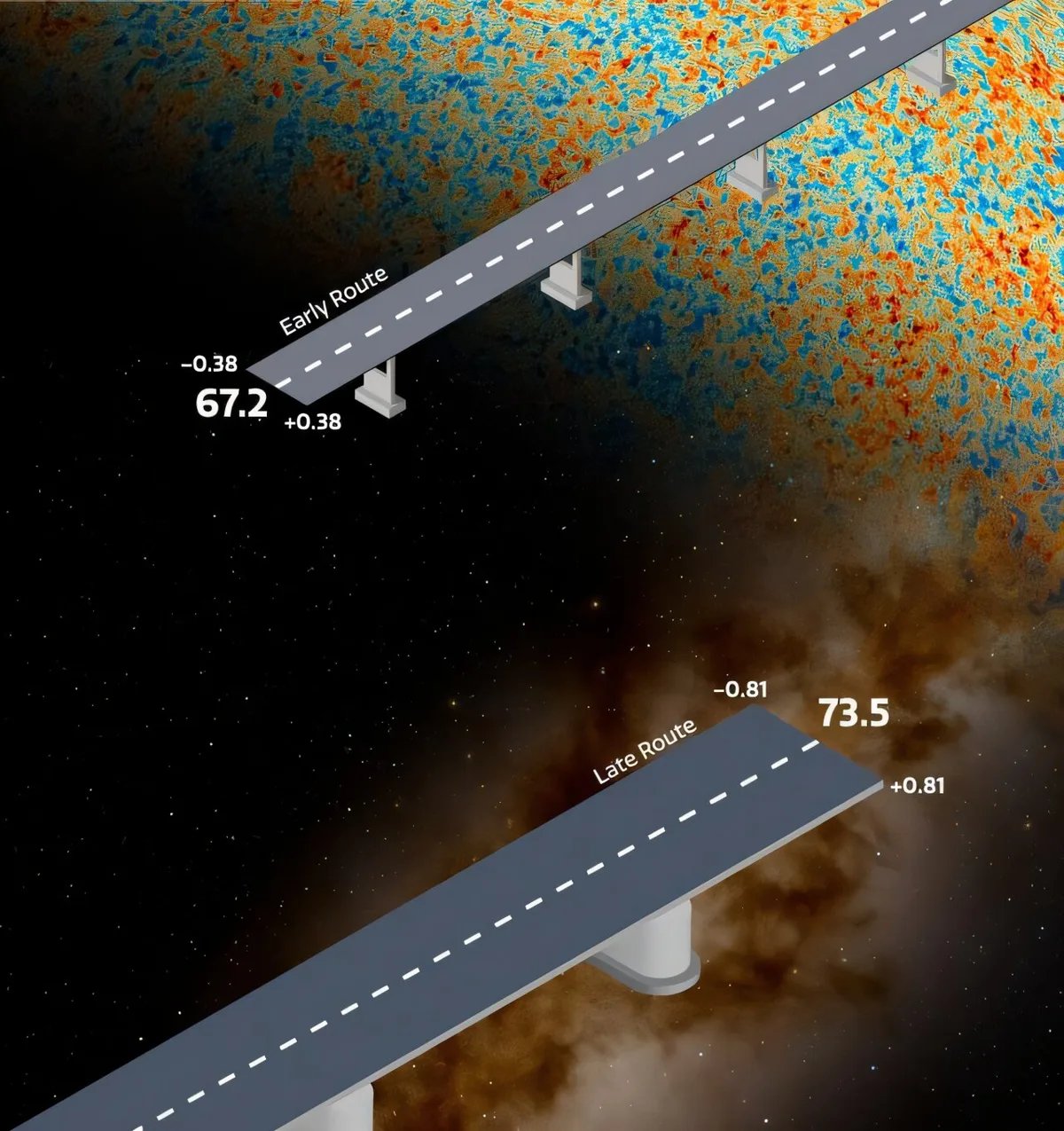
The finding supports the standard Lambda-CDM model, which has faced challenges from recent Hubble constant measurements. The independent stellar method avoids assumptions about the early universe. Lead author Dr. Emily Sandford of the University of Chicago noted the consistency strengthens confidence in the current cosmological framework.
What's Next
The paper is under peer review for publication in a scientific journal. It remains unclear whether future stellar surveys will further refine the age estimate or reveal tensions with other cosmological probes.
1 source
Star census of 155,000 Milky Way stars supports 13.8-billion-year universe age