
76 sq km ice island breaks from Greenland's Petermann Glacier
This digest was compiled by AI from multiple sources — links to the originals are below.
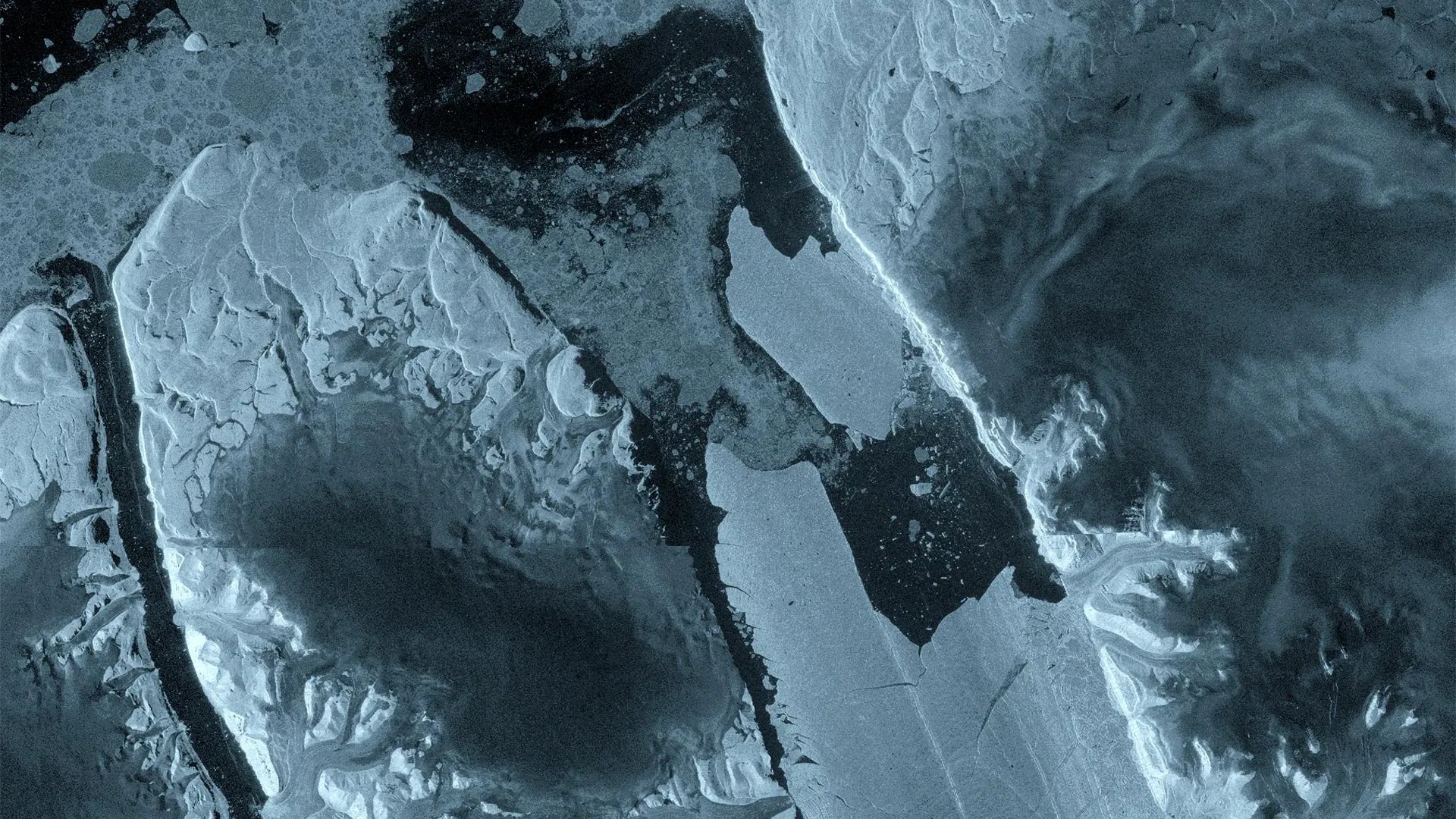
A 76 sq km ice island broke away from Petermann Glacier in northwest Greenland on August 4, 2026, according to Europe's Copernicus Sentinel-1 mission. The calving event is the glacier's largest since 2012 and the biggest recorded in the Arctic since 2020. The newly formed tabular iceberg is roughly the size of Manhattan and may be up to 150 meters thick.
Key Facts
- The calving event at Petermann Glacier on August 4, 2026, produced a 76 sq km ice island, the glacier's largest since 2012.
- The ice island is roughly the size of Manhattan and may be up to 150 meters thick.
- Sentinel-1 radar images from August 3, 2026, showed significant deterioration along the center of the ice tongue one day before the break.
- An international research team has monitored Petermann Glacier with Sentinel-1 imagery since 2019, tracking expanding fractures and growing instability.
- Two additional ice islands, with estimated areas of about 97 and 87 sq km, could eventually detach as existing rifts continue spreading.
The Calving Event
Europe's Copernicus Sentinel-1 mission documented the breakaway of a 76 sq km section of Petermann Glacier's floating ice tongue on August 4, 2026. The event is Petermann Glacier's largest loss of floating ice since 2012 and the biggest calving event recorded in the Arctic since 2020. The newly formed tabular iceberg, also known as an ice island, is roughly the size of Manhattan and may be as much as 150 meters thick. Radar images from Sentinel-1 taken on August 3 showed significant deterioration developing along the center of the ice tongue, and one day later the ice island had separated from the glacier's eastern side.
Monitoring and Research
An international research team has used Sentinel-1 imagery to monitor Petermann Glacier since 2019, with work partially funded through ESA's FutureEO ARCTEX project. The collaboration includes researchers from the University of Ottawa, the Universities of Stirling, Lancaster and Leeds, and the Canadian Ice Service of Environment and Climate Change Canada. Over several years, the team tracked expanding fractures and growing evidence that the glacier's floating ice tongue was becoming unstable. Interferometric observations collected in April 2026 revealed deformation and fractures within the floating ice tongue, giving researchers a detailed view of changes months before the calving event.
Future Instability
Petermann Glacier has experienced major calving events in 2008, 2010 and 2012, but since 2012 the floating ice tongue had remained comparatively stable aside from several smaller calving events. The latest break may not be the final major change, as two additional ice islands with estimated areas of about 97 and 87 sq km could eventually detach as existing rifts continue spreading across the floating ice tongue. Adam Garbo, a PhD student from the University of Ottawa, said, "Petermann Glacier has long been one of Greenland's largest remaining ice tongues. We've anticipated this break for years, and seeing it finally happen is remarkable." Anna Crawford from the University of Stirling noted that while large tabular icebergs are relatively common in the Southern Ocean around Antarctica, Arctic ice islands are far rarer.
2 sources
Time · lag behind first