
Greenland meltwater to weaken, not shut down, Atlantic currents
This digest was compiled by AI from multiple sources — links to the originals are below.
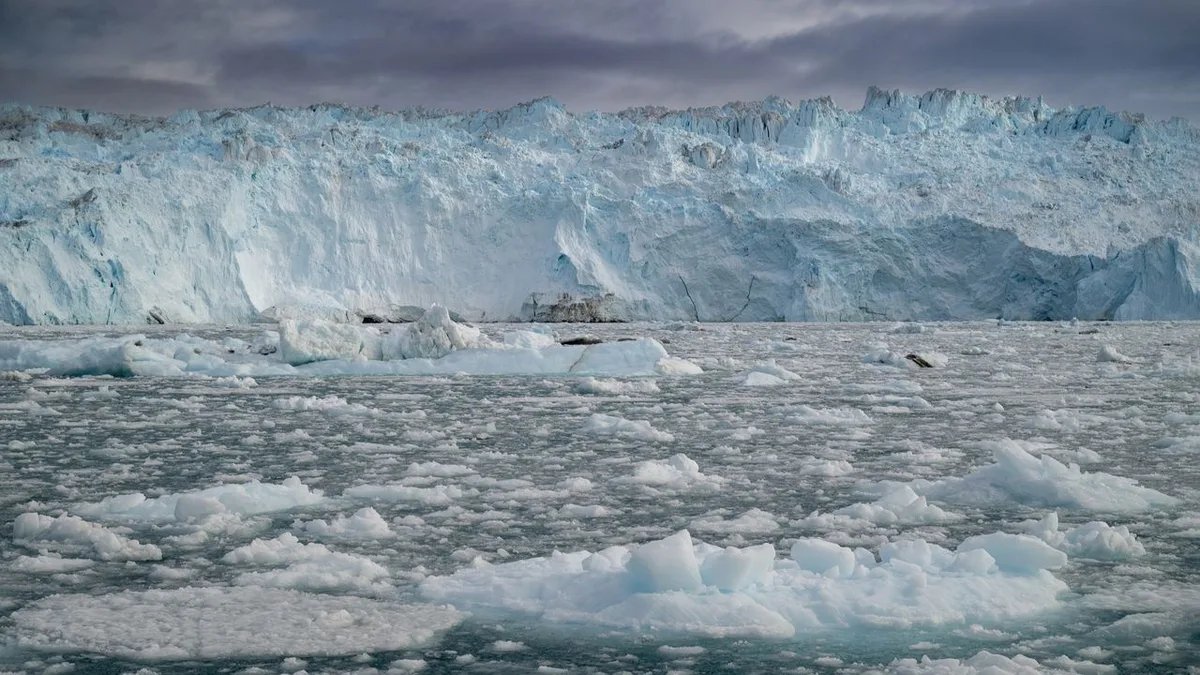
A new study finds that Greenland meltwater will cause a 10-20% additional weakening of the Atlantic Meridional Overturning Circulation (AMOC) by 2100, but not a complete collapse. The research, using a coupled ice sheet-climate model, projects a 40% extra weakening by 2300 under high emissions.
The Study
Researchers from the Polytechnic University of Turin and colleagues used the EC-Earth3 climate model coupled with the Community Ice Sheet Model version 2 (CESM2) to simulate Greenland meltwater effects on AMOC. By 2100, meltwater could add a 10-20% weakening on top of already projected declines. By 2300, the additional weakening could reach 40% under high-emission scenarios, according to the study published in Live Science.
Mechanism and Gaps
Meltwater slows AMOC by preventing deep water formation in the North Atlantic, as fresh water dilutes and warms surface waters. Most climate models currently exclude Greenland ice sheet runoff, partly because it requires a dedicated dynamic model. Co-author Jost von Hardenberg noted that representing Greenland melt correctly demands significant resources.
Broader Context
Previous research indicates AMOC is at its weakest in over 1,000 years due to Arctic ice melt and ocean warming. A shutdown could bring freezing weather to Northwest Europe, sea-level rise along the U.S. East Coast, and equatorial droughts. The new study suggests a strong weakening but not a complete collapse, offering a nuanced outlook.
1 source
Time · lag behind first