
76.4 sq km iceberg breaks from Greenland's Petermann Glacier
This digest was compiled by AI from multiple sources — links to the originals are below.
A 76.4 square kilometer ice island broke off from Petermann Glacier in northwestern Greenland. The calving is the largest loss recorded at Petermann Ice Shelf since 2012 and was captured by the European Space Agency's Copernicus Sentinel-1 satellites.
Key Facts
- The calved ice mass covers 76.4 square kilometers and reaches 150 meters thick in places.
- The event is the largest loss at Petermann Ice Shelf since 2012 and the most extensive Arctic ice breakup in recent years.
- Models indicate two additional ice islands of 94 and 84 square kilometers could break off along existing fracture lines.
- The breakup followed deformations detected in April and severe deterioration in the central ice sheet in early August.
The Calving Event
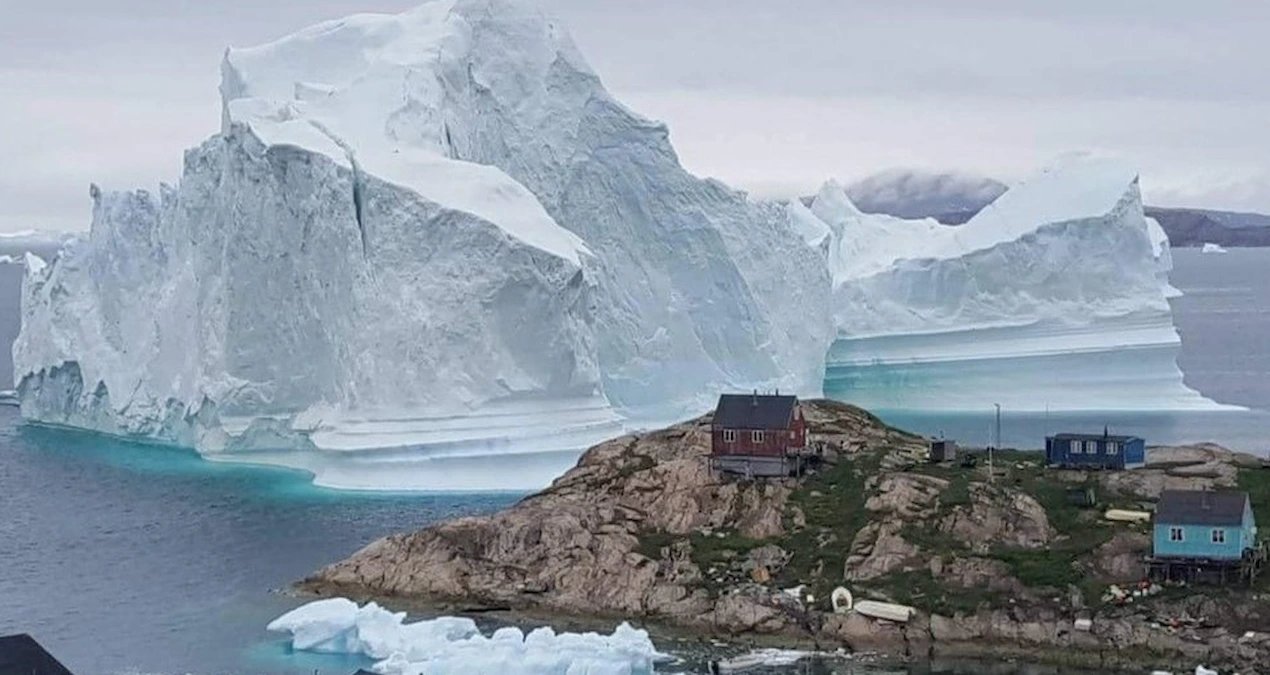
A massive ice block of approximately 76.4 square kilometers broke away from Petermann Glacier in northwestern Greenland. The ice mass reaches thicknesses of up to 150 meters in some areas and is seven times the size of Istanbul's islands. The event was recorded as the largest loss at Petermann Ice Shelf since 2012 and the most extensive Arctic ice fragmentation in recent years. The European Space Agency's Copernicus Sentinel-1 satellites captured the calving in real time.
Scientific Context
Scientists were not surprised by the development, attributing it to cracks that had been growing gradually on the glacier for years. Deformations detected in April were followed by severe deterioration in the central ice sheet in early August, when the giant piece fully separated from the glacier. Petermann, which connects the Greenland Ice Sheet to the Arctic Ocean and hosts one of the region's largest floating ice shelves, is a critical indicator for researchers studying climate change and ice loss mechanisms.
Future Breakup Risk
International research teams warn that this major breakup may be only the beginning and are closely monitoring deepening new cracks on the glacier. Modeling shows that two additional ice islands of 94 and 84 square kilometers could break off along existing fracture lines. Experts note that giant flat icebergs of this scale are typically seen around Antarctica and are rare in the Arctic. Researchers continue to track the drift and melting of the newly formed giant mass via satellites.
1 source
Time · lag behind first